

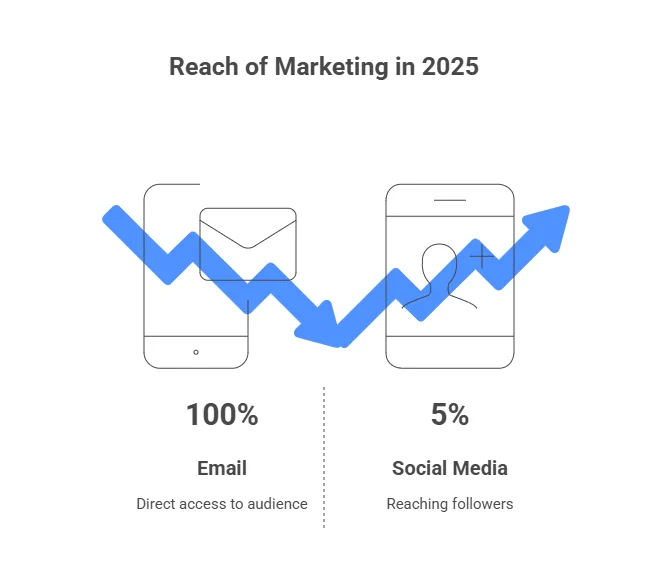
Email marketing may sound old-school, but in 2025, it’s still one of the most powerful and cost-effective ways to grow your business. Unlike social media platforms, where algorithms and ads control your reach, your email list is 100% yours — a direct line to people who actually want to hear from you.
Table Of Content
If you’re a UK startup looking to build lasting relationships with customers, growing your email list should be your first priority. Let’s explore why this channel continues to thrive — and how to create a subscriber base that truly supports your business growth.
Why Building an Email List Matters for UK Startups
Imagine this: you post an important update or offer on Instagram, but only 5% of your followers see it because of changing algorithms. With email, that message lands directly in your subscriber’s inbox — no middleman, no restrictions.
Email marketing gives UK startups a level of control, reliability, and ROI that’s hard to beat. According to the Data & Marketing Association (DMA UK), email marketing still delivers an impressive £36 return for every £1 spent, making it one of the highest-performing marketing channels for small businesses.
Beyond the numbers, it’s about building trust. Your subscribers have chosen to hear from you — meaning they already have some level of interest in your brand. That’s a huge advantage in today’s crowded online space.
For UK startups, owning your list means:
- You’re not dependent on unpredictable social media algorithms.
- You can communicate directly with customers — in their inbox, not a newsfeed.
- You’re building long-term relationships instead of one-off clicks.
- You can nurture leads over time with helpful content, updates, and offers.
Even a small list of 200 engaged subscribers can outperform 2,000 passive social followers. The key is quality over quantity, and consistency over quick wins.
Key Email List Building Tips for UK Startups
Now that you know why an email list matters, let’s dive into how to grow it effectively.
Here are proven strategies that help UK startups attract the right subscribers and build genuine engagement.
Use Attractive Lead Magnets
People won’t just hand over their email address — you need to give them something valuable in return. That’s where lead magnets come in.
A lead magnet is a free resource, offer, or incentive you provide in exchange for someone’s email address. For UK startups, these could include:
- A free downloadable guide, such as “10 Quick Marketing Wins for UK Small Businesses”
- A checklist, like “Essential Startup Funding Steps for 2025”
- Exclusive discounts for first-time buyers
- Early access to new products or beta programs
Tailor your offer to what your UK audience cares about. For example, if you’re targeting local business owners, offer something region-specific — like “A Local SEO Guide for London Startups” or “How to Attract Customers in Manchester”.
Your lead magnet should:
- Solve a real problem your target audience faces.
- Be quick and easy to consume (think one-page checklist, not a 50-page eBook).
- Deliver immediate value so new subscribers trust your brand right away.
Optimise Sign-Up Forms and Placement
Even the best lead magnet won’t work if your sign-up form goes unnoticed.
Make your forms easy to find, easy to fill, and visually appealing.
Here’s how to make the most of your sign-up opportunities:
- Place forms strategically: Add them to your homepage, blog sidebar, footer, and even at checkout or pop-up windows (without being annoying).
- Keep it short: Only ask for essential details like name and email address. The fewer fields, the higher the completion rate.
- Use clear benefits: Replace generic text like “Subscribe to our newsletter” with something compelling like “Join 1,000+ UK entrepreneurs getting weekly growth tips.”
- Ensure GDPR compliance: Always include a consent checkbox and a link to your privacy policy to stay compliant with UK data laws.
Think of your sign-up form as a friendly invitation, not a sales pitch. When visitors instantly understand the value they’ll receive, they’re much more likely to hit “subscribe”.
Leverage Partnership Opportunities
One of the fastest (and most authentic) ways to grow your email list as a UK startup is through partnerships. Collaborating with like-minded businesses helps you reach new audiences who already trust your partner’s brand — making them more likely to engage with you too.
Here’s how to make it work:
- Find complementary brands – For example, if you sell organic skincare, collaborate with a local wellness café or sustainable fashion store.
- Co-create a giveaway or event – Run a joint social media contest where users enter by subscribing to both email lists.
- Share spotlights in newsletters – Feature each other’s content or promotions in your respective newsletters to introduce audiences naturally.
- Offer co-branded resources – Create a downloadable guide or webinar that includes insights from both businesses.
Partnerships are particularly powerful in the UK’s tight-knit small business scene. Local collaborations not only expand your reach but also build credibility within your community.
You don’t need big budgets or national brands — start small, find genuine alignment, and offer real value to each other’s audiences.
Convert Social Media Followers into Subscribers
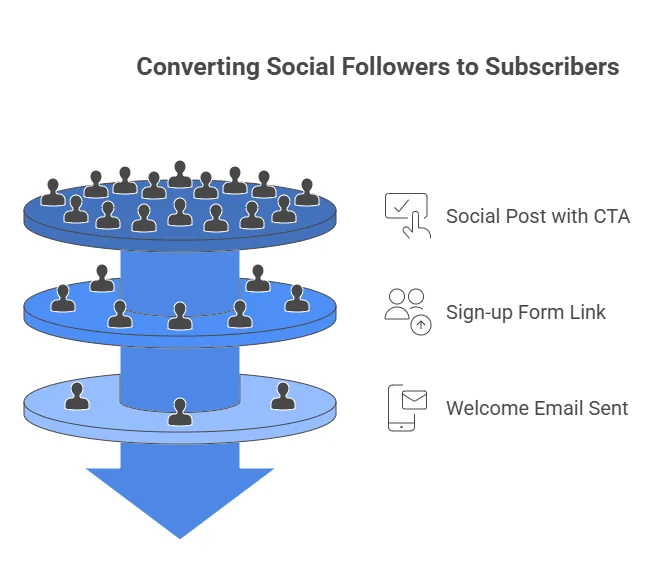
If you’ve built a following on Instagram, LinkedIn, or TikTok, you already have a warm audience — they just don’t belong to you yet. Platforms can change their rules or algorithms overnight, so turning those followers into email subscribers gives you direct access to them, anytime.
Here are simple ways to encourage sign-ups:
- Promote your newsletter regularly.
Don’t just post once — remind followers that subscribing gives them access to exclusive tips, early news, or special offers. - Show what they’ll get.
Share sneak peeks of your newsletter content on your feed. For example:
“Want the full guide? Get it in this week’s subscriber-only email.” - Use social bio links and stories.
Add your sign-up link in your bio and highlight it in Instagram Stories or LinkedIn posts with a call-to-action like “Join our founder circle – it’s free!” - Run lead generation campaigns.
Consider using Facebook or LinkedIn’s built-in lead forms that collect email addresses directly. These tools often integrate smoothly with email marketing platforms like Mailchimp or ConvertKit. - Offer exclusive value.
Give followers a reason to subscribe beyond your regular content — think downloadable guides, insider updates, or access to a private community.
In 2025, social media visibility is more competitive than ever. By funnelling your social followers into an owned channel like email, you protect your reach and strengthen long-term customer relationships.
Implement Welcome Email Sequences
First impressions matter — and your welcome email is your brand’s first real conversation with a new subscriber. It’s your chance to deliver on your promise, set expectations, and build a genuine connection.
When someone signs up, don’t leave them hanging. Send a friendly, well-crafted welcome email that greets them, delivers immediate value, and introduces your brand personality.
Here’s what a great welcome sequence should include:
- Email 1 – The Warm Welcome
Thank them for subscribing and give them what you promised (e.g., free guide, discount code, or resource link). Keep the tone conversational and appreciative. - Email 2 – The Introduction
Share a short story about your startup — why you started, your mission, or the problem you’re solving for UK customers. People connect with human stories more than polished sales pitches. - Email 3 – The Engagement
Offer helpful resources or ask a simple question like, “What’s your biggest challenge right now?” This builds trust and encourages replies, showing you value their voice. - Email 4 – The First Offer
Once trust is built, gently introduce your main product or service, highlighting how it solves their problem. Include a clear but friendly call-to-action.
Automating this sequence ensures that every new subscriber feels welcomed and valued — even if you’re asleep or focused on other business tasks. Most email platforms like MailerLite, Mailchimp, or ConvertKit make this easy to set up.
Think of your welcome sequence as onboarding for your subscribers. Done right, it can turn casual sign-ups into loyal customers who look forward to hearing from you.
Keep Your List Clean and Segmented
A healthy email list isn’t just about size — it’s about engagement and relevance. As your list grows, it’s crucial to keep it clean and well-organised. That means regularly removing inactive subscribers, verifying new sign-ups, and sending tailored content that fits your audience’s interests.
Start with these key practices:
1. Use Double Opt-In
Instead of adding subscribers after a single form submission, ask them to confirm their email via a verification link. This ensures that only genuine, interested people join your list — and helps maintain strong deliverability.
2. Remove Inactive Subscribers
Every few months, check for subscribers who haven’t opened or clicked your emails in a while. Send a quick re-engagement campaign like “Still want to hear from us?” — if they don’t respond, remove them. This keeps your list fresh and improves open rates.
3. Segment Your List
Not every subscriber should receive the same message. Segment your audience based on:
- Location – e.g., London vs. Manchester for local events or offers.
- Interests – product preferences or content topics.
- Customer stage – new lead, first-time buyer, or loyal customer.
By tailoring your emails, you’ll boost relevance — and your readers will feel like your messages were written just for them.
4. Maintain GDPR Compliance
Always be transparent about how you use data. Provide easy unsubscribe options and store consent records safely. Compliance not only avoids penalties but also builds trust with your UK audience.
A smaller, engaged list of 500 subscribers will almost always outperform a disengaged list of 5,000. Focus on keeping your list clean, compliant, and segmented — quality truly beats quantity.
Common Mistakes to Avoid
Even with the best intentions, many startups stumble when trying to grow their email lists. Avoiding these common pitfalls can save you time, protect your reputation, and improve results.
Here are the most frequent email list-building mistakes UK startups should steer clear of:
1. Buying Email Lists
It might seem like a quick shortcut, but purchasing email lists almost always backfires. These contacts haven’t consented to hear from you, which can lead to spam complaints, low engagement, and even fines under GDPR. Instead, focus on organic growth — it may take longer, but it builds real trust.
2. Over-Emailing (or Spamming) Subscribers
Sending too many emails, especially without real value, can quickly lead to unsubscribes. Stick to a consistent but respectful schedule. Quality beats frequency — a helpful weekly or biweekly email often performs better than daily promotions.
3. Ignoring GDPR and Consent Rules
UK startups must comply with GDPR and PECR regulations, which means gaining clear consent before emailing anyone. Always include an unsubscribe option, display your business address, and link to your privacy policy. Transparency protects both you and your customers.
4. Sending Generic, Unpersonalised Messages
A “one-size-fits-all” approach no longer works. Generic emails make readers feel unseen and reduce open rates. Use subscriber names, reference past interactions, or mention relevant local offers to make every message feel personal.
5. Neglecting Mobile Optimisation
More than half of emails in the UK are opened on mobile devices. If your email design doesn’t display well on smaller screens, you’ll lose engagement fast. Always test your campaigns on phones and tablets before sending.
By avoiding these common mistakes, you’ll keep your list healthy, your audience engaged, and your brand reputation strong.
Tools and Platforms for UK Startups
Building and managing an email list doesn’t have to be complicated or expensive. With the right tools, even small UK startups can automate campaigns, analyse results, and maintain compliance with ease.
Here are some of the best platforms to consider in 2025:
1. Mailchimp
A long-time favourite for beginners, Mailchimp offers an intuitive interface, professional templates, and reliable automation. Its free plan allows up to 500 subscribers — perfect for startups just getting started.
2. MailerLite
Known for its simplicity and affordability, MailerLite offers a generous free plan, easy drag-and-drop editors, and great automation features. It’s ideal for small teams looking for efficiency without complexity.
3. ConvertKit
Excellent for content creators and service-based startups. ConvertKit focuses on automation, segmentation, and personalisation. It’s particularly good if you plan to run courses or nurture leads with storytelling-style emails.
4. Brevo (formerly Sendinblue)
A GDPR-compliant platform popular across Europe, Brevo combines email, SMS, and CRM tools. It’s a great all-in-one solution for UK startups that want to manage customer communication in one place.
5. HubSpot (Starter Plan)
While more advanced, HubSpot’s free CRM and marketing tools can integrate email with contact management, making it perfect for scaling businesses that plan to grow fast.
When choosing your platform, look for:
- Ease of use (simple setup, intuitive editor)
- Automation features (welcome series, segmentation, drip campaigns)
- Analytics (open rates, click-throughs, and conversions)
- GDPR compliance (UK-based data handling options)
Start small, then upgrade as your subscriber base grows. Most platforms allow you to integrate sign-up forms directly with your website or social channels — making the process seamless.
Measuring Success: Key Email Metrics for UK Startups
Once your email campaigns are up and running, tracking performance is essential to understand what’s working — and what’s not. Data-driven insights help you refine your approach, improve engagement, and maximise ROI.
Here are the key email metrics every UK startup should monitor:
1. Open Rate
This shows the percentage of subscribers who open your email. A healthy benchmark for UK small businesses in 2025 is around 25–35%.
👉 Tip: Test different subject lines, sender names, and send times to boost this rate.
2. Click-Through Rate (CTR)
CTR measures how many readers click links inside your emails. A good average is 2–5%.
👉 Tip: Use clear calls-to-action (CTAs) and engaging visuals that guide the reader to take action.
3. Conversion Rate
This metric reveals how many subscribers actually complete your desired action — such as signing up for a demo or making a purchase.
👉 Tip: Align your email offer with your audience’s intent and ensure your landing pages are optimised.
4. Bounce Rate
A high bounce rate means some of your emails aren’t being delivered. Keep it below 2% by maintaining a clean list, using double opt-in, and avoiding spam triggers.
5. Unsubscribe Rate
Track how many people opt out of your list. Anything under 0.5% is considered healthy.
👉 Tip: If this rises, revisit your content frequency and value — are your emails still relevant?
Regularly reviewing these metrics helps you identify trends, segment audiences better, and continually improve engagement.
Conclusion: Start Small, Build Smart, and Grow with Confidence
Building a strong email list isn’t about numbers — it’s about connection, trust, and long-term value.
For UK startups in 2025, email remains one of the most cost-effective marketing channels to nurture relationships, increase conversions, and build loyal communities. By focusing on authentic growth — offering value, maintaining compliance, and leveraging automation tools — you’ll create a list that drives results for years to come.
Start today:
- Add that sign-up form to your homepage.
- Create a simple lead magnet.
- Send your first welcome email.
Small, consistent steps compound into meaningful growth.
🚀 Ready to Simplify Your Marketing?
If you’re a UK startup looking to grow your email list, automate campaigns, or build a marketing strategy that actually works, DataXpie can help.
We provide pay-as-you-go and startup-friendly marketing services — from email marketing to automation setup — so you can focus on what you do best: growing your business.
👉 Let’s make your emails work smarter — not harder.
Visit DataXpie.com to explore how we can help your startup scale efficiently.