
Top Email Marketing Strategies for UK Small Businesses (2025 Guide)

Introduction
In 2025, email marketing remains one of the most powerful and cost-effective tools for UK small businesses. While social media algorithms keep changing and paid ads grow more expensive, email gives you something no other platform can — direct access to customers who genuinely want to hear from you.
Table Of Content
- Introduction
- Why Email Marketing Still Works
- Building Your UK Email List
- Crafting Effective Emails
- Personalisation & Segmentation
- Automation with a Human Touch
- Mobile-First, Accessible Design
- Measuring Success
- Emerging Email Marketing Trends (2025)
- Consistent Monitoring and Adaptation
- Conclusion: Turn Emails Into Lasting Customer Relationships
- Ready to Take Your Email Marketing Further?
Whether you’re running a café in Manchester, an online shop in Bristol, or a consultancy in London, email marketing can help you build stronger relationships, drive consistent sales, and grow your brand loyalty. In this guide, we’ll walk through proven strategies — from list building to automation — designed specifically for UK entrepreneurs looking to make email marketing their most profitable channel in 2025.
Why Email Marketing Still Works
Despite the rise of social media and AI chatbots, email marketing continues to deliver one of the highest returns on investment for small businesses. Why? Because it’s personal, permission-based, and measurable — all key ingredients for sustainable growth.
According to SimplyBusiness.co.uk, open rates between 17% and 28% are considered strong benchmarks for UK businesses. This level of engagement outperforms many social channels, where organic reach can drop below 5%. When someone joins your mailing list, they’ve already raised their hand to say, “Yes, I’m interested.” That’s a level of intent that’s hard to match elsewhere.
Why It Matters for UK Small Businesses
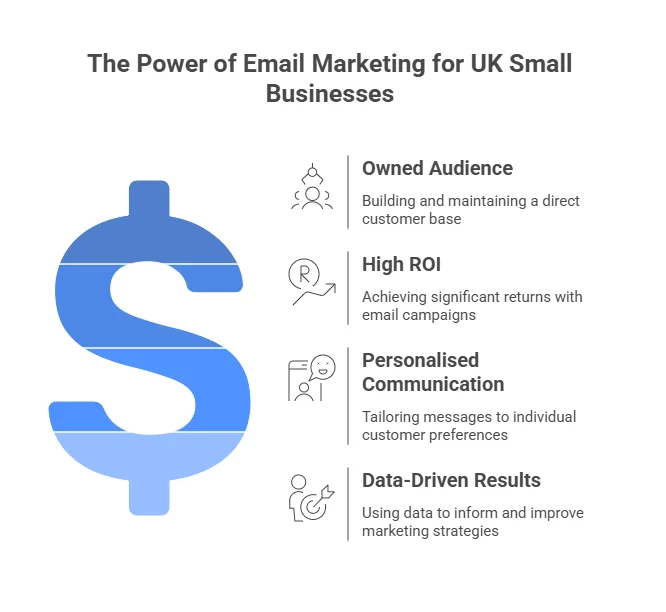
- You own your list. Unlike social media followers, your email subscribers belong to you — not an algorithm. No sudden platform changes can take them away.
- High engagement, low cost. Once set up, email campaigns cost pennies per send but can generate significant leads and sales.
- Personalised reach. You can tailor your message to a specific region or customer type — for instance, promoting different offers for London vs Leeds audiences.
- Reliable results. With tracking tools, you can see exactly what’s working — open rates, clicks, and conversions — and adjust your approach in real time.
Email remains the digital backbone for customer communication — whether it’s sharing new products, exclusive discounts, or valuable insights that position your brand as an expert in your field.
Building Your UK Email List
Before you can send powerful campaigns, you need an engaged list of subscribers who actually want to hear from you. The goal isn’t just to grow your list quickly — it’s to grow it thoughtfully. Quality beats quantity every time.
Instead of buying random contacts or pushing aggressive pop-ups, focus on attracting people genuinely interested in your brand. Offer them something valuable, make the sign-up process simple, and always stay transparent about what they’ll receive.
Here’s how to start building a strong, UK-based email list in 2025:
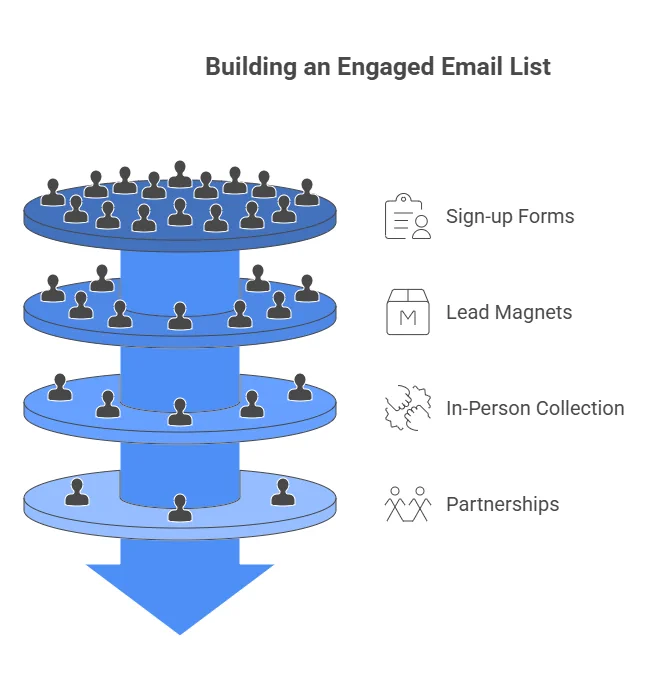
Sign-up Forms
Place your newsletter sign-up form prominently across your website — especially on your homepage, blog, and contact page.
- Use a clear call-to-action like “Join our UK business community” or “Get local offers straight to your inbox.”
- Offer UK-specific incentives, such as a local discount, event invite, or shipping offer.
- Keep it short — name and email are enough. The fewer fields, the higher the sign-up rate.
Lead Magnets
People are more likely to share their email when they get something valuable in return. Create free downloads or tools that genuinely help your target audience.
- Offer checklists, templates, or mini-guides relevant to your niche.
- For example: “2025 Marketing Calendar for UK Startups” or “Small Business Tax Prep Checklist.”
- Promote these lead magnets on your social media and inside relevant blog posts.
In-Person Collection
Don’t underestimate real-world opportunities.
- Collect emails at networking events, trade shows, or local markets using a tablet or sign-up sheet.
- Offer something in exchange, like entry to a prize draw or a free consultation.
- Just make sure you remain GDPR-compliant — always get explicit permission before adding anyone to your list.
Partnerships
Collaborate with other small businesses or community brands that share your target audience.
- Cross-promote each other’s newsletters or feature a joint giveaway.
- Example: a local fitness studio and a health café promoting a shared “Healthy Living in London” guide.
- This kind of partnership helps you grow faster by tapping into existing, trusted audiences.
Crafting Effective Emails
Once your list starts growing, the next challenge is making sure your emails actually get opened — and acted upon. The secret lies in clarity, value, and timing. Every email you send should feel helpful, personal, and worth reading.
Strong Subject Lines
Your subject line is your first impression — it decides whether your message gets opened or ignored.
- Keep it short, clear, and intriguing (ideally under 50 characters).
- Use curiosity or urgency: “Still want that free toolkit?” or “Your October business checklist is here.”
- Personalise when possible — using the subscriber’s name can boost open rates.
- Try A/B testing different styles to see which resonates best with your audience.
(According to SimplyBusiness.co.uk, engaging subject lines can lift open rates above 25%, a strong result for small UK brands.)
Valuable Content
Each email should offer something your reader truly benefits from.
- Mix promotional offers with helpful insights like local business tips or industry updates.
- Keep the tone friendly, down-to-earth, and relevant to your UK audience.
- Short paragraphs, scannable bullet points, and clean design make reading effortless.
- Avoid being overly salesy — the goal is to build trust first, sell second.
Clear Call-to-Action (CTA)
Every email should have one main goal. Whether it’s to book a call, download a guide, or shop a sale, make that next step obvious.
- Use a bold, eye-catching button with text like “Book Now,” “Get My Guide,” or “Read More.”
- Place the CTA above the fold (visible without scrolling).
- Reiterate it naturally once at the end to encourage action.
Personalisation & Segmentation
In 2025, successful email marketing is all about relevance. Gone are the days of blasting one message to your entire list. Today’s UK audiences expect personalised communication that feels made for them — not mass-produced.
By dividing your subscribers into segments based on their interests, behaviours, or location, you can deliver emails that truly resonate. Personalisation doesn’t stop at using someone’s name; it’s about understanding who they are and what they care about.
Why Segmentation Matters
When you send relevant content, people engage more — it’s that simple.
- By location: Send event invites to London subscribers and online offers to those further away.
- By interest: A marketing agency could send different tips to small retailers versus B2B service providers.
- By engagement: Reward your most loyal subscribers with exclusive perks, and re-engage inactive ones with special offers.
This approach makes each reader feel understood, increasing both open and click-through rates.
Personalisation Tactics That Work
- Custom Subject Lines: “Sarah, your autumn marketing checklist is here.”
- Dynamic Content: Show different images or offers based on the reader’s preferences.
- Behavioural Triggers: Send follow-up emails after a customer browses certain products or downloads a guide.
- Birthday or Anniversary Emails: Small touches that build loyalty over time.
A well-segmented and personalised campaign can lift conversions by over 25%, according to industry research — and for small UK businesses, that can mean real growth.
Automation with a Human Touch
Automation is the secret to scaling your email marketing without losing that personal connection. The right automation system works quietly in the background — sending the right message to the right person at the right time.
But here’s the key: automation should enhance relationships, not replace them. The goal is to keep your brand human, approachable, and trustworthy — even when your emails are triggered by software.
Essential Automated Email Sequences
- Welcome Series:
Greet new subscribers warmly. Introduce your brand story, share your best resources, and offer a small first-purchase incentive. - Onboarding Emails:
Guide customers through your services or products — think tutorials, FAQs, or user tips. - Re-Engagement Campaigns:
If someone hasn’t opened your emails in a while, send a friendly “We miss you” message or a special offer to win them back. - Post-Purchase Follow-ups:
Thank customers for buying, request feedback, or recommend complementary products.
Each of these workflows strengthens trust while reducing the amount of manual effort needed to stay connected.
Choosing the Right Tools
Platforms like Mailchimp, MailerLite, and Brevo (formerly Sendinblue) are ideal for UK small businesses.
- They offer free or affordable tiers with easy automation builders.
- You can A/B test subject lines, content, and send times.
- Analytics dashboards make it simple to see what’s working — and what’s not.
When setting up automation, remember to keep the tone conversational and authentic. Add personal notes, natural language, and real value — because nobody wants to feel like they’re talking to a robot.
Mobile-First, Accessible Design
With most UK consumers checking emails on their phones, designing for mobile is no longer optional — it’s essential. In fact, over 60% of emails in the UK are opened on mobile devices, meaning your message has to look great and work perfectly on smaller screens.
A clunky layout, tiny text, or hard-to-click buttons can make even the best offer go unnoticed. But mobile-first design doesn’t just improve usability — it also shows that your business values professionalism and user experience.
Key Mobile Design Tips
- Keep it clean and simple. Use a single-column layout with short sections.
- Readable fonts: Stick to at least 14–16px body text and high-contrast colours for easy reading.
- Clickable CTAs: Buttons should be large enough to tap with a thumb, ideally around 44px tall.
- Optimised images: Compress images for faster loading while maintaining clarity.
- Short subject lines: Mobile inboxes often cut off text after 35–40 characters.
Accessibility Matters
Accessibility ensures that all readers — including those with visual or cognitive impairments — can engage with your emails.
- Use alt text for every image so screen readers can describe visuals.
- Structure your content with clear headings and logical flow.
- Avoid colour-only cues (e.g. don’t rely on red text to indicate importance).
- Stick to simple, consistent layouts to reduce cognitive load.
By prioritising mobile and accessibility together, you’ll reach a broader audience and reflect the inclusivity expected from modern UK brands.
Measuring Success
Even the most creative email campaign is only as good as the results it delivers. Tracking performance helps you understand what’s working, what needs tweaking, and where your audience is most responsive.
Email marketing provides clear, measurable metrics — and UK small businesses should review them regularly to keep campaigns sharp and effective.
Core Metrics to Track
- Open Rate:
Measures how many subscribers open your emails.- A good UK benchmark is around 20–28% (SimplyBusiness.co.uk).
- If open rates drop, experiment with subject lines or send times.
- Click-Through Rate (CTR):
Shows how many readers click a link in your email.- Aim for 2–5% depending on industry.
- Low CTR? Review your CTA placement and content relevance.
- Conversion Rate:
The percentage of subscribers who take your desired action (buying, booking, downloading).- Use tracking links or Google Analytics to measure actual outcomes.
- Unsubscribe & Bounce Rates:
- High unsubscribe rates may mean your emails are too frequent or not valuable enough.
- Bounce rates can signal outdated email lists — clean them regularly.
Refining Your Strategy
- Test different send times and frequencies — what works for a London café might differ from an online design agency.
- Run A/B tests on subject lines, tone, and CTA buttons.
- Reuse high-performing formats and topics, but keep content fresh.
- Consider quarterly reviews to refine your strategy and stay aligned with your goals.
Consistent tracking helps small businesses make smarter marketing decisions, improving engagement and ROI over time.
Emerging Email Marketing Trends (2025)
The world of email marketing is constantly evolving, and 2025 is bringing fresh opportunities for UK small businesses to stand out. With new technologies and changing consumer expectations, keeping up with trends ensures your messages remain engaging, effective, and ahead of competitors.
Here are some of the most impactful trends shaping the email marketing landscape this year:
AI-Driven Optimisation
Artificial Intelligence (AI) is transforming how small businesses craft and deliver their campaigns.
- AI tools can suggest subject lines, recommend optimal send times, and even create content tailored to each subscriber’s preferences.
- Platforms like Mailchimp and Brevo now include smart send features that predict when your audience is most likely to open an email.
- For small teams, AI saves time while improving precision — helping you deliver messages that feel personal and well-timed.
Interactive Emails
Static messages are being replaced by interactive elements that encourage participation.
- Add polls, mini-surveys, or clickable image carousels to make emails feel dynamic.
- These features boost engagement because readers can interact without leaving their inbox.
- Even simple additions, like a “Vote for our next product flavour” button, can spark valuable engagement and data collection.
Visual Storytelling
Modern audiences love visuals that quickly convey value.
- Use GIFs, illustrations, and minimal animations to highlight offers or new arrivals.
- Keep visuals subtle and accessible — too much movement can distract or overwhelm.
- Consistent imagery builds brand recognition and makes emails more memorable.
Sustainability Messaging
UK consumers increasingly want brands that care about people and the planet.
- Share your sustainability efforts or eco-friendly packaging updates in your newsletters.
- Highlight local sourcing, community support, or carbon-reduction initiatives.
- Authentic storytelling around sustainability can strengthen customer loyalty and align your brand with modern values.
Consistent Monitoring and Adaptation
Email marketing isn’t a ‘set it and forget it’ strategy. To achieve lasting success, UK small businesses need to treat it as an ongoing experiment — testing, learning, and improving continuously.
The most effective brands are those that use insights to evolve. What works today may need tweaking next month as your audience, products, or market shifts.
How to Stay Consistent
- Review Monthly Performance:
Check open and click-through rates every month to catch any dips early. - Run Regular A/B Tests:
Test subject lines, visuals, or send times to identify what resonates best. - Update Your List Frequently:
Remove inactive subscribers every few months to improve deliverability. - Refine Your Tone:
As your brand grows, ensure your messaging still reflects your personality and audience needs.
Consistency doesn’t mean repetition — it’s about showing up regularly with something valuable. When customers know your emails are worth opening, you build lasting credibility and trust.
Adapting to Change
The digital world evolves fast. Keep learning and stay flexible:
- Follow UK email marketing forums and industry newsletters for new ideas.
- Stay informed about GDPR updates or evolving privacy laws.
- Watch competitors’ campaigns to identify trends you can adapt or improve on.
Adaptability is what separates stagnant businesses from thriving ones. Those that learn and evolve will continue to grow their reach — even as inbox competition increases.
Conclusion: Turn Emails Into Lasting Customer Relationships
Email marketing remains one of the most powerful, affordable, and personal channels available to UK small businesses — especially in 2025.
Unlike social media platforms or paid ads, your email list is entirely yours. Every subscriber represents someone who chose to hear from you — that’s a privilege worth nurturing.
By applying strategies such as:
- thoughtful list building,
- smart personalisation and segmentation,
- automation with a human touch,
- and continuous monitoring and adaptation,
you can transform email from a routine marketing task into a reliable growth engine.
The key is to remain consistent — show up in inboxes with useful, genuine content that adds value, and your audience will reward you with engagement, loyalty, and conversions.
Ready to Take Your Email Marketing Further?
If you’re looking to streamline your campaigns, improve open rates, or build your UK audience faster, DataXpie’s Email Marketing Services for Small Businesses can help.
We design, automate, and optimise campaigns tailored to your goals — so every email drives real results.
📩 Let’s make every send count.
Start building stronger customer relationships today with DataXpie’s expert email marketing solutions.