

Introduction
In today’s crowded digital marketplace, standing out isn’t just about having a good product — it’s about building a brand people remember and trust. For small businesses in the UK, your brand identity is often your first impression, your handshake, and your story all rolled into one.
Table Of Content
As we step into 2025, consumer expectations have shifted dramatically. Shoppers are looking for more than polished visuals; they want brands that feel human, authentic, and consistent across every channel — whether that’s your Instagram feed, your product packaging, or your email newsletter.
This guide explores the top brand identity trends in the UK for 2025 and offers practical advice to help your small business stand out in a fast-changing market. From adaptive design systems to AI-enhanced creativity, we’ll uncover how modern branding can help you build lasting recognition and genuine customer trust.
What Brand Identity Means in 2025
Your brand identity is more than just your logo or colour palette — it’s the complete visual and emotional experience that defines how people perceive your business. It includes:
- Visual elements: logo, typography, colours, and imagery
- Verbal identity: tone of voice, brand story, and key messages
- Values and personality: what your brand stands for and how it makes people feel
In 2025, brand identity goes beyond design. It’s about creating cohesive experiences that build emotional connection and recognition at every customer touchpoint.
For UK small businesses, this means consistency across everything — from your website and business cards to social media captions and customer service replies. When your brand looks, sounds, and feels the same everywhere, you create a sense of reliability that customers instinctively trust.
A clear, consistent brand identity also reduces long-term marketing costs. Instead of reinventing visuals or tone for every campaign, your team can rely on a unified set of design and communication guidelines — a practical advantage for small teams managing limited budgets.
Perhaps most importantly, strong brand identity helps small businesses compete with larger corporations. While big brands have the advantage of scale, smaller companies have agility — the ability to craft authentic, personable identities that resonate with their communities and reflect local values.
As the UK market becomes more saturated, the businesses that succeed will be those that build meaningful brand identity: recognisable, emotionally resonant, and flexible enough to evolve with new technologies and customer expectations.
Top Brand Identity Trends in the UK for 2025
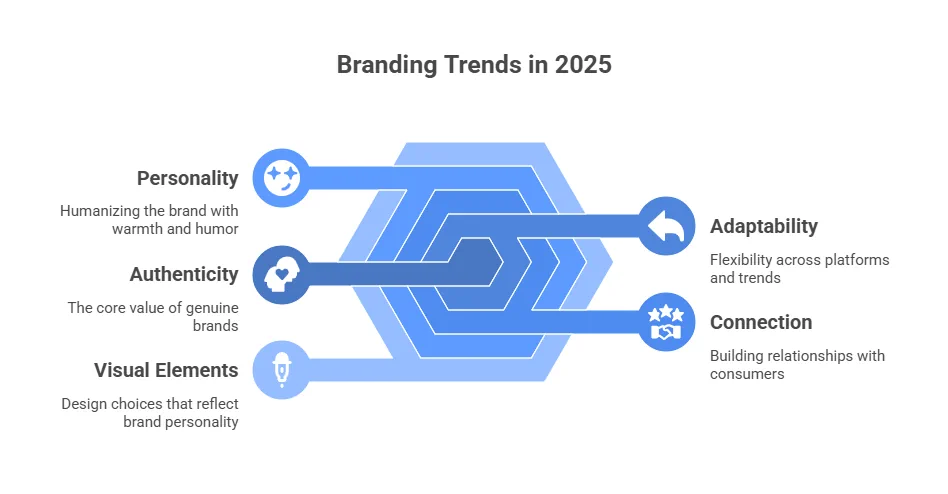
Brand Identity in 2025 is all about connection, adaptability, and authenticity. UK consumers are drawn to brands that look good and feel genuine — ones that tell real stories, celebrate diversity, and adapt smoothly across platforms. Here are the key trends shaping the way UK small businesses will define their brand identity this year.
1. Embracing Personality and Humanity
Gone are the days of stiff, faceless brands. In 2025, the UK market is embracing personality — warmth, humour, and authenticity are taking centre stage.
Brands like Monzo and Black Sheep Coffee are great examples. Their tone of voice feels like chatting with a friend, not reading a corporate brochure. This conversational, down-to-earth approach helps customers trust the brand and feel part of a community.
Visually, this shift means less generic stock imagery and more human touches:
- Hand-drawn illustrations
- Quirky, characterful typefaces
- Imperfect but meaningful logo designs
These design details tell your audience: “There are real people behind this brand.” For small businesses, it’s a golden opportunity to showcase individuality — especially when competing with large, impersonal corporations.
2. Fluid and Adaptive Branding
Branding today must live everywhere — on a smartphone screen, on packaging, in digital ads, even on TikTok videos. That’s why fluid branding is one of the strongest trends for 2025.
A fluid brand identity is one that’s consistent but flexible. Your logo, for example, may have a primary version for your website, a simplified mark for mobile, and an animated version for social posts. Instead of one rigid design, you have a family of visual elements that work harmoniously across platforms.
Brands like BBC and Monzo lead the way here, with dynamic logos that can shrink, stretch, or move depending on where they appear. The key is adaptability — your identity should look as natural on a mobile screen as it does on a shopfront sign.
For small businesses, this doesn’t require expensive design systems. It can be as simple as:
- Creating multiple logo variations (full, icon-only, animated)
- Using a consistent colour palette that adapts across digital and print
- Testing designs for readability on different screen sizes
The goal is to keep your brand recognisable — wherever your customers find you.
3. Bold Yet Minimalist Visuals
2025 brings a confident new balance between boldness and simplicity. UK audiences are drawn to designs that are clean, yet striking.
Expect to see:
- Vibrant colour pairings that stand out on social feeds
- Geometric layouts that guide the eye
- Strong typography that communicates confidence
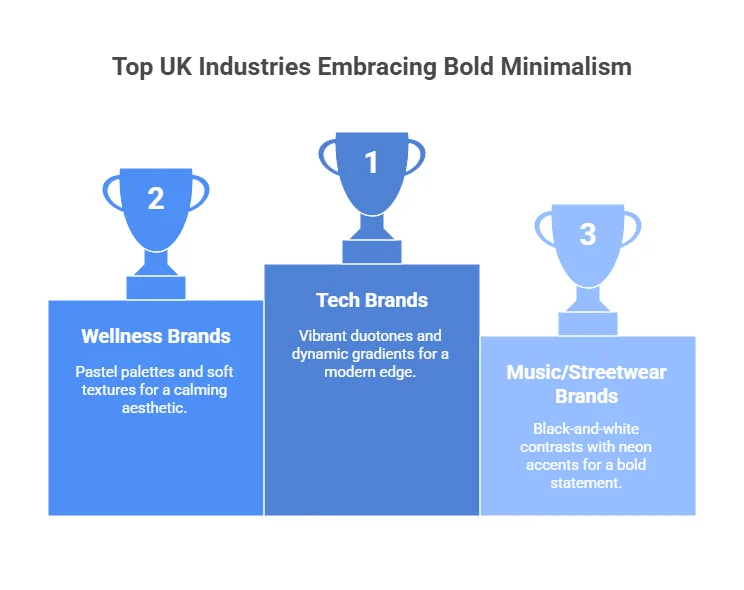
Different industries are taking their own spin on this trend:
- Tech brands: bright duotones and dynamic gradients
- Wellness brands: pastel palettes and soft textures
- Music or streetwear brands: black-and-white contrasts with neon accents
For small businesses, this approach is a gift — bold minimalism is cost-effective, easy to reproduce, and highly memorable. It gives your brand a modern edge without clutter or confusion.
4. Inclusive and Localised Aesthetic
In 2025, inclusivity isn’t a buzzword — it’s a baseline expectation. UK consumers want brands that see them, represent them, and speak their language.
Modern brand identities are integrating diverse imagery, gender-neutral design, and accessibility-first layouts. But they’re also celebrating local culture — from using British heritage fonts to referencing regional dialects or landmarks.
This approach gives brands a unique voice rooted in community and authenticity. A small business in Manchester, for instance, could use visual cues from local architecture, while one in Cardiff might weave Welsh-language phrases into their storytelling.
The more local and inclusive your brand feels, the more genuine your connection with your audience becomes.
5. Technology and AI Integration
Artificial intelligence is rapidly reshaping branding — and small businesses are benefiting the most. AI tools can now:
- Generate logo ideas based on your values
- Suggest colour palettes tied to emotional triggers
- Test which designs perform best with target audiences
But AI is a tool, not a replacement for creativity. The most successful brands will use AI for efficiency, while keeping their storytelling human. That combination — smart automation with personal authenticity — is what will define the best branding outcomes in 2025.
6. Omnichannel Consistency
Finally, consistency across all channels remains the backbone of strong branding. Whether someone sees your business card, Instagram ad, or product packaging, the look and message should feel instantly familiar.
Small businesses can achieve this by creating clear brand guidelines that outline:
- Colour codes and logo usage
- Font hierarchy and spacing rules
- Tone of voice for emails, posts, and ads
Consistency builds recognition — and recognition builds trust. When customers know what to expect from your brand, they’re far more likely to remember and recommend it.
How UK Small Businesses Can Stand Out in 2025
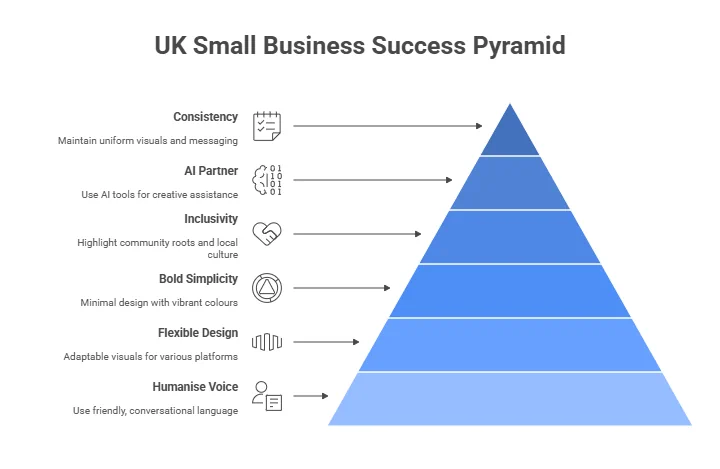
Now that you know the trends, the next step is applying them effectively. Here’s how you can make your brand shine in 2025 — no huge budget required.
1. Humanise Your Brand Voice
Speak the way your customers do. Use plain, friendly language and don’t be afraid to show personality. A conversational tone creates a stronger connection than corporate jargon ever will.
2. Adopt Flexible Design Systems
Design your logo, colours, and typography with adaptability in mind. Create simplified variations for mobile, and ensure your visuals work in both dark and light themes.
3. Balance Boldness with Simplicity
Use minimal design to make your message pop. Choose one or two vibrant brand colours and a clean font family that works well across print and screen.
4. Champion Inclusivity and Local Culture
Highlight your community roots. Showcase real customers, collaborate with local creators, and use regionally relevant language that feels familiar to your audience.
5. Use AI as a Creative Partner
Experiment with AI tools for concept creation, layout testing, or colour matching — but always refine results through your own creative lens to keep things authentic.
6. Prioritise Consistency
Create a shared style guide for your team — even if it’s just a simple Canva folder or Google Doc. Consistent visuals and messaging will make your brand instantly recognisable.
Common Branding Mistakes to Avoid
Even with the best intentions, small businesses often fall into branding traps that can dilute their identity or confuse customers. Here are the most common mistakes to watch out for in 2025:
- Inconsistency Across Channels
Using different logos, fonts, or colours on your website, social media, and print materials can confuse your audience. Consistency is key — it builds instant recognition and trust. - Copying Competitors
It’s tempting to mimic successful brands, but copying others erodes originality. Your brand should highlight what makes your business unique, not blend in with the crowd. - Ignoring Your Target Audience
Not tailoring visuals, tone, or messaging to your audience can make your brand feel irrelevant. Research your customers, understand their preferences, and speak directly to their needs. - Neglecting UK Cultural Nuances
The UK is diverse and regional. Using designs, phrases, or imagery that don’t resonate locally can alienate potential customers. Incorporate local references, inclusivity, and accessibility to make your brand relatable. - Over-Reliance on AI
AI is a fantastic tool, but it cannot replace the human touch. Relying solely on automated design can lead to generic or impersonal branding. Always add creativity and storytelling to keep your identity authentic.
By avoiding these mistakes, your small business can maintain a strong, memorable, and trustworthy brand presence that connects with UK customers.
Conclusion
In 2025, building a standout brand in the UK is about more than just a pretty logo — it’s about creating a cohesive, authentic, and flexible identity that resonates with your audience. By embracing trends like human-centric branding, fluid design systems, bold yet minimal visuals, inclusivity, AI-assisted creativity, and omnichannel consistency, small businesses can craft memorable brands that inspire trust and loyalty.
Strong branding not only makes your business recognisable but also reduces marketing headaches, strengthens customer relationships, and allows you to compete confidently in a crowded marketplace.
If you’re ready to take your brand to the next level, consider exploring DataXpie’s Brand Identity Services. Whether it’s developing a style guide, refining your visual identity, or crafting a compelling brand story, a structured approach can help your UK small business shine in 2025 and beyond.