
The public is more familiar with bad design than good design. It is, in effect, conditioned to prefer bad design, because that is what it lives with. The new becomes threatening, the old reassuring.
Introduction
For many UK small business owners, creating a website or app can feel overwhelming. You know you need a professional online presence — but hiring a full-time developer isn’t always realistic. That’s where freelance web developers come in.
Table Of Content
- Introduction
- Why Hire a Developer for Your UK Business?
- Key Benefits for UK Small Businesses
- Types of Developers
- 1. Full-Time Developers
- 2. Freelance Developers
- 3. Web Development Agencies
- Understanding Freelance Developer Rates in the UK (2025 Update)
- Typical Freelance Rates in 2025
- What Affects the Cost?
- Finding a UK Developer
- Platforms & Agencies
- Evaluating Skills and Fit
- Defining the Project Scope
- How to Write a Strong Project Brief
- Budgeting & Contracts
- Choosing the Right Pricing Model
- Contracts and Legal Essentials
- Collaboration & Project Management Tips
- Stay in Touch Regularly
- Encourage Open Dialogue
- Align on Working Hours and Time Zones
- Set Milestones and Celebrate Progress
- Managing Costs Effectively
- Understand Your Cost Options
- Tips to Stay Within Budget
- Think Long-Term Value, Not Just Price
- Conclusion: Hire Smart, Build Better
In 2025, more businesses across the UK are turning to freelance talent for their web projects. It’s not just about saving money — it’s about flexibility, speed, and access to specialised skills that can make your business stand out online. Whether you’re upgrading your e-commerce store or building a new booking platform, hiring the right freelance developer can transform your digital growth.
Why Hire a Developer for Your UK Business?
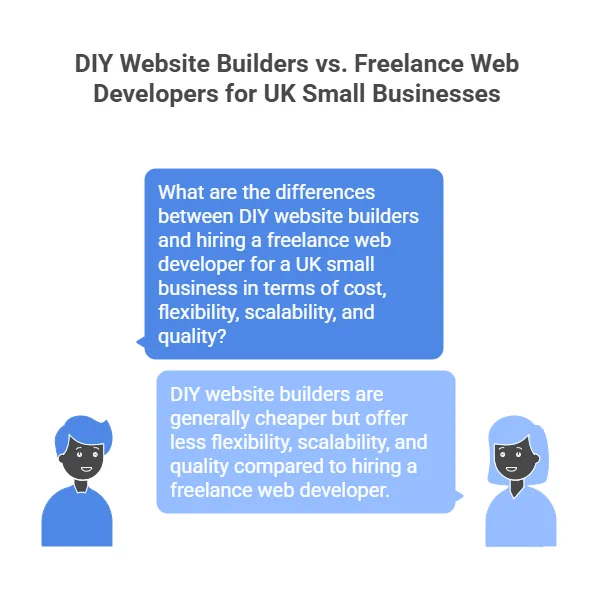
DIY website builders like Wix or Squarespace can help you get started, but they often hit limits when your business grows. If you need custom features, better performance, or seamless integrations (like payment gateways or booking systems), a professional web developer can take your site to the next level.
Key Benefits for UK Small Businesses
- Faster results: Skilled developers can deliver high-quality websites in weeks, not months, helping you launch faster.
- Specialised expertise: You gain access to professionals experienced in platforms like WordPress, Shopify, or React — without hiring in-house.
- Scalability: Freelancers can be brought in for specific projects or ongoing support as your business expands.
- Budget control: Pay only for the work you need, with transparent pricing and flexible contracts.
By hiring a developer, you’re investing in a long-term digital asset rather than just a quick online page. It’s the difference between renting a stall and owning a shopfront on the high street — one gives you visibility, the other builds your brand.
Types of Developers
Not every business needs a full-time developer — and that’s good news for smaller teams. There are three main types of development options to consider, each with pros and cons.
1. Full-Time Developers
Hiring a full-time employee is ideal if you have constant, ongoing technical needs (for example, managing a SaaS platform or maintaining complex databases). However, this approach involves salary, benefits, and long-term commitments — often too much for small businesses.
2. Freelance Developers
Freelancers offer on-demand flexibility. You can hire them per project, per hour, or per milestone. They’re perfect for building websites, fixing bugs, or creating features like online payment systems or customer dashboards. The key advantage is agility — you get professional help without long-term costs.
3. Web Development Agencies
Agencies provide a team of experts (designers, developers, testers) who handle everything from design to deployment. They’re great for large-scale projects but often charge higher rates. For smaller businesses, combining agency-style expertise with a freelance budget — through a vetted network — is often the sweet spot.
If you’re just starting or working with limited funds, a freelance developer or pay-as-you-go agency gives you professional quality without the overheads.
Understanding Freelance Developer Rates in the UK (2025 Update)
Hiring a freelance web developer in the UK gives small businesses access to skilled talent without the high costs of a full-time hire. But to make smart budgeting decisions, it’s important to understand current market rates and what influences them.
Typical Freelance Rates in 2025
Rates vary based on experience, project complexity, and skill set — but here’s a clear overview of what you can expect:
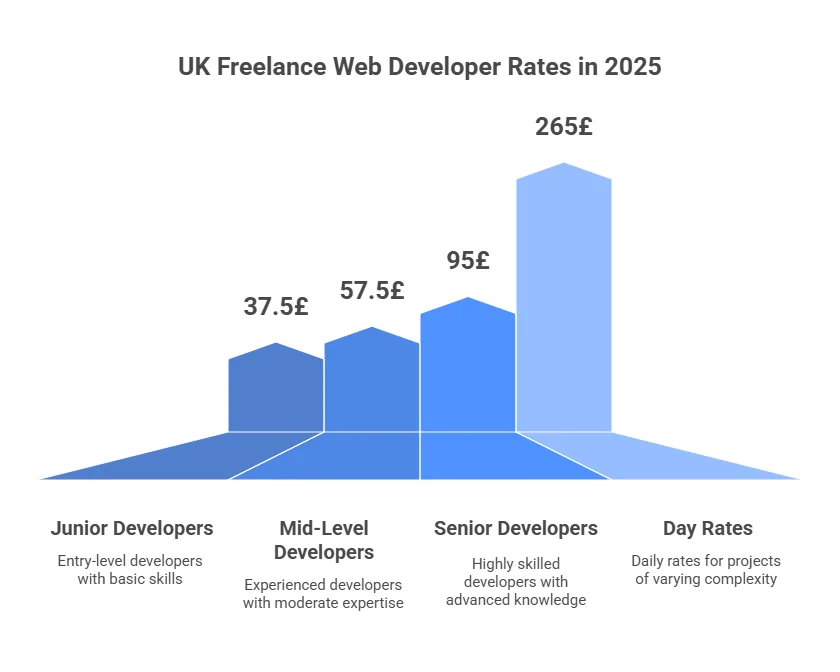
- Junior Developers (Entry-Level): £30–£45 per hour
- Mid-Level Developers: £45–£70 per hour
- Senior or Specialised Developers: £70–£120+ per hour
- Day Rates: £180–£550 per day (depending on complexity and expertise)
These numbers can fluctuate based on demand and region. For instance, developers in London and Manchester may charge slightly higher than those in smaller cities or remote areas.
What Affects the Cost?
Several factors influence a developer’s rate:
- Technology stack: Developers skilled in newer or in-demand frameworks (like React, Node.js, or Laravel) often charge higher rates than those working in standard CMS platforms like WordPress.
- Project size: Building a simple brochure website costs less than creating a full e-commerce or booking system.
- Experience level: Developers with proven track records, certifications, or agency experience typically command premium rates.
- Ongoing support needs: Projects that require maintenance, security updates, or long-term collaboration may involve retainer fees.
For most small businesses, it’s wise to compare quotes from multiple freelancers — and look beyond the hourly rate. The cheapest option isn’t always the best; consider the value and reliability a developer brings to your project.
Finding a UK Developer
Once you understand the cost landscape, the next step is finding the right talent. The good news is that the UK has a vibrant freelance ecosystem — whether you’re after a WordPress expert, Shopify developer, or full-stack coder.
Platforms & Agencies
Here are some of the most effective ways to find and hire skilled developers:
- Upwork and Freelancer: Global platforms with filters for UK-based professionals. You can view ratings, portfolios, and client feedback before hiring.
- PeoplePerHour: A UK-focused platform that specialises in local freelancers — ideal for small business projects.
- LinkedIn: A great place to search for independent developers or small digital agencies. Use the “Open to Work” tag to identify available talent.
- DataXpie’s Developer Network: Offers vetted UK-based developers who understand local business requirements, compliance, and payment systems.
When hiring, always check that the freelancer is familiar with UK business standards, including GDPR data protection, UK hosting environments, and payment gateways such as BACS or Stripe UK.
Evaluating Skills and Fit
Finding a technically capable developer is only half the battle — you also need someone who communicates well and understands your goals. Here’s what to look for:
- Portfolio and Case Studies: Review examples similar to your industry or project type.
- Client Reviews and Testimonials: Look for consistency in quality and professionalism.
- Technical Competence: Ask about their experience with CMS tools (WordPress, Shopify) or frameworks (React, Vue, Laravel).
- Trial Tasks or Interviews: A short paid test project can reveal real skill and work ethic.
- Cultural Fit: Communication style and responsiveness matter, especially for ongoing work.
Taking a bit of time to vet candidates upfront saves countless hours later. The goal isn’t just to hire a coder — it’s to find a collaborative partner who can bring your vision to life.
Defining the Project Scope
Before hiring a freelance developer, it’s essential to define exactly what you need. A clear project scope prevents misunderstandings, keeps costs predictable, and ensures the end result matches your expectations. Think of it as a roadmap — it tells your developer where to start, what to build, and when to finish.
How to Write a Strong Project Brief
A well-defined project brief should answer these key questions:
- What is the goal?
- Are you creating a new website, upgrading an existing one, or developing a web app?
- Outline what success looks like (e.g., faster site, better conversions, or new online features).
- What features do you need?
- List core functionalities like contact forms, online payments, booking systems, or e-commerce carts.
- Mention any integrations you’ll need — such as CRM tools, newsletter platforms, or analytics systems.
- What platform or technology do you prefer?
- WordPress or Shopify for small business sites.
- Custom development using React, Node.js, or Laravel for complex web apps.
- What design direction should the developer follow?
- Provide your logo, colour palette, and examples of websites you like.
- If you have brand guidelines, share them upfront.
- Are there UK-specific requirements?
- Payment options like BACS, Stripe, or PayPal UK.
- VAT-compliant invoices, GDPR compliance, and mobile accessibility standards.
A clear scope allows developers to provide accurate quotes and timelines. It also helps you avoid “scope creep” — where small additions pile up and stretch both the budget and delivery schedule.
Budgeting & Contracts
Budgeting wisely ensures you get the best value without compromising quality. In the UK freelance market, transparency and written agreements are key to smooth, stress-free collaborations.
Choosing the Right Pricing Model
There’s no one-size-fits-all approach — the right model depends on your project’s clarity and flexibility needs:
- Hourly Rates:
Best for ongoing work or evolving projects. You pay only for the time used, but costs can rise if tasks expand. - Fixed-Price Projects:
Ideal when your project scope is clearly defined. You agree on total cost upfront, with milestone-based payments. - Retainer Agreements:
Perfect for businesses needing continuous website updates, maintenance, or support. Predictable monthly payments make budgeting easier. - Value-Based Pricing:
Useful for high-impact projects (like redesigns that improve sales). You pay based on the outcome or value generated, not just hours worked.
Contracts and Legal Essentials
Even small projects benefit from a formal agreement. A simple contract protects both you and the developer by setting clear expectations. Include the following:
- Project Scope and Deliverables: Define exactly what’s being delivered.
- Payment Schedule: Link payments to milestones or completed stages.
- Intellectual Property (IP) Rights: Ensure you own the code and content once paid for.
- GDPR and Data Protection: Crucial for UK businesses handling customer data.
- Confidentiality Clauses: Protect business-sensitive information.
- Termination Terms: Outline what happens if either party ends the contract early.
Most freelancers are used to working with contracts — it’s a sign of professionalism, not distrust. Always confirm deliverables and IP transfer in writing before making final payments.
Collaboration & Project Management Tips
Once you’ve hired a developer, good collaboration is what keeps your project on track. Even the best freelancers need clear communication, structure, and regular feedback to deliver quality results. The goal is to create a partnership where both sides understand what’s expected — and work smoothly toward shared goals.
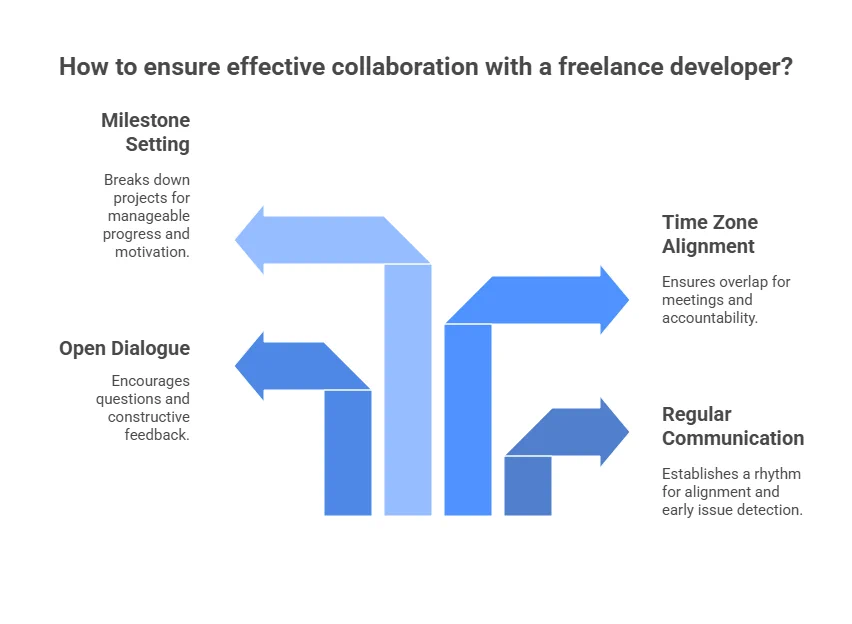
Stay in Touch Regularly
Set up a simple communication rhythm. Weekly check-ins or progress calls keep everyone aligned and help spot potential issues early. Use tools like Slack or Microsoft Teams for chat, and Zoom for quick video catch-ups.
For project tracking, Trello, Asana, or ClickUp work brilliantly — they allow you to assign tasks, set deadlines, and view progress in real time. If your developer uses GitHub or GitLab, ask them to walk you through the version control setup so you can track updates as the project evolves.
Encourage Open Dialogue
A good developer won’t just code — they’ll ask smart questions. Encourage this. If something’s unclear, it’s better they check first rather than assume. Likewise, share feedback constructively and focus on outcomes (“I’d like this button to stand out more”) instead of personal preferences (“I don’t like blue”).
Align on Working Hours and Time Zones
If your freelancer is based in the UK, collaboration will naturally align with your schedule. However, if they’re remote or international, discuss working hours early on. Try to find overlap during UK business hours for meetings and reviews — it helps maintain flow and accountability.
Set Milestones and Celebrate Progress
Breaking big projects into smaller milestones helps both parties manage progress and expectations. Celebrate completed milestones — it keeps motivation high and builds a sense of teamwork.
Managing Costs Effectively
Every small business wants to save money without sacrificing quality. With freelance web development, smart cost management is all about balancing flexibility and clarity.
Understand Your Cost Options
You’ll usually encounter three main pricing setups:
- Hourly Billing:
Great for evolving projects or maintenance tasks. Be sure to use time-tracking tools (like Toggl or Harvest) for transparency. - Fixed-Price Contracts:
Best for defined deliverables. Once the scope is set, agree on milestone payments to ensure fair progress tracking. - Monthly Retainers:
Ideal for ongoing updates or tech support. You pay a set fee each month for a guaranteed number of hours. - Value-Based Pricing:
Some developers prefer pricing based on results — for instance, if they improve your website’s conversion rate or speed. It’s less common but can work well for performance-driven goals.
Tips to Stay Within Budget
- Be Specific Early: A well-written project brief prevents misunderstandings and revisions.
- Avoid Scope Creep: Resist adding new features mid-project unless you’re ready to adjust the budget.
- Use Milestone Payments: Pay after each stage is complete and approved.
- Get Multiple Quotes: Comparing at least three offers helps you gauge market value.
- Factor in Maintenance: Budget for ongoing support — security updates, hosting, and small tweaks after launch.
Think Long-Term Value, Not Just Price
Cheap developers might save money short term, but fixing poor code later can cost double. Look for developers who combine fair pricing with proven reliability. The right freelancer isn’t just an expense — they’re an investment in your brand’s growth and digital presence.
Conclusion: Hire Smart, Build Better
Hiring a freelance web developer in the UK is one of the smartest investments a small business can make in 2025. You get flexibility, access to specialised skills, and control over costs — without the commitment of a full-time hire.
By understanding current market rates, writing a clear project brief, and using milestone-based contracts, you can manage development projects confidently. Combine that with good communication and modern project management tools, and you’ll enjoy professional-quality results that truly reflect your brand.
Whether you’re building your first website, improving your online shop, or developing a custom web app, the right freelance developer can bring your vision to life — efficiently and affordably.
If you’d rather skip the guesswork, DataXpie’s vetted UK developer team is ready to help. We connect small businesses with experienced web developers who understand UK standards, GDPR compliance, and modern technologies — all on flexible, pay-as-you-go plans.
👉 Ready to find your ideal freelance developer?
Visit DataXpie to explore how our expert team can help your business grow online with confidence.