Launching a startup in the UK is exciting—but also demanding. From building your brand identity to crafting marketing materials, visuals play a huge role in how potential customers perceive your business. Yet for many startups, hiring a full-time designer simply isn’t realistic. That’s where on-demand design services come in: giving you professional design expertise exactly when you need it, without the long-term cost or commitment.
Table Of Content
- Why Outsource Design as a UK Startup?
- Where to Find On-Demand Designers in the UK
- Skills to Look for in a Designer
- Rates and Pricing Models in 2025
- How to Work Effectively with On-Demand Designers
- Benefits for UK Startups
- How to Choose Between Freelancers and Agencies
- Conclusion: Design That Scales with Your Startup
Whether you’re rebranding, building your first website, or creating digital ads, on-demand design offers flexibility, speed, and access to top-tier creative talent—tailored to a startup’s budget and pace.
Why Outsource Design as a UK Startup?
In today’s crowded market, strong visual branding isn’t a luxury—it’s a business essential. Great design makes your startup look trustworthy, memorable, and ready to compete. Unfortunately, many small teams lack in-house design skills or the funds to hire a full-time creative. Outsourcing helps bridge that gap.
Here’s why UK startups increasingly turn to outsourced or on-demand design services:
1. Cost Efficiency
Instead of paying a monthly salary, software subscriptions, and training expenses, you only pay for what you need. Freelance and on-demand designers often work per project or per hour, saving thousands in fixed costs.
2. Access to Expertise
A professional designer brings experience across platforms and industries—whether that’s designing pitch decks, eCommerce branding, or app interfaces. For startups, this means agency-level quality at a fraction of the price.
3. Scalability
As your business grows, so do your creative needs. On-demand design lets you scale up for campaigns or scale down during quieter periods—no HR hassle, no overhead.
4. Faster Turnaround
Freelancers and design agencies often deliver projects quickly because they’re built for flexibility. When you’re moving fast in the startup world, this responsiveness is invaluable.
5. Competitive Advantage
According to the UK Design Council, businesses that invest in design outperform those that don’t by over 70% in revenue growth. Consistent, high-quality design strengthens credibility and customer trust—both crucial for early-stage ventures.
Where to Find On-Demand Designers in the UK
Finding the right designer is often the hardest step—but it’s also where UK startups have an advantage. There’s a wide pool of local and global talent available online, and many professionals now specialise in flexible, startup-friendly models.
Here’s where you can start your search:
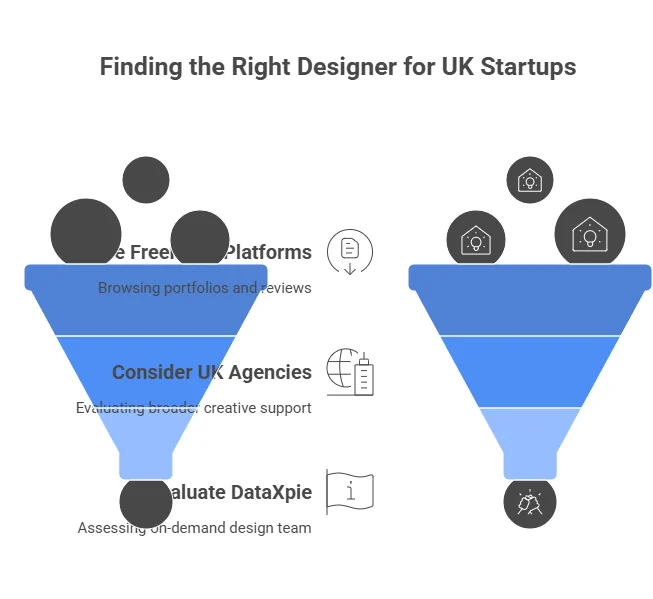
Freelance Platforms
Websites like Upwork, Fiverr, and PeoplePerHour make it easy to browse portfolios, compare rates, and read reviews. Look for designers who are either UK-based or have experience working with UK clients (for smoother communication and timezone alignment).
- Use filters like “UK English”, “Brand Design”, or “Startup Experience” to refine your search.
- Check for verified profiles and portfolios showcasing logo, web, and social media work.
UK-Based Design Agencies
If you need broader creative support—like full brand development, website UI, or ongoing campaign design—partnering with a UK design agency can be worthwhile. Agencies often provide:
- Brand strategy consultations
- Multi-format asset creation (print, web, digital)
- Dedicated project managers
Though more expensive than freelancers, agencies deliver structure and reliability—ideal for scaling startups.
DataXpie’s Design Team
For a balance of quality, flexibility, and affordability, consider DataXpie’s on-demand design team. It’s a pay-as-you-go service tailored for UK startups needing quick access to skilled designers. Whether it’s rebranding, app UI, or social graphics, you can tap into a vetted team without hiring full-time staff.
Skills to Look for in a Designer
Once you’ve found potential designers, the next step is understanding what to look for. A talented designer can do more than make things look good — they help communicate your brand’s story and values effectively.
Here’s how to evaluate whether a designer is right for your UK startup:
1. Core Creative Skills
A great designer should demonstrate strength in:
- Logo and brand identity design – creating a visual system that represents your startup’s personality.
- Marketing assets – such as social media visuals, flyers, and email banners that drive engagement.
- UI/UX design – crafting user-friendly website and app interfaces.
- Print and packaging design – particularly if you sell physical products.
Review their portfolio carefully. Look for consistency, attention to detail, and whether their work fits the kind of look you want for your brand.
2. Technical Skills and Tools
The best designers are fluent in leading design platforms:
- Adobe Creative Suite (Photoshop, Illustrator, InDesign) for traditional and print design.
- Figma and Sketch for UI/UX and prototyping.
- Canva Pro for quick social media creatives.
- Familiarity with AI-powered tools like Adobe Firefly or Midjourney can also help generate fresh concepts faster.
3. Understanding of Branding and Marketing
Design isn’t just about visuals — it’s about impact. A good designer should:
- Understand your target audience and tailor designs accordingly.
- Know how to create assets optimised for platforms like Facebook, Instagram, and LinkedIn.
- Align visuals with your overall brand messaging and tone.
4. UK Market Experience
For UK startups, hiring designers familiar with the local market is a bonus. They’ll understand regional design preferences, accessibility standards, and even local payment or compliance nuances if they’re working on website design.
For example, UK brands often favour clean, minimalist aesthetics with strong typography and relatable imagery — styles that signal professionalism and trust.
Rates and Pricing Models in 2025
Budget is always top of mind for startups — and the UK On-Demand Design market offers flexible pricing models that fit various needs. Whether you’re hiring freelance designers, agencies, or on-demand services, knowing what to expect helps you plan effectively.
Typical Hourly Rates (2025 Estimates)
Freelance graphic designers in the UK typically charge:
- £15 – £30/hour for entry-level designers (junior or less experienced).
- £30 – £60/hour for mid-level designers with a few years of experience and a solid portfolio.
- £60 – £90+/hour for senior or specialised designers (brand experts, UI/UX specialists, or motion graphic artists).
💬 Tip: In major UK cities like London or Manchester, rates can be 15–25% higher due to demand and cost of living.
Common Project-Based Pricing
If you prefer fixed costs, many designers offer project-based packages:
- Logo design: £250 – £2,000
- Complete brand identity: £800 – £5,000+
- Website UI design: £1,500 – £6,000
- Social media creative packs: £150 – £1,200
These figures vary based on complexity, On-Demand Designer experience, and deliverable count. Always ask for a breakdown of inclusions — such as number of revisions, file formats, and brand guideline documents.
Different Pricing Models
Startups typically work within one of these pricing setups:
- Hourly Rate – Best for flexible, ongoing small tasks or uncertain scope.
- Fixed Project Fee – Ideal for defined deliverables like rebranding or website redesigns.
- Subscription or Pay-as-You-Go Model – Perfect for startups needing regular design output without long-term contracts.
The subscription or pay-as-you-go option has become increasingly popular in the UK — it offers predictable monthly costs while keeping design work agile.
How to Work Effectively with On-Demand Designers
Hiring a great designer is only half the job — the other half is collaboration. Clear communication, defined goals, and smart project management can make all the difference between a smooth process and an expensive headache.
Here’s how UK startups can get the most out of working with on-demand or freelance designers:
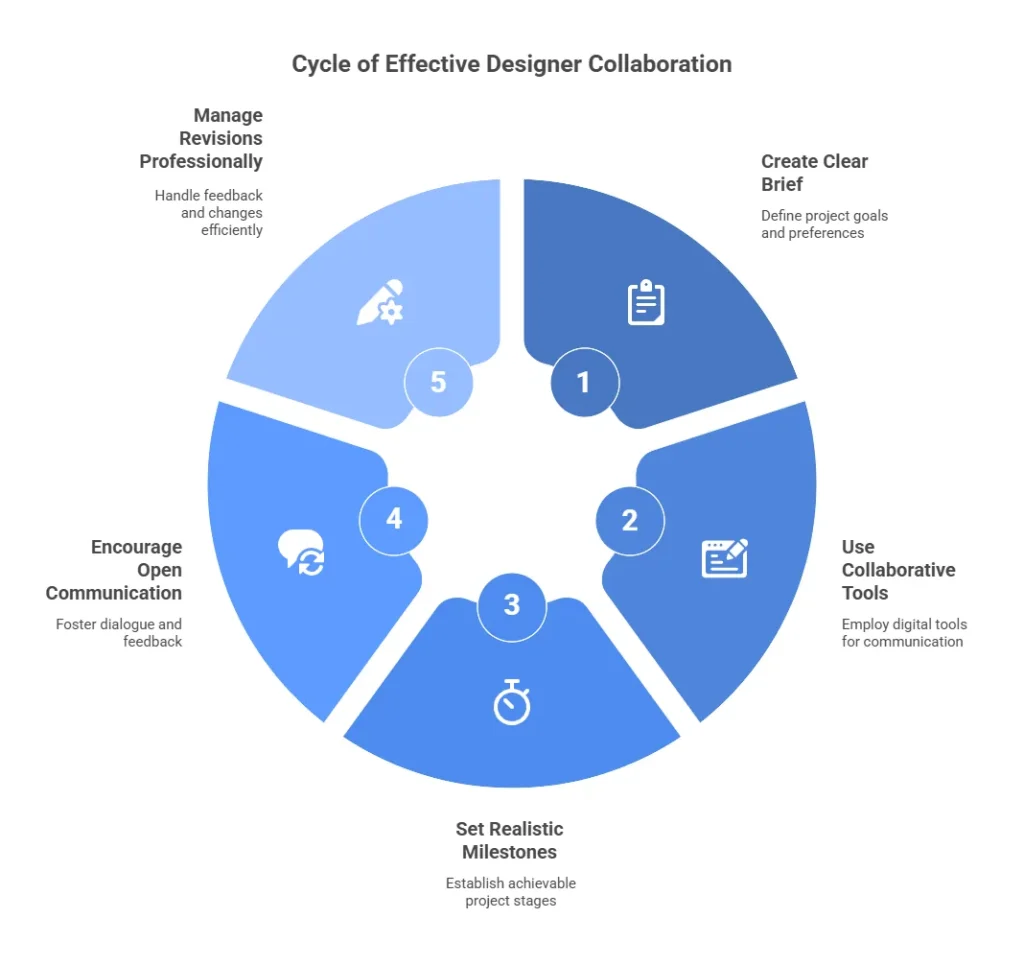
1. Create a Clear Design Brief
Start with a detailed brief that covers your business goals, target audience, tone, and design preferences. Include examples of brands or visuals you like — this helps your designer understand your aesthetic direction quickly.
A strong brief should outline:
- Project objectives (e.g., launch campaign, website redesign)
- Deliverables (logos, web banners, packaging, etc.)
- Brand guidelines (colours, fonts, tone)
- Deadlines and budget
The clearer your brief, the fewer revisions you’ll need later — saving both time and cost.
2. Use Collaborative Tools
Digital collaboration is now effortless thanks to project management tools like Trello, Asana, and Slack. Use them to:
- Track milestones and tasks
- Share feedback in one place
- Keep both sides accountable for deadlines
Design files can also be shared via Google Drive, Figma, or Dropbox, making revisions smoother and more transparent.
3. Set Realistic Milestones and Deadlines
Break projects into stages (e.g., concept, draft, review, final delivery). This allows you to check progress regularly without micromanaging. Milestones also make it easier to release payments fairly — a common approach for freelance agreements.
4. Encourage Open Communication
A healthy designer-client relationship is built on trust and dialogue. Encourage your designer to ask questions and suggest improvements — after all, they’re the creative expert.
5. Manage Revisions Professionally
On-Demand Design is an iterative process. Give constructive feedback and avoid last-minute changes that fall outside the agreed scope. If you anticipate needing multiple versions, discuss this upfront in your contract.
💬 Pro Tip: Always ensure your contract includes intellectual property transfer and GDPR compliance clauses, especially if your designs include customer data or sensitive brand assets.
Benefits for UK Startups
For many startups, design can feel like an optional extra — but the truth is, great design drives growth. Outsourcing design to professionals not only elevates your brand but also frees your internal team to focus on strategy, sales, and product development.
Here are the key advantages for UK startups using on-demand design services:
1. Affordable Access to Talent
Hiring full-time creative staff is expensive. On-demand design lets you access expert designers without paying ongoing salaries, benefits, or equipment costs. You only pay for what you need — whether it’s a one-off logo or an entire brand refresh.
2. Scalability as You Grow
Startups evolve quickly. One month you may need a full website redesign; the next, just a few social media graphics. On-demand services adapt easily to your changing needs, helping you scale your design resources up or down effortlessly.
3. Speed and Agility
Freelancers and design teams are used to working with fast-moving businesses. They can deliver high-quality assets on short notice — perfect for product launches, investor pitches, or last-minute campaigns.
4. Diverse Skillsets
By outsourcing, you gain access to designers with different specialisations — from brand identity to UI/UX or animation. This diversity ensures your visuals are consistent and high-quality across all channels.
5. Stronger Brand Presence
Consistent design across every platform — your website, social media, packaging, and ads — builds trust and recognition. In a competitive UK market, a strong brand presence can make the difference between blending in and standing out.
🎯 According to the UK Design Council, companies investing in design see up to a 200% return on investment through increased sales, loyalty, and visibility.
How to Choose Between Freelancers and Agencies
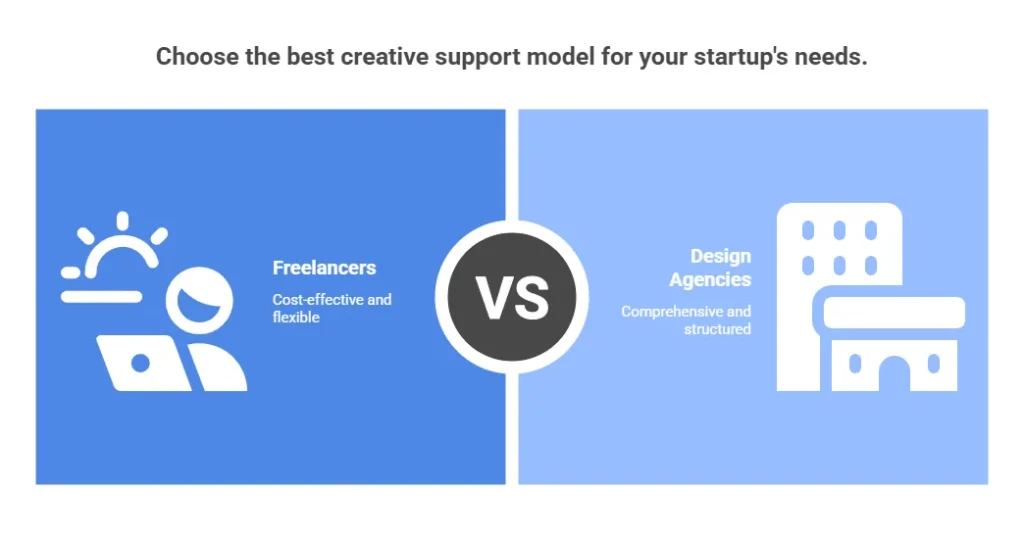
When deciding how to outsource your design work, you’ll often face one big question: should you hire a freelancer or work with a design agency? Both options have unique advantages depending on your startup’s goals, budget, and timeline.
Here’s a simple breakdown to help you choose what fits best:
Freelance Designers
Best for: Small projects, startups on tight budgets, or quick design tasks.
Pros:
- Flexible pay-as-you-go structure
- Direct communication with the designer
- Usually more affordable than agencies
- Ideal for fast turnarounds or short-term projects
Cons:
- Limited capacity — one person can only handle so much
- Quality and reliability vary
- You may need to manage multiple freelancers for different design needs (branding, web, social media)
Freelancers work brilliantly when you already have a clear brief and just need someone to execute creative ideas quickly and efficiently.
Design Agencies
Best for: Startups seeking ongoing creative support or complete brand transformation.
Pros:
- Teams with diverse expertise — from strategists to designers and copywriters
- Structured processes and dedicated project management
- Consistent brand output across all materials
- Reliable delivery schedules and scalable support
Cons:
- Higher cost due to overheads
- Less flexibility for very small or one-off tasks
Agencies are ideal once your startup begins to scale, or if you need an entire visual identity refresh that aligns with marketing strategy and digital channels.
The Hybrid Option: On-Demand Teams
For many UK startups, a hybrid model like DataXpie’s on-demand design service offers the best of both worlds. You get access to multiple professional designers without the high agency costs — all under a pay-as-you-go or subscription system. This approach gives you agency-quality output with freelancer-level flexibility, perfectly suited to startups in growth mode.
Conclusion: Design That Scales with Your Startup
In a fast-paced startup environment, on-demand design services give UK entrepreneurs the freedom to build strong, professional branding without the long-term expense of hiring full-time staff. They offer flexibility, speed, and access to world-class design talent — helping your startup look polished and credible from day one.
By outsourcing creatively, you can:
- Focus on growth while professionals handle your visuals.
- Scale your design needs as your business evolves.
- Maintain a consistent brand across every digital touchpoint.
Whether you choose a freelancer, an agency, or a flexible on-demand model, the key is to find designers who understand your brand’s vision and the UK market.
✨ At DataXpie, our on-demand design team helps UK startups and small businesses create professional, affordable designs — from logos to websites to marketing assets — all without long-term contracts. If you’re ready to elevate your brand with scalable creative support, DataXpie is here to help you look as good as you grow.