

SEO Trends In 2025, the digital landscape for small businesses in the UK is more competitive than ever. Customers are searching smarter, using voice commands and AI tools to find local products or services faster. For small business owners, staying visible online now depends on understanding how SEO is evolving — and adapting before competitors do.
Table Of Content
- Why SEO Still Matters for UK Small Businesses in 2025
- The Power of Organic Search
- SEO as a Cost-Effective Growth Strategy
- Voice Search Revolution – Optimising for Conversational Queries
- Optimise for Natural Language and Long-Tail Keywords
- Featured Snippets and Voice Answers
- Local Impact of Voice Search
- Local SEO Is More Important Than Ever
- Google Business Profile Optimisation
- NAP Consistency and Local Landing Pages
- Local Citations and Community Engagement
- Rise of AI-Driven SEO Tools and Automation
- Smart Keyword Research and Content Suggestions
- AI Tools for Reputation and Listings Management
- Automating Repetitive SEO Tasks
- Long-Tail Keywords and Content Strategy in 2025
- Why Long-Tail Keywords Dominate
- Creating Problem-Solving Content
- Building FAQ and How-To Sections
- Video SEO on YouTube
- Technical SEO – Foundation for Every Trend
- Mobile-First Design Is Non-Negotiable
- Page Speed and User Experience
- HTTPS and Security
- Sitemaps, Robots.txt, and Crawling
- Practical SEO Trends Tips from UK Small Business Communities
- 1. Focus on Google Business Profile (GBP)
- 2. Leverage Local Backlinks
- 3. Encourage Reviews and User-Generated Content
- 4. Combine Paid Ads with SEO Trends
- Measuring and Iterating Your SEO Efforts
- 1. Set Clear SEO Trends Goals
- 2. Use Analytics and Search Console
- 3. Track Engagement Metrics
- 4. Review, Refine, Repeat
- The Future of SEO: AI and User Intent
- 1. AI-Powered Tools for Smarter SEO
- 2. Understanding User Intent Is Key
- 3. Personalisation and Predictive Search
- Conclusion: Future-Proofing Your SEO Trends in 2025
- Call-to-Action
In this guide, we’ll explore the latest SEO Trends shaping the UK market in 2025, from the rise of voice search to AI-powered optimisation tools, and share practical steps small businesses can take to stay ahead.
Why SEO Still Matters for UK Small Businesses in 2025
Despite the rise of social media and paid ads, SEO Trends remains the most sustainable way for small businesses to attract customers online. In fact, 70–90% of buying journeys begin with a search engine query — and most of those searches happen on Google.
In the UK, more people are using Google Maps and “near me” searches to find trusted local providers, from plumbers to accountants. Appearing in that local map pack of three top businesses can mean the difference between a new sale and a missed opportunity (source: Edge of the Web).
The Power of Organic Search
Organic search helps you appear in front of customers who are already looking for what you offer — without paying for every click like with ads. It’s not just about ranking higher; it’s about building trust. When people see your business repeatedly across search results, reviews, and maps, it strengthens credibility and brand recall.
SEO as a Cost-Effective Growth Strategy
For small businesses with limited marketing budgets, SEO Trends is a long-term investment that compounds over time. A well-optimised site continues to bring traffic months after content is published — something no paid ad can match.
💡 Quick Tip: Instead of chasing quick results, UK business owners should view SEO as an ongoing process — improving site quality, content, and reputation step by step.
Voice Search Revolution – Optimising for Conversational Queries
One of the most significant SEO shifts in 2025 is the explosive growth of voice search. According to community data and digital marketing research, voice-based searches are expected to account for over 50% of all online queries in the UK by the end of 2025.
People are no longer just typing short keywords like “SEO agency London.” They’re asking natural, conversational questions such as:
- “Who offers the best SEO services near me?”
- “What’s the top-rated café open now in Manchester?”
This change means your SEO Trends strategy must reflect how real people speak — not just how they type.
Optimise for Natural Language and Long-Tail Keywords
Voice searches are often longer, question-based, and more localised. To match this intent, focus on long-tail keywords and natural phrasing.
Examples:
- Instead of “hairdresser London,” target “Where can I get a haircut near Covent Garden?”
- Instead of “SEO checklist UK,” try “What’s the best SEO Trends checklist for UK small businesses in 2025?”
Structure your content to directly answer these spoken questions, preferably in short paragraphs or bullet points — perfect for Google’s featured snippets.
Featured Snippets and Voice Answers
Voice assistants like Siri, Alexa, and Google Assistant typically pull answers from featured snippets (the short box at the top of Google results). That means optimising for snippets also increases your chance of being the spoken answer to someone’s voice query.
To increase your odds:
- Use question-based headings (e.g., “What are the best SEO Trends in 2025?”).
- Provide clear, concise answers in 1–2 sentences right after the question.
- Use structured data (schema markup) to help Google identify key sections of your page.
Local Impact of Voice Search
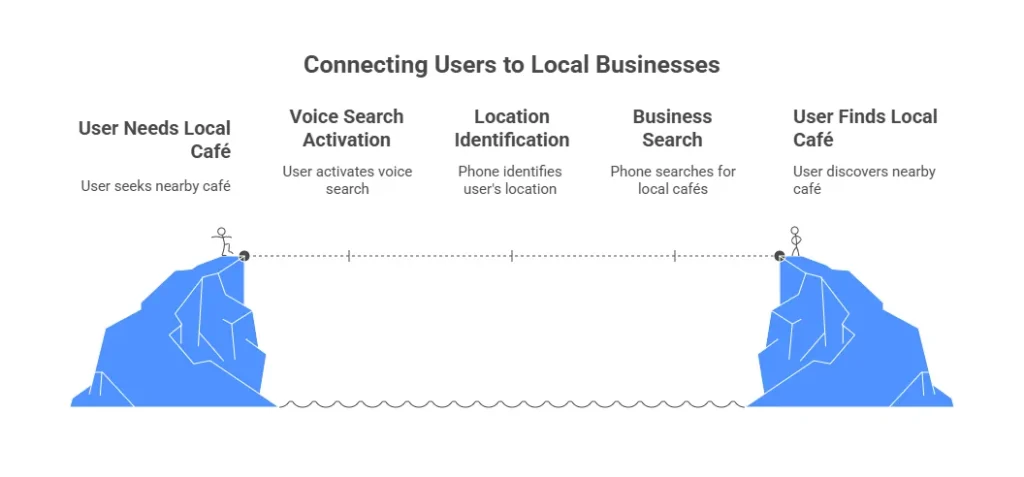
Most voice queries have local intent — people asking for services “near me” or in specific UK towns. That’s why combining voice SEO with local optimisation is critical for small businesses.
Local SEO Is More Important Than Ever
As voice and mobile searches dominate in 2025, local SEO has become the heart of online visibility for small businesses across the UK. Whether you’re a café in Bristol or a cleaning service in Birmingham, your success now depends on how easily nearby customers can find you online.
Search engines prioritise local relevance — meaning if your business details aren’t accurate or your presence isn’t optimised, your competitors will show up first in map results.
According to community discussions on Reddit and UK business forums, local SEO is viewed as the most profitable and measurable SEO strategy for small enterprises today.
Google Business Profile Optimisation
Your Google Business Profile (GBP) is your business’s digital storefront. It’s often the first impression customers get before visiting your website — or your shop.
Here’s how to make your GBP stand out in 2025:
- Keep information accurate and complete: Ensure your Name, Address, and Phone (NAP) match exactly across all online listings.
- Add fresh content regularly: Post updates about new offers, events, or blog content.
- Use high-quality photos and videos: Businesses with visuals get 42% more requests for directions (Google data).
- Respond to reviews promptly: Both positive and negative responses signal reliability to customers and Google alike.
💡 Pro Tip: Treat your GBP like a social profile. The more engagement it has, the more visible it becomes in “near me” searches.
NAP Consistency and Local Landing Pages
If your business has multiple locations or serves several UK towns, each area deserves its own local landing page.
Example:
yourbusiness.co.uk/london-cleaning-servicesyourbusiness.co.uk/manchester-cleaning-services
These pages should include:
- The specific city or region in headings and meta descriptions.
- Local customer reviews or testimonials.
- Embedded Google Maps for authenticity.
Inconsistent NAP information (e.g., one listing says “High Street” and another says “High St.”) can confuse Google’s crawlers — reducing your visibility in search results.
Local Citations and Community Engagement
Local citations remain crucial in 2025 for reinforcing your location’s legitimacy. Get listed in trusted UK directories such as:
- Yell.com
- Federation of Small Businesses (FSB)
- Local chambers of commerce
- Niche-specific directories (e.g., Checkatrade, TrustATrader)
Equally important is community engagement. Businesses with real local interactions — charity sponsorships, collaborations with local influencers, or geo-tagged social media posts — tend to earn stronger organic visibility.
🗣 “Your local community is your best SEO tool,” one small business owner shared on Reddit. “Engagement drives reviews, links, and visibility — all naturally.”
Rise of AI-Driven SEO Tools and Automation
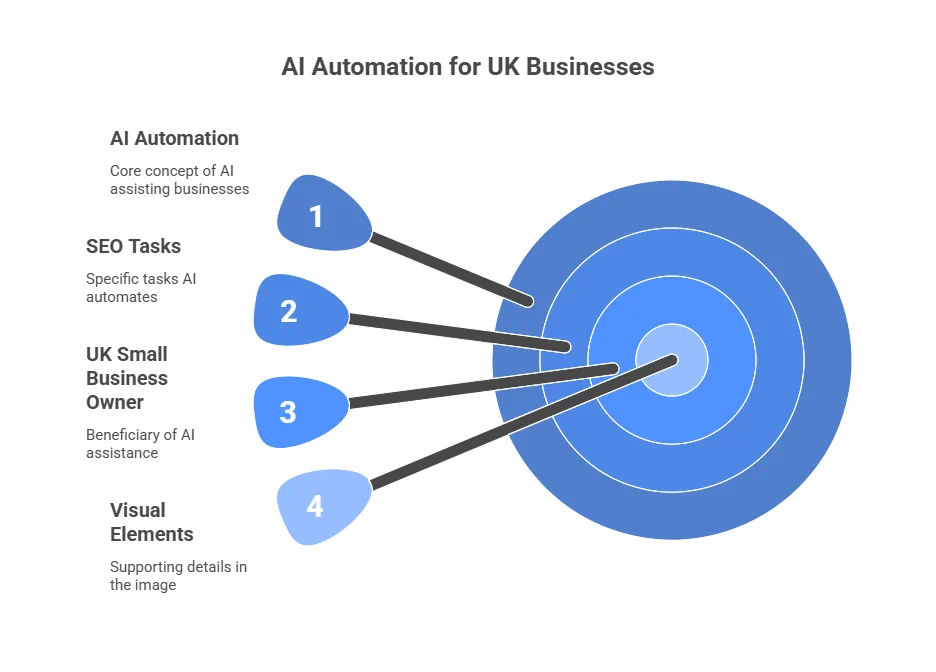
Artificial Intelligence (AI) has transformed SEO Trends from a manual, time-consuming task into a smarter, data-driven process. In 2025, UK small businesses increasingly rely on AI-powered SEO tools to save time, reduce costs, and improve performance.
Community feedback from YouTube and Reddit shows that even small-budget startups are leveraging AI to compete with larger companies. These tools are no longer “nice-to-haves” — they’re essentials for staying ahead.
Smart Keyword Research and Content Suggestions
AI tools are now helping UK entrepreneurs discover low-competition, high-intent keywords faster than ever. Instead of spending hours manually researching, platforms like Surfer SEO Trends, Clearscope, and ChatGPT generate:
- Relevant long-tail keyword ideas (e.g., “best eco cleaners in London”)
- Content gap analysis
- Readability and tone optimisation suggestions
AI can even predict which topics are trending in your region — allowing you to publish content before competitors catch on.
🧠 Example: An AI tool might detect rising searches for “sustainable packaging for UK small businesses” and recommend a blog post around that trend.
AI Tools for Reputation and Listings Management
For local businesses, managing online reputation can be a full-time job — replying to reviews, updating opening hours, monitoring listings.
That’s where AI automation steps in.
Tools like Birdeye help automate:
- Review responses using sentiment analysis.
- Listing updates across directories.
- Social post scheduling and keyword tracking.
These platforms ensure consistency and speed, especially useful for small businesses juggling multiple tasks.
💬 “AI tools keep my listings updated and my responses polite — even when I’m busy running the shop,” shared one UK café owner on LinkedIn.
Automating Repetitive SEO Tasks
AI also helps automate routine yet essential SEO work such as:
- Generating meta titles and descriptions for each page.
- Monitoring broken links or 404 errors.
- Tracking daily keyword rankings and traffic spikes.
This automation lets small business owners focus more on strategic growth — creating content, improving services, and engaging with customers — instead of staring at analytics dashboards all day.
🔧 Tip: Choose AI tools that offer UK-based data integration, since regional accuracy is key for small businesses targeting local customers.
Long-Tail Keywords and Content Strategy in 2025
If there’s one SEO Trends truth that’s held steady through all the algorithm updates, it’s this: content is still king — but in 2025, it’s the right kind of content that matters.
Gone are the days when short, generic posts could rank. Today, Google’s algorithms (and AI-based search tools) prioritise helpful, localised, and intent-driven content. For small businesses in the UK, this means producing valuable articles, videos, and FAQs that directly answer the questions potential customers are asking — especially through voice search.
Why Long-Tail Keywords Dominate
Long-tail keywords — those longer, conversational phrases — have become the backbone of successful SEO. Instead of chasing highly competitive short terms like “SEO agency” or “plumber,” UK small businesses are ranking faster with specific, problem-solving queries such as:
- “Affordable SEO agency for small businesses in Birmingham”
- “Emergency plumber near Shoreditch open on Sunday”
These terms may have fewer searches, but they bring in customers with clear intent to buy or book. According to recent community insights, small businesses focusing on long-tail keywords see higher conversion rates with less competition.
💡 Pro Tip: Use your own customers’ language. Review messages, emails, or FAQ inquiries — they’re a goldmine for natural keyword ideas.
Creating Problem-Solving Content
In 2025, search engines reward content that genuinely solves users’ problems. Instead of publishing generic “top 10” lists, focus on how-to guides and tutorials that address real-world needs.
Example topics for UK businesses:
- “How to market a local café in Leeds using Google Maps”
- “Simple steps to improve your online reviews in the UK”
- “How to use AI tools for small business SEO Trends in 2025”
This content builds trust and keeps visitors on your site longer — signals Google uses to rank you higher.
Building FAQ and How-To Sections
Voice searches often start with “how,” “what,” “where,” and “when.” Creating a dedicated FAQ or Knowledge Hub on your site that uses these formats can attract voice traffic directly.
For instance:
- “How can I grow my small business with local SEO Trends in 2025?”
- “What’s the best AI tool for keyword research in the UK?”
Keep answers short and structured so they can appear as featured snippets — the “position zero” on Google.
Video SEO on YouTube
Video is another area booming in 2025, and YouTube — being owned by Google — remains a massive SEO opportunity. UK businesses producing short, location-relevant videos (“3 Tips for Improving Your Local SEO in London”) often appear both in YouTube and Google search results.
🎬 Quick Tip: Add local tags, keywords, and captions. Even your accent helps local relevance for voice-matching algorithms.
Technical SEO – Foundation for Every Trend
Even with AI and great content, none of it matters if your site’s technical foundation isn’t solid. Technical SEO Trends remains the silent hero behind every successful online presence. In 2025, it’s not just about search engines — it’s about delivering a smooth, fast, and secure user experience that keeps customers on your site.
Mobile-First Design Is Non-Negotiable
Over 70% of UK internet traffic now comes from mobile devices. If your website isn’t responsive, you’re losing both visitors and rankings.
- Ensure text, buttons, and menus are easy to navigate on phones.
- Test pages using Google’s Mobile-Friendly Test tool.
- Use lightweight images and minified code for speed.
📱 Remember: Google now uses mobile-first indexing, meaning your mobile version determines your ranking — not your desktop one.
Page Speed and User Experience
Slow websites are SEO Trends killers. Studies from UK web agencies like Charle.co.uk show that every extra second of load time can reduce conversions by up to 20%.
Key steps to improve speed:
- Compress images (use WebP format).
- Enable browser caching and CDN.
- Reduce plugins and unnecessary scripts.
Also, prioritise Core Web Vitals — metrics Google uses to measure load speed, interactivity, and layout stability.
⚙️ Pro Tip: Use free tools like PageSpeed Insights or GTmetrix to test performance regularly.
HTTPS and Security
Security remains a ranking factor. If your website still uses “http://”, it’s time to upgrade to HTTPS with an SSL certificate. Visitors seeing “Not Secure” in their browser are less likely to trust your brand — and Google notices that too.
Sitemaps, Robots.txt, and Crawling
Make it easy for Google to understand your website structure:
- XML sitemap: Lists all important pages for search engines to index.
- robots.txt: Tells crawlers which pages to ignore (useful for admin or duplicate pages).
- Fix broken links and remove outdated pages — they hurt crawl efficiency.
For UK small businesses, this means your product pages, blogs, and contact details are found faster and ranked more accurately.
Practical SEO Trends Tips from UK Small Business Communities
While SEO Trends guides and algorithms can feel technical, many of the most effective tactics for 2025 come straight from UK small business communities — local founders, freelancers, and digital marketers sharing what actually works in today’s market.
Here’s a roundup of real-world SEO insights small business owners across the UK are putting into practice this year.
1. Focus on Google Business Profile (GBP)
For local SEO Trends, your Google Business Profile (formerly Google My Business) is your most valuable free tool. Keeping it active signals to Google that your business is alive and engaging with local customers.
To stand out:
- Add weekly updates, photos, and event posts.
- Respond to every review — even negative ones.
- Use local keywords in your business description.
- Ensure address, opening hours, and phone number are correct.
Many UK businesses have reported a 20–40% boost in map pack visibility just by posting consistently on GBP.
2. Leverage Local Backlinks
Backlinks remain one of Google’s top ranking factors — but in 2025, local relevance trumps volume. Instead of chasing links from big global sites, focus on hyperlocal mentions:
- Partner with local bloggers or community pages.
- Get listed in UK business directories (like Yell or Checkatrade).
- Sponsor local charity events or sports clubs — their websites often include backlinks.
The goal is to make Google associate your brand with a specific geographic area.
3. Encourage Reviews and User-Generated Content
Customer reviews are a trust and ranking booster. Google’s AI increasingly factors in review sentiment and frequency when ranking local results.
Encourage customers to share feedback by:
- Sending polite follow-up emails after service.
- Displaying QR codes linking to your Google review page.
- Featuring top reviews on your website (with permission).
Even better — invite customers to tag your business on social media using local hashtags (e.g., #LeedsBakery or #LondonHairStylist). That social activity feeds SEO Trends indirectly.
4. Combine Paid Ads with SEO Trends
Many small businesses in 2025 blend short-term paid ads (like Google Ads or Facebook) with long-term SEO Trends growth. Paid traffic helps test which keywords or landing pages perform best — insights you can then apply to your organic SEO Trends.
For example, if a paid ad targeting “best accountant in Manchester” converts well, build SEO Trends content around that phrase too.
💡 Insight: Many UK entrepreneurs use this strategy to validate keyword intent before investing in long-form content or backlinks.
Measuring and Iterating Your SEO Efforts
You can’t improve what you don’t measure.
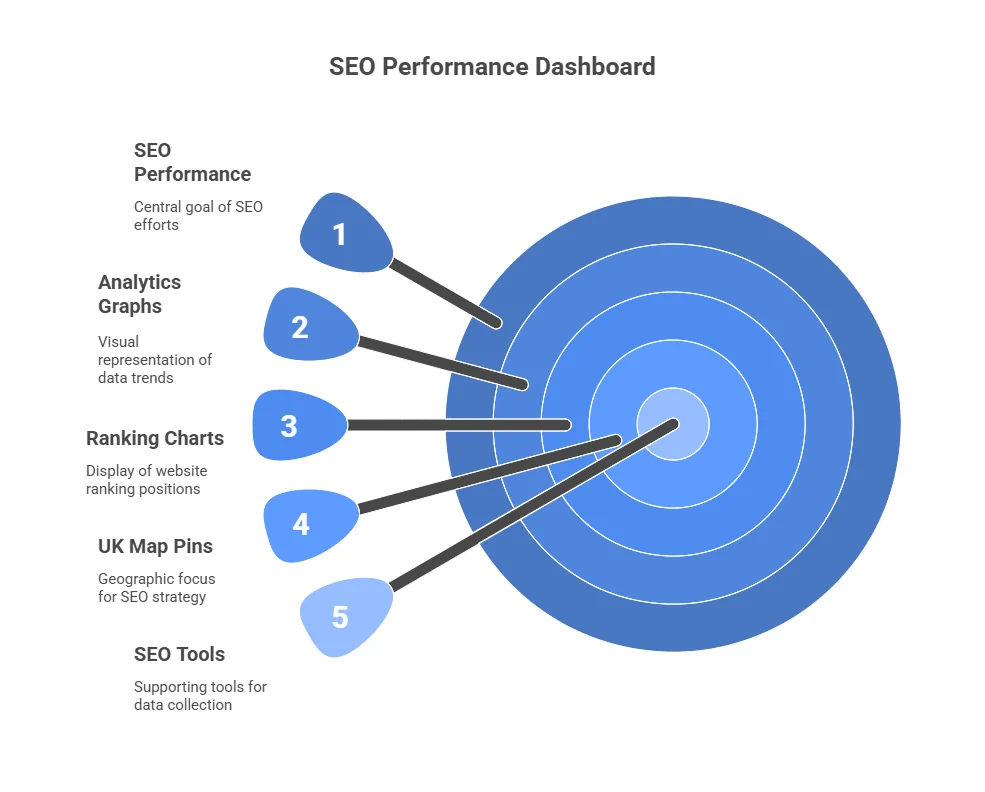
SEO Trends success in 2025 isn’t about guessing — it’s about tracking the right metrics, identifying trends, and adapting quickly to what your data shows.
1. Set Clear SEO Trends Goals
Start by defining what success means for your business:
- Traffic-based goal: Increase organic visits by 30% in six months.
- Lead-based goal: Generate 20 new inquiries a month from organic search.
- Local visibility goal: Appear in the top 3 map results for your city.
Once you know what matters most, tracking becomes meaningful — not just numbers on a screen.
2. Use Analytics and Search Console
Google Analytics 4 (GA4) and Google Search Console are your best free allies.
- GA4 shows where users come from, how long they stay, and what they do.
- Search Console reveals which keywords you rank for and how your clicks change over time.
📊 Example: A London florist noticed rising clicks from “eco-friendly bouquets” in Search Console and created a blog around that — doubling leads in a month.
3. Track Engagement Metrics
SEO Trends isn’t just about traffic — it’s about user engagement. Google measures how visitors interact with your site.
Monitor:
- Bounce rate: Lower is better (people stay longer).
- Average time on page: Longer indicates useful content.
- Click-through rate (CTR): If it’s low, your title/meta needs refining.
Simple tweaks like improving meta descriptions or adding visuals can boost engagement significantly.
4. Review, Refine, Repeat
SEO Trends isn’t “set and forget.” In 2025, the best-performing small businesses treat SEO Trends like an ongoing cycle:
- Measure → 2. Analyse → 3. Adapt → 4. Test again
Update your content quarterly — add new stats, refresh keywords, and check for broken links. Consistency tells Google your site is active and relevant.
💬 Pro Tip: Many UK entrepreneurs schedule a monthly “SEO checkup” like a financial review — short, focused, and incredibly effective.
The Future of SEO: AI and User Intent
SEO Trends in 2025 isn’t just about ranking — it’s about relevance and understanding intent.
With AI deeply integrated into Google’s ranking algorithms and everyday search behaviour, UK businesses must adapt faster than ever.
1. AI-Powered Tools for Smarter SEO
Artificial intelligence is now central to SEO Trends strategy. Many small businesses in the UK are using AI-driven platforms to:
- Identify trending long-tail keywords.
- Generate optimised meta tags and outlines.
- Automate Google Business Profile updates.
- Respond to customer reviews faster (using tools like Birdeye).
AI helps level the playing field — even a one-person startup can compete with larger companies by automating repetitive SEO Trends tasks.
💡 Example: A Bristol-based bakery used an AI content optimiser to refine product descriptions and saw a 32% rise in organic clicks within 60 days.
2. Understanding User Intent Is Key
Search behaviour is shifting. Instead of short, generic searches like “plumber London,” users now type or say natural questions like:
- “Who’s the best-rated plumber near me open today?”
- “Which plumber in Camden offers 24-hour service?”
This means your SEO Trends strategy should:
- Include question-based keywords in content.
- Write FAQ sections that directly answer customer queries.
- Use structured data (schema) so Google can feature your answers.
By focusing on intent, not just keywords, your business becomes the answer people — and voice assistants — are looking for.
3. Personalisation and Predictive Search
Google’s algorithms now adapt results based on location, device, and even prior searches.
This personalisation means local context matters more than ever — your content should include nearby areas, service coverage, and UK spellings.
Predictive search (like Google Discover) rewards brands that publish regular, helpful, and current content. If your posts answer what people will be searching for soon, you’ll appear ahead of competitors.
Conclusion: Future-Proofing Your SEO Trends in 2025
SEO Trends in the UK is changing — but that’s good news for small businesses.
Voice search, AI automation, and hyperlocal content have made it easier than ever for startups and SMEs to compete with big brands by focusing on quality, intent, and connection.
If you:
- Optimise for natural, conversational keywords,
- Keep your Google Business Profile and local listings up to date,
- Use AI tools to simplify content and technical tasks, and
- Track your data regularly to adapt…
Then your small business can build sustainable visibility, attract local customers, and grow without overspending on ads.
Remember — SEO Trends isn’t about outsmarting algorithms anymore. It’s about understanding your audience better than anyone else.
Call-to-Action
Want to take your SEO strategy to the next level?
At DataXpie, we help UK startups and small businesses create tailored SEO Trends plans — from technical audits to AI-driven keyword strategies — so you can rank higher, faster, and smarter.
👉 Book a free consultation with DataXpie today and discover how to future-proof your digital presence for 2025 and beyond.