
Introduction
If you’re running a small business in the UK, you already know how crowded Social Media Graphic Design feeds have become. Every brand is trying to grab a few seconds of attention — but only those with fresh, visually engaging posts truly stand out. In 2025, social media design isn’t just about looking pretty; it’s about telling authentic stories, building trust, and keeping pace with evolving technology.
Table Of Content
- Introduction
- Why Design Trends Matter for UK Small Businesses
- Key Trends in UK Social Media Graphic Design 2025
- Bold Minimalism & “Minimal Maximalism”
- Motion Graphics and Animation
- Authentic Visual Storytelling
- Sustainable and Accessible Design
- Typography as a Hero Element
- Retro and Mixed Media Influences
- Applying These Trends to Your UK Brand
- Tools and Resources for UK Designers
- Conclusion & Call to Action
From AI-powered creativity to motion graphics and bold minimalism, the latest trends are changing the way UK businesses connect online. This guide walks you through the key design trends shaping 2025 — and how to apply them to your own brand presence with ease and confidence.
Why Design Trends Matter for UK Small Businesses
A great social media design isn’t just decoration — it’s a conversation starter. In an era where people scroll faster than they read, visuals are your brand’s first impression and strongest engagement tool.
- Visuals are processed 60,000× faster than text, according to Luminite Design. That means your graphics need to communicate instantly.
- For small businesses competing in a saturated UK market, consistent and high-quality visuals can boost recognition, build credibility, and help you stand out against larger brands.
- According to HubSpot data, posts with strong visuals receive 2.3× more engagement on average — proving that design has a direct impact on visibility and conversions.
Beyond metrics, the right visuals make your brand feel cohesive and trustworthy. Whether you’re a bakery in Birmingham or a consulting firm in London, your design language — colours, fonts, and imagery — sends a message before any caption is read.
By keeping your design strategy updated with 2025’s top trends, you’re not just following style — you’re aligning with how UK audiences see, interact, and emotionally connect with brands.
Key Trends in UK Social Media Graphic Design 2025
AI-Powered Design Integration
Artificial intelligence has officially moved from buzzword to design assistant. In 2025, UK designers and marketers are embracing AI tools like Adobe Firefly, Canva’s Magic Studio, and Midjourney to make content creation faster and more intuitive.
But here’s the key — AI isn’t replacing creativity; it’s amplifying it. Instead of spending hours editing or searching for stock images, designers can now:
- Generate fresh concepts instantly: AI can suggest layouts, colour palettes, and image ideas based on your brand tone.
- Automate repetitive tasks: Resize visuals for multiple platforms, remove backgrounds, or clean up images in seconds.
- Spark inspiration: Tools like Firefly or Midjourney help visualise concepts before production, saving time and boosting creative output.
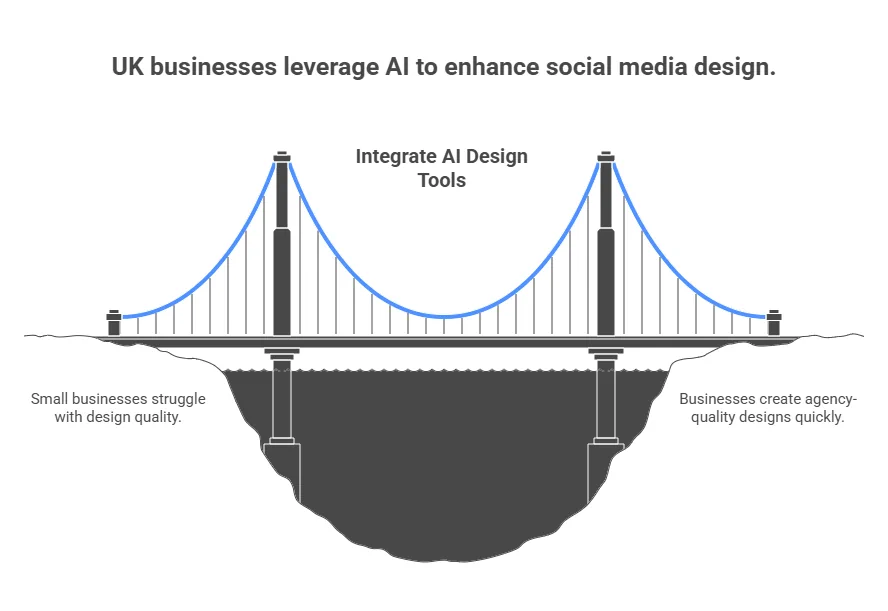
For UK small businesses, this means you can produce agency-quality designs even without an in-house team. A bakery can quickly generate branded template variations for its weekly specials, while a local gym might use AI-generated imagery to refresh campaign visuals.
The trick is transparency — if AI-generated visuals are used, disclose them openly. Authenticity builds trust, and audiences appreciate honesty over perfection.
AI is a design partner, not a replacement. When used wisely, it gives small businesses the speed and flexibility to keep up with big brands in the ever-changing social media space.
Bold Minimalism & “Minimal Maximalism”
If there’s one design philosophy defining 2025, it’s this: less can still be loud.
UK social media design is moving toward a bold, stripped-down aesthetic that balances simplicity with strong visual personality — a look often described as “minimal maximalism.”
The idea? Clean layouts, plenty of breathing space, but with a single bold element that makes your post pop — like oversized typography, vibrant gradients, or one striking image that grabs attention in a crowded feed.
Minimalism has always been about clarity, but 2025 takes it a step further. Designers are pairing muted backgrounds with vivid accent colours — think coral red or electric blue — and layering dynamic text effects to guide the viewer’s eye in social media.
This combination makes your post instantly scannable while keeping it memorable.
For UK brands, this approach is perfect for audiences scrolling quickly on mobile. A minimalist design means your message lands in seconds, while bold elements keep it visually exciting. Whether you’re posting a product teaser or sharing an event announcement, the rule of thumb is simple:
One message. One focus. One wow factor.
Quick tips to apply “Bold Minimalism” in your posts:
- Use one dominant colour with supporting neutrals for balance.
- Keep text short and impactful — no long paragraphs on images.
- Embrace white space; it draws attention to your main element.
- Add contrast through typography weight, shape, or motion (more on that next).
When executed well, minimal maximalism helps small businesses look sleek, modern, and confident — without needing a massive design budget. It’s proof that simplicity can still make a statement.
Motion Graphics and Animation
Static posts still work — but motion wins attention.
In 2025, motion graphics and animation have become essential tools for UK brands that want to stop the scroll. From animated logos to subtle micro-movements on text, a touch of animation adds energy and personality to your content in Social Media.
Social Media platforms like Instagram Reels, TikTok, and YouTube Shorts have conditioned audiences to expect movement. Even short, looping animations can hold a viewer’s gaze longer than still images.
According to Statista, the average UK user spends over 2 hours daily on social media platforms, and dynamic visuals are proven to increase dwell time and share rates.
Here are a few practical ways small businesses can integrate motion into their design without heavy production costs:
- Animated text overlays to highlight offers or key phrases.
- Kinetic typography for brand slogans or product features.
- Simple GIF-style animations (like twinkling effects or image reveals).
- Subtle transitions between product images in a carousel post.
Even a simple animated sparkle on your logo or a moving background gradient can make a post feel more modern and engaging.
Best of all, motion graphics are now easier than ever to create. Tools like Canva Animate, Adobe Express, or VistaCreate offer built-in animation features perfect for small businesses without motion design expertise.
The key is moderation. Movement should enhance your message — not distract from it. Focus on guiding the viewer’s eye toward your call-to-action or brand identity.
Authentic Visual Storytelling
In 2025, authenticity isn’t a buzzword — it’s the backbone of successful social media design. UK audiences are increasingly sceptical of overly polished, generic visuals. They’re craving real stories, honest imagery, and brands that show their human side.
Authentic visual storytelling is all about blending design with emotion. Instead of stock-perfect smiles and staged offices, think behind-the-scenes moments, handcrafted textures, and user-generated content that captures your community’s true spirit.
Why It Works for UK Brands
British consumers value transparency and diversity. A local café showing its barista at work or a small retailer reposting customer photos builds a sense of belonging. It feels real — and that connection drives loyalty.
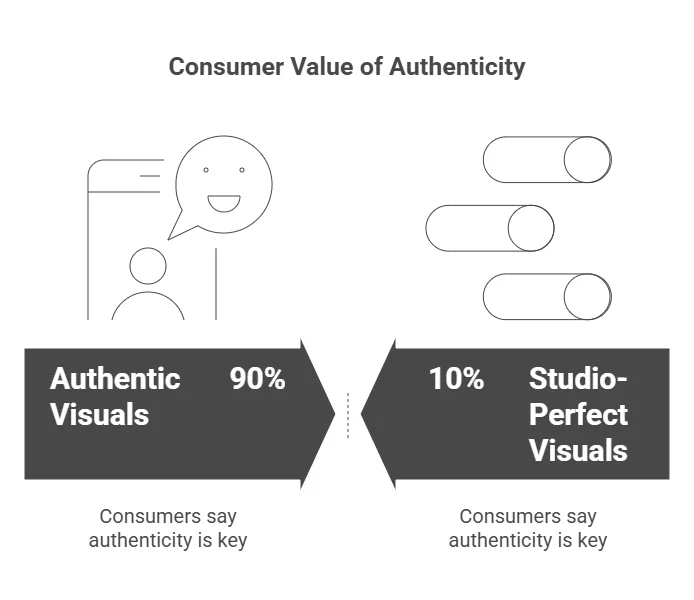
These authentic visuals often outperform studio-perfect ones because they invite trust. A study by Stackla found that 90% of consumers say authenticity is key when choosing which brands to support — a clear signal that honest visuals resonate deeply.
How to Tell Visual Stories That Connect
- Show people, not just products. Audiences relate to faces and emotions.
- Encourage UGC (User-Generated Content). Repost your customers’ photos and thank them publicly.
- Use narrative-driven design. Combine captions, imagery, and layout flow to tell a mini story in every post.
- Highlight your journey. Share milestones, lessons learned, or moments of growth.
When your design reflects real moments, imperfections and all, your audience feels seen. And that’s the heart of connection — turning passive scrollers into brand advocates.
Sustainable and Accessible Design
The 2025 design landscape isn’t just about aesthetics — it’s about responsibility.
As UK consumers become more eco-conscious and inclusive, brands are expected to reflect those values in their visual content. Enter sustainable and accessible social media design — two principles that define modern brand integrity.
Sustainable Design Practices
Sustainability in digital design means reducing environmental impact by designing smarter. While digital media doesn’t produce physical waste, every image, video, and website consumes energy through data transmission.
Designers are now optimising file sizes, using minimal colour palettes, and choosing digital-first layouts that reduce data load.
For UK small businesses, this can mean:
- Compressing image files without losing quality.
- Using lightweight animations instead of heavy videos.
- Designing for longevity — creating timeless templates rather than disposable trends.
These small changes contribute to a more sustainable web and reflect well on your brand’s ethical awareness.
Accessible Design for All
Accessibility ensures that everyone — regardless of ability — can enjoy and engage with your content. It’s not only the right thing to do but also beneficial for business.
According to GOV.UK accessibility guidelines, inclusive design includes:
- Readable text: Use large, legible fonts and sufficient contrast.
- Alt text for images: Descriptions for screen readers.
- Colour-conscious choices: Avoid relying solely on colour to convey meaning.
- Scalable layouts: Ensure visuals adapt well across devices.
Accessible design increases your audience reach and positions your brand as thoughtful and inclusive — qualities UK audiences highly appreciate.
Together, sustainable and accessible design aren’t just trends; they’re long-term commitments to creating a digital presence that’s responsible, respectful, and resonant.
Typography as a Hero Element
In 2025, typography steps out of the background and takes centre stage. It’s no longer just about readability — it’s about personality. For UK brands trying to cut through crowded social media feeds, bold type choices are one of the most effective ways to stand out.
From geometric sans-serifs to expressive hand-drawn lettering, brands are embracing fonts that speak before the words do. Think of typography as your visual voice — it conveys tone, energy, and emotion in a split second.
The Rise of Typographic Identity
Instead of relying on complex graphics, many UK designers are using type-led layouts that tell a story through scale, texture, and motion.
For example:
- A bold headline in uppercase can communicate confidence.
- A soft, rounded typeface conveys warmth and approachability.
- Playful letter spacing or animation can add motion and energy without overwhelming the viewer.
It’s no surprise that many social media campaigns are now built around typography alone — no photos, no illustrations, just beautifully arranged words. It’s clean, quick to produce, and deeply expressive.
Best Practices for Strong Typography Design
- Prioritise clarity: Always check legibility on mobile screens.
- Use hierarchy: Contrast font weights to guide the viewer’s attention.
- Keep it consistent: Use the same two or three fonts across your posts to build recognition.
- Experiment thoughtfully: Try overlapping text, gradient fills, or motion effects — but never at the expense of readability.
Typography in 2025 is about making words feel like design elements. For small businesses, this means you can create scroll-stopping visuals using text alone — perfect for quote posts, announcements, or campaign headlines.
Retro and Mixed Media Influences
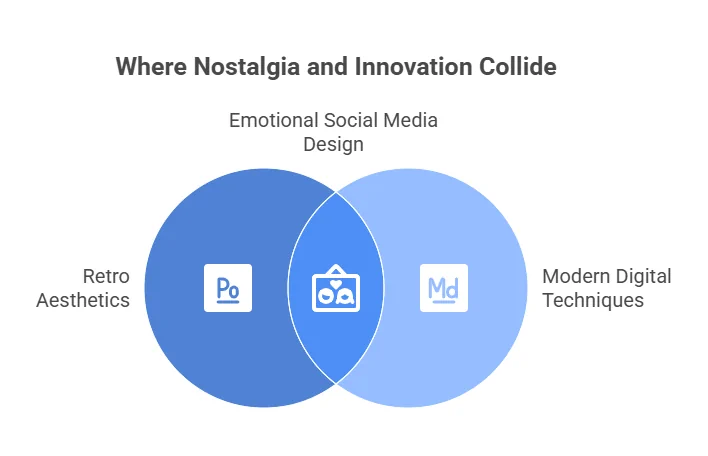
In 2025, nostalgia meets innovation. UK social media designers are blending retro aesthetics with modern digital techniques to create a look that’s both familiar and fresh — a perfect recipe for emotional connection.
This trend takes cues from vintage print styles, scrapbook textures, and 90s colour palettes, then reimagines them with crisp digital polish. The result? Eye-catching posts that spark instant nostalgia while feeling entirely current.
The Emotional Power of Nostalgia
Nostalgia-based design connects on an emotional level because it reminds audiences of simpler, happier times. For UK audiences — especially millennials and Gen Z — retro visuals trigger a sense of comfort and authenticity amid fast-paced digital noise.
Think grainy filters, paper textures, pixel art, or Polaroid-style frames paired with modern typography and animations.
Blending Old and New
This isn’t about going full vintage. The key is fusion — mixing the tactile charm of analogue design with the precision of modern tools.
Here’s how brands are doing it:
- Scrapbook-style collages mixing photos, tape textures, and doodles.
- Retro fonts like serif typefaces paired with modern gradients or animations.
- Muted pastel palettes balanced with bold accent hues.
- Mixed media layering — combining illustration, photography, and digital effects.
For small UK businesses, this style is perfect for storytelling posts or product launches that evoke emotion. A retro poster feel on Instagram, for instance, can instantly grab attention among minimalist feeds — standing out by going “back in time.”
This design language also aligns beautifully with authentic storytelling, creating posts that feel handcrafted rather than mass-produced — exactly what modern audiences crave.
Applying These Trends to Your UK Brand
Now that you’ve explored the top 2025 social media design trends, it’s time to make them work for your business. The beauty of these trends is that they’re scalable — whether you’re a solo entrepreneur or a growing UK brand, you can apply them at your own pace and budget.
Here’s how to turn inspiration into action:
1. Embrace AI for Efficiency
You don’t need to be a designer to create standout visuals anymore. Tools like Canva’s Magic Studio or Adobe Firefly can generate image variations, remove backgrounds, or suggest layouts — saving you valuable time.
Use AI as your assistant, not your replacement. You bring the vision; it brings the speed.
2. Keep It Bold but Simple
Adopt bold minimalism in your post design. Stick to a clean layout with one strong focal point — whether it’s your product, a quote, or your logo. The less visual noise, the more your message stands out in the feed.
3. Add Movement Where It Matters
Experiment with motion graphics for stories, reels, or animated carousels. Even light animation can bring static designs to life and increase engagement.
4. Stay Real and Relatable
Share authentic moments, not just polished ads. Encourage customers to share their experiences and feature their content on your page. Real stories create trust — a huge factor in brand loyalty among UK audiences.
5. Design Responsibly
Make your visuals accessible and sustainable. Keep file sizes light, use readable fonts, and ensure your colour choices work for everyone. It’s not just good ethics — it’s smart branding.
By combining these approaches, you’ll create a brand presence that feels modern, genuine, and distinctly you. The secret is consistency — stay visually cohesive while adapting to new design innovations as they emerge.
Tools and Resources for UK Designers
Design trends are only as powerful as the tools that bring them to life. Fortunately, 2025 offers a wealth of creative resources accessible to everyone — even if you’re not a professional designer.
Here are some must-have tools to help UK small businesses stay visually competitive:
Design Platforms
- Canva Pro – Perfect for creating on-brand templates and animated posts quickly.
- Adobe Express – Great for custom social media graphics and brand kits for social media.
- Figma – Ideal for collaborative design and brand consistency across teams.
Stock and AI Image Resources
- Unsplash & Pexels (UK collections) – Free, high-quality images with a local feel.
- Shutterstock UK – Premium stock imagery including British cultural scenes.
- Adobe Firefly / Leonardo.ai – Generate unique visuals that fit your brand tone.
Accessibility & Optimisation Tools
- Contrast Checker (WebAIM) – Ensures your text is readable for all audiences.
- TinyPNG / Squoosh – Compresses files to reduce load times.
- Meta Creator Studio – Preview and schedule designs for multiple platforms.
Combining these tools helps small UK brands maintain a consistent, professional visual identity — one that looks high-end but remains efficient and authentic.
Conclusion & Call to Action
In 2025, successful social media design in the UK is about much more than keeping up with trends — it’s about connecting with people through creativity, authenticity, and purpose.
By combining AI efficiency, bold minimalism, motion graphics, and sustainable practices, small businesses can build powerful, trustworthy brands that attract attention and foster loyalty online.
Your visuals are your digital handshake — the first impression your audience gets before reading a single word. Make it count.
If you’re ready to refresh your social media visuals and stay ahead of the curve, DataXpie can help. Our expert design team creates on-brand, eye-catching social media graphics tailored for UK audiences — so your posts not only look great but perform great, too.
✨ Let DataXpie help your business design the future — one scroll-stopping post at a time.