

Introduction
Generating a consistent stream of high-quality leads remains one of the biggest challenges for UK small businesses in 2025. Whether you run a local agency, a consultancy, or an online retailer, it’s not enough to rely on word of mouth or random advertising anymore. The UK market is increasingly competitive — and customers expect relevant, personalised communication before they engage.
Table Of Content
- Introduction
- What Is Lead Generation and Why It Matters
- 1. Optimise Your Google Business Profile (GBP) for Local SEO
- 2. Leverage Content Marketing with an SEO Focus
- 3. Use AI-Powered Lead Generation Tools
- 4. Harness Social Media and Paid Ads for Targeted Outreach
- 5. Create Irresistible Lead Magnets
- 6. Email Marketing and Lead Nurturing Sequences
- 7. Networking and Strategic Partnerships
- 8. Focus on Multi-Channel Lead Capture Tactics
- 9. Measure and Optimise Your Lead Generation Strategy
- 10. Conclusion: Turning Data into Growth
The good news is that with the right combination of proven tactics and smart digital tools, even small teams can achieve enterprise-level lead generation results. This guide explores 10 actionable strategies tailored specifically for UK SMEs, combining trusted marketing principles with the latest innovations like AI automation and local SEO.
What Is Lead Generation and Why It Matters
Lead generation is the process of attracting and capturing interest from potential customers — individuals or businesses who are likely to benefit from your products or services. In practical terms, it’s about guiding strangers to become prospects, then turning those prospects into paying customers through consistent engagement and value delivery.
According to research from Quality Company Formations UK, 91% of marketers say lead generation is their top goal, highlighting its critical role in sustainable business growth. However, not all leads are equal. Chasing volume often leads to wasted resources and low conversion rates. Instead, modern UK businesses are focusing on quality leads — those that fit their ideal client profile and have real purchase intent.
A well-structured lead generation system helps your small business to:
- Build a predictable pipeline of potential clients.
- Improve return on marketing investment (ROI).
- Strengthen brand visibility within your target UK market.
- Shorten the sales cycle through better qualification.
Lead generation is not about collecting as many email addresses as possible — it’s about attracting the right people through precise targeting and meaningful engagement.
1. Optimise Your Google Business Profile (GBP) for Local SEO
For UK-based service providers, your Google Business Profile (GBP) is a crucial, often underused, lead generation channel. When optimised correctly, it ensures your business appears in Google’s Local Pack, map results, and search queries made by customers in your area — those most likely to convert.
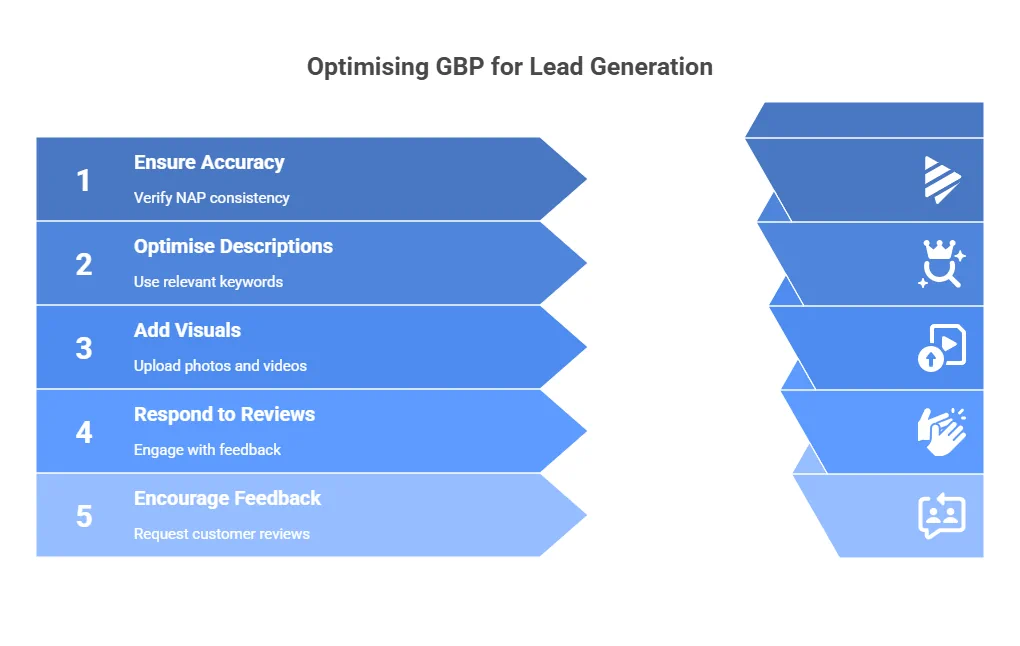
Here’s how to make your GBP a lead magnet:
- Ensure accuracy and consistency – Double-check that your business name, address, and phone number (NAP) match across all listings.
- Write keyword-optimised descriptions – Include search terms such as “lead generation services in London” or “digital marketing agency Birmingham” to improve local relevance.
- Add fresh visuals and updates – Upload professional photos, short videos, and weekly posts or offers to engage potential customers.
- Respond to every review – Positive or negative, timely responses build trust and show credibility.
- Encourage customers to leave feedback – Reviews influence rankings and act as social proof for new leads.
When your profile is properly maintained, you not only improve visibility but also build authority with Google — resulting in more organic enquiries without spending heavily on ads.
2. Leverage Content Marketing with an SEO Focus
In 2025, content remains the cornerstone of inbound lead generation. For UK small businesses, content marketing with an SEO strategy helps you attract high-quality traffic and establish credibility in your niche. It’s not just about posting blogs — it’s about creating useful, search-optimised content that speaks directly to your audience’s needs.
Key steps include:
- Publish UK-relevant, SEO-friendly blogs – Write about industry pain points or local market trends, e.g., “Top 5 B2B Lead Generation Tips for SMEs in Manchester.”
- Use long-tail keywords – Phrases like “generate leads online UK” help attract ready-to-convert visitors.
- Incorporate videos and visuals – Tutorials, webinars, or product demos increase dwell time and engagement.
- Optimise meta titles and descriptions – Clear, keyword-rich summaries improve search click-through rates.
- Include calls-to-action (CTAs) – Invite readers to download a guide, request a consultation, or join your email list.
By consistently producing helpful content, your business becomes a trusted resource, building organic visibility that keeps generating leads long after publication.
3. Use AI-Powered Lead Generation Tools
Artificial Intelligence (AI) is transforming how small businesses approach lead generation in the UK. What was once accessible only to enterprise-level companies is now affordable and scalable for SMEs. AI-powered tools can automatically identify, engage, and qualify leads — saving valuable time while improving conversion rates.
UK SMEs adopting AI-driven lead generation systems report average ROI increases of over 280% within six months, with many seeing payback within the first 90 days. These results come from automation, smarter targeting, and data-led decision-making.
Here’s how AI can enhance your lead generation workflow:
- Predictive lead scoring – AI algorithms analyse customer data (website visits, form submissions, social interactions) to identify high-intent prospects automatically.
- Chatbots and virtual assistants – Integrated on websites or messaging apps, these tools engage visitors 24/7, qualify leads, and even schedule follow-up calls.
- Smart email automation – AI personalises emails based on user behaviour, sending the right message at the right time to improve engagement.
- CRM integration – Modern CRM systems use AI to suggest next actions, forecast sales, and prevent lead drop-offs.
For UK small businesses with limited marketing teams, AI tools act as a virtual assistant, handling repetitive work while you focus on strategy and customer relationships. Implementing AI doesn’t require huge budgets — many solutions now offer flexible monthly pricing designed for SMEs.
4. Harness Social Media and Paid Ads for Targeted Outreach
Social media remains one of the most powerful tools for small business lead generation in the UK — especially when combined with precise paid advertising. The key is strategic targeting and platform-specific content that reaches decision-makers or local consumers effectively.
LinkedIn for B2B Lead Generation
LinkedIn continues to dominate the UK’s B2B landscape. With over 35 million UK users, it’s the go-to platform for professional networking and outreach. Businesses can:
- Run Sponsored Content or Message Ads targeting decision-makers by job title, industry, and company size.
- Post thought leadership articles and client success stories to establish authority.
- Engage directly with prospects through personalised connection messages — avoiding the spammy “copy-paste” approach.
Facebook and Instagram for Local Reach
For B2C and service-based SMEs, Facebook and Instagram ads are highly effective for local lead generation. You can:
- Target users by location, age, interests, and behaviour, reaching only your ideal UK audience.
- Use lead ad forms directly within the platform — allowing users to share details without leaving the app.
- Showcase authentic visuals and testimonials to build trust.
- Combine paid campaigns with organic content to maintain a consistent brand voice.
Ad Strategy Best Practices for UK SMEs
To maximise return on ad spend (ROAS):
- Set clear goals (lead form completions, website traffic, or event sign-ups).
- Use UTM tracking in URLs to measure ad effectiveness in Google Analytics.
- Test different creatives and ad copy (A/B testing).
- Allocate budget based on proven performance, not assumptions.
When done right, social media and paid ads don’t just bring clicks — they deliver qualified, conversion-ready leads who already trust your brand.
5. Create Irresistible Lead Magnets
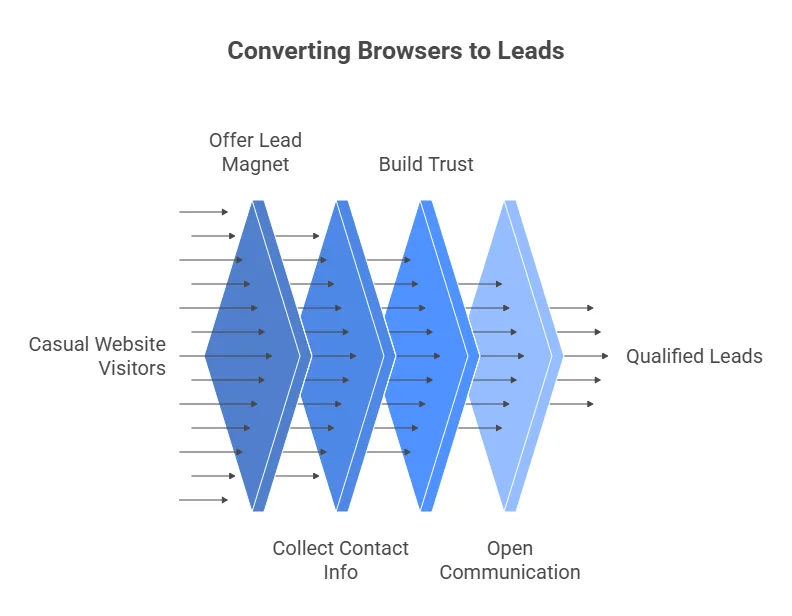
Lead magnets remain one of the most effective ways to convert casual browsers into warm leads. They work because they offer immediate value in exchange for a visitor’s contact information — building trust and opening a direct line of communication.
For UK small businesses, the key is to design offers that are specific, locally relevant, and genuinely useful. Instead of generic e-books or outdated checklists, focus on resources that solve a current challenge for your audience.
Effective Lead Magnet Ideas for UK SMEs
- Downloadable resources: Free industry guides, local business templates, or market reports (e.g. “2025 Social Media Calendar for UK Retailers”).
- Exclusive discounts: Offer limited-time vouchers or event invites for new subscribers.
- Free trials or demos: Especially powerful for service-based or software companies targeting UK business clients.
- Webinars and workshops: Host sessions such as “How to Generate Leads Online in the UK – 2025 Playbook.”
When designing your lead magnet, keep forms short and clear — ask only for essential details like name and email. Place your offers prominently on homepages, blog posts, and social profiles.
Localisation matters too. For example, if you operate in Manchester, create content that references local market conditions or regional trends. UK audiences respond better to content that feels authentic and tailored to their environment.
Ultimately, a strong lead magnet should:
- Address a specific pain point.
- Provide immediate, actionable value.
- Align closely with your core services.
When done well, your lead magnets act as silent salespeople — converting curious visitors into qualified leads who are already interested in your solutions.
6. Email Marketing and Lead Nurturing Sequences
Despite the rise of social media and AI automation, email marketing continues to deliver exceptional results for small businesses — especially when used to nurture leads through every stage of the sales funnel.
Email remains powerful because it’s personal, measurable, and affordable. In fact, according to multiple UK digital marketing surveys, every £1 spent on email marketing generates an average return of £36 — one of the highest ROIs among digital channels.
Building a Smart Email Funnel
- Segment your audience – Group leads by behaviour, interests, or acquisition channel (e.g. webinar attendees, website subscribers, or LinkedIn leads).
- Personalise communication – Use first names, relevant topics, and dynamic content based on previous engagement.
- Design nurturing sequences – Send a series of automated messages that educate, inspire, and softly sell.
- Example:
- Email 1: “Thanks for downloading our UK SEO Guide – here’s how to get started.”
- Email 2: “Top 3 mistakes small businesses make in lead generation.”
- Email 3: “Let’s talk: Book your free consultation with DataXpie.”
- Example:
- Measure and optimise – Track open rates, click-throughs, and conversions to refine content timing and tone.
Tips for Effective Email Campaigns
- Keep subject lines short and curiosity-driven.
- Always include a clear call-to-action (CTA).
- Comply with UK GDPR rules — include an easy unsubscribe option and clear consent wording.
- Mix educational and promotional content (80/20 rule).
By nurturing leads consistently, you stay top-of-mind when your prospects are ready to make a purchase. For UK SMEs, well-executed email marketing bridges the gap between first contact and final sale — turning data into dependable revenue.
7. Networking and Strategic Partnerships
In the UK business environment, relationships often drive opportunities. While digital lead generation is essential, building genuine connections through networking and partnerships can create sustainable, high-quality leads that no online campaign can match.
Why Networking Still Matters
Even in the age of automation, face-to-face interactions remain incredibly powerful for small and medium-sized enterprises (SMEs). Networking helps businesses:
- Build trust faster than digital ads.
- Gain referrals from like-minded professionals.
- Discover collaboration or co-marketing opportunities.
Attending UK business expos, local chamber events, and industry-specific conferences (like SME XPO or Marketing Show North) can connect you with decision-makers who actually influence buying decisions.
You can also leverage digital networking platforms such as:
- LinkedIn: Engage consistently through valuable posts, comments, and outreach messages.
- Facebook and WhatsApp Business Groups: Join regional business communities (e.g., Small Business Network UK).
- B2B directories: Create listings on sites like Yell, Clutch, or UK Business Forums for visibility.
Forming Strategic Partnerships
Sometimes, growth comes not from competing — but collaborating. Partnering with complementary UK businesses can lead to cross-promotion, shared audiences, and cost-effective lead generation.
For example:
- A digital marketing agency partners with a web design studio to share client referrals.
- A local café collaborates with a co-working space to offer exclusive member discounts.
The secret lies in identifying businesses that serve the same audience but solve different problems. When done strategically, these partnerships turn your network into a lead-generation machine.
8. Focus on Multi-Channel Lead Capture Tactics
Successful UK businesses don’t rely on a single marketing channel — they build multi-touchpoint ecosystems that capture leads wherever potential customers spend their time.
Your audience may see your brand on social media, read a blog, visit your website, and later respond to an email or Google ad. The goal is to ensure every channel reinforces the same brand story and drives users towards conversion.
Top Multi-Channel Lead Capture Strategies
- Website Pop-ups and Live Chat: Use smart triggers to display contact forms or offers when users show interest or intent to leave.
- Social Media CTAs: Encourage followers to download your guides or book consultations through Instagram, LinkedIn, and Facebook lead forms.
- Google My Business Lead Buttons: For local UK audiences, use “Request a Quote” and “Book Now” buttons directly from search listings.
- QR Codes on Print Materials: Connect your flyers, brochures, or posters to online lead pages — bridging offline and digital marketing.
- Remarketing Campaigns: Retarget visitors who interacted with your ads or website but didn’t convert.
Pro Tip:
Use unified tracking tools like HubSpot, Zoho CRM, or Google Analytics 4 to monitor how leads move between channels. This insight helps identify your strongest conversion paths and eliminates wasted ad spend.
When all channels — digital, social, and offline — work together, your business creates a consistent and persuasive presence that keeps your brand top-of-mind at every customer touchpoint.
9. Measure and Optimise Your Lead Generation Strategy
Once you’ve implemented several lead generation tactics, the next step is to measure what’s actually working. Without proper tracking, it’s easy to spend money and effort on strategies that don’t deliver results.
In 2025, UK businesses have access to more affordable and powerful analytics tools than ever before — meaning even small enterprises can make data-driven marketing decisions like large corporations.
Key Metrics to Track
Monitoring the right metrics allows you to refine your campaigns effectively. Focus on these essential performance indicators:
- Lead Source Performance: Identify where your best leads come from (social media, organic search, Google Ads, or referrals).
- Conversion Rate: Track how many leads turn into paying customers.
- Cost per Lead (CPL): Calculate how much each qualified lead costs across platforms.
- Customer Lifetime Value (CLV): Estimate the total value each customer brings to your business.
- Lead Quality: Evaluate leads based on engagement level, buying intent, and fit with your ideal customer profile.
Optimisation Tips for Better ROI
- A/B Test Landing Pages: Try different headlines, call-to-action buttons, or lead magnet formats to see what converts best.
- Refine Audience Targeting: Use your data to narrow down demographics, regions, or interests that bring the highest-value leads.
- Automate Lead Scoring: Many CRM tools like HubSpot, ActiveCampaign, or Pipedrive allow you to assign scores to leads automatically based on actions or engagement levels.
- Regular Reporting: Set monthly review cycles to evaluate campaign performance and pivot quickly when something underperforms.
Real UK Example
A small accounting firm in Manchester increased its monthly leads by 46% within three months by analysing which blog topics generated the most form submissions — then creating more content around those high-performing themes.
In short, constant measurement and optimisation are the backbone of scalable lead generation. You can’t improve what you don’t measure.
10. Conclusion: Turning Data into Growth
Lead generation isn’t a one-time project — it’s a continuous process of testing, learning, and adapting. By combining traditional networking with advanced digital tools and UK-focused tactics, small businesses can thrive even in competitive markets.
To recap, the ten strategies we explored are:
- Optimise your Google Business Profile for local SEO.
- Leverage content marketing with an SEO focus.
- Use AI-powered lead generation tools.
- Harness social media and paid ads.
- Create irresistible lead magnets.
- Master email nurturing sequences.
- Build strategic partnerships and network effectively.
- Implement multi-channel lead capture systems.
- Measure and optimise your lead generation strategy.
Each of these steps works best when approached systematically — aligning marketing with measurable goals and customer behaviour. The UK market rewards authentic, data-driven, and customer-focused businesses that communicate value clearly.
If you’re ready to turn these strategies into real results, DataXpie’s Lead Ghttps://www.dataxpie.com/marketing/lead-generation/eneration Services can help. From setting up AI-driven lead generation systems to building conversion-optimised campaigns tailored for UK audiences, we provide hands-on support to boost your sales pipeline effectively.
✅ Start generating quality leads today — with strategy, precision, and confidence.