

Your website isn’t just a digital brochure — it’s the face of your startup. But once it’s launched, many UK business owners make a common mistake: neglecting ongoing website maintenance. Over time, broken links, outdated plugins, or slow load speeds can quietly damage your reputation and SEO.
Table Of Content
- Why Website Maintenance Matters for UK Startups
- How to Maintain Your Website Effectively
- WordPress Maintenance & Support Services in the UK
- WordPress Maintenance & Support Services in the UK
- Cost Considerations for UK Startups
- DIY vs Professional Website Maintenance
- Conclusion: Keep Your Website Strong, Secure, and Ready for Growth
Regular website maintenance ensures your online presence remains secure, user-friendly, and optimised for performance. For UK startups, it’s more than a technical chore — it’s a strategic investment in customer trust, search visibility, and long-term growth.
Let’s explore why consistent website maintenance upkeep is essential, what tasks you should perform regularly, and how you can manage it effectively (with or without professional help).
Why Website Maintenance Matters for UK Startups
For growing startups in the UK, a website often serves as the first — and sometimes only — touchpoint with potential customers. If it loads slowly, looks outdated, or worse, suffers a security breach, it can directly impact sales, SEO, and your brand’s credibility.
According to solve.co.uk, over 40% of cyberattacks target small businesses, yet many UK startups lack a structured maintenance plan. Website upkeep isn’t just about avoiding disasters; it’s about keeping your site healthy, fast, and trustworthy.
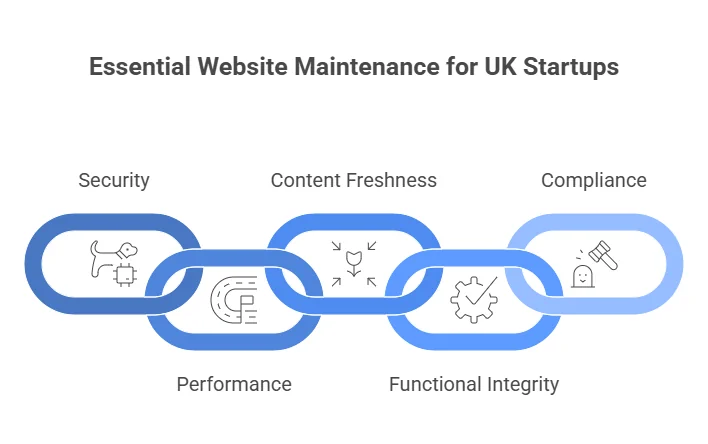
Let’s break down the five key reasons maintenance matters most.
1. Security: Protecting Data and Reputation
Cyber threats are a growing concern. Outdated CMS versions, themes, or plugins often serve as open doors for hackers and malware. By applying regular updates, startups can patch vulnerabilities before they become a problem.
Regular security updates, SSL renewals, and firewalls prevent data theft and downtime — protecting both your business and customer trust. A compromised website can not only lose customers but may also face Google blacklisting or fines under UK GDPR regulations.
2. Performance: Speed, SEO & User Experience
Website speed directly affects user behaviour. Studies show visitors abandon a site if it takes longer than 3 seconds to load. Search engines also use page speed as a ranking factor.
Regular performance checks — compressing images, clearing caches, and optimising scripts — keep your site “lightning-fast” (solve.co.uk). Faster sites improve dwell time, reduce bounce rates, and lead to higher conversions.
3. Content Freshness & Relevance
Nothing undermines credibility faster than outdated information. Regularly updating your content — whether that’s adding new blog posts, revising product details, or refreshing visuals — shows customers your business is active and attentive.
Google rewards freshness, so consistent updates help maintain or improve your search rankings. Even small tweaks, like updating your “About” section or adding recent testimonials, can make a noticeable difference.
4. Functional Integrity
Every click matters. If your contact forms fail or links break, potential customers might never reach you. Regularly testing all interactive features ensures a smooth, frustration-free experience.
For startups running online stores or booking systems, this is even more critical — small technical issues can directly result in lost revenue. Routine functional checks also help you catch design inconsistencies across different devices.
5. Legal & Compliance Requirements
In the UK, startups must comply with GDPR and data protection laws. Regular website maintenance audits help you confirm that privacy policies, cookie notices, and consent settings are accurate and visible.
Outdated or missing compliance elements can lead to hefty fines or eroded trust. Keeping these pages current demonstrates professionalism and care for your users’ data.
How to Maintain Your Website Effectively
Creating a beautiful website maintenance is one thing — keeping it secure, fast, and functional is another. For UK startups juggling multiple priorities, having a structured maintenance schedule can make upkeep simple and manageable.
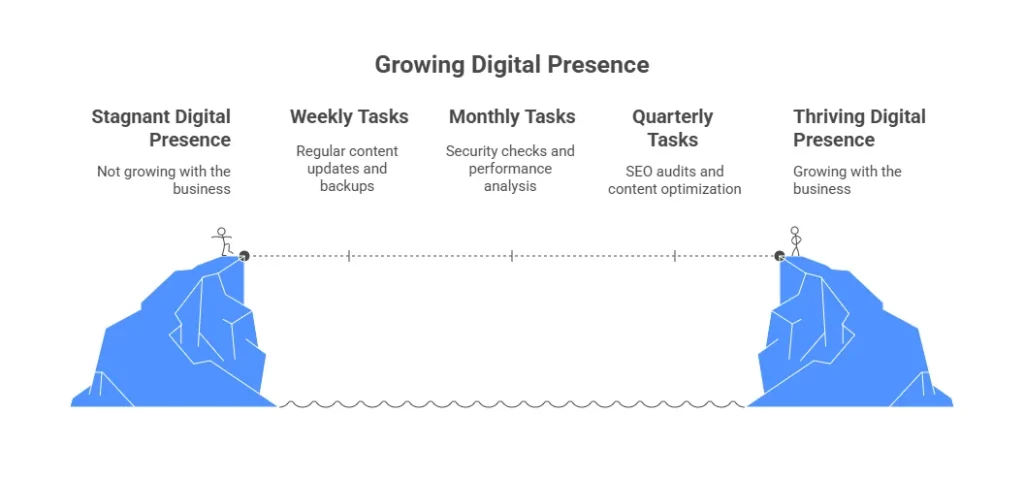
Here’s a breakdown of what to do weekly, monthly, quarterly, and yearly to keep your website maintenance running at its best.
Weekly Tasks: Quick Health Checks
These are light but vital checks that prevent small issues from becoming serious problems.
- Check for broken links or missing images. Use tools like BrokenLinkCheck or Ahrefs.
- Monitor website speed using Google PageSpeed Insights.
- Review content accuracy — ensure offers, contact info, and product details are correct.
- Test mobile responsiveness. Most users in the UK now browse on smartphones.
- Verify contact forms and chatbots to ensure enquiries reach your inbox.
A quick 15–30 minute review each week can save you hours (and money) later.
Monthly Tasks: System & Security Updates
Every month, dedicate time to the “engine room” of your site.
- Update your CMS, plugins, and themes to patch vulnerabilities.
- Run malware and vulnerability scans — many UK startups use tools like Wordfence or Sucuri.
- Backup your entire site and store copies both on your server and an external drive/cloud.
- Review analytics data in Google Analytics or Search Console to spot traffic changes and improve performance.
Monthly maintenance ensures your site’s foundation remains secure, especially as plugins and browsers evolve constantly.
Quarterly Tasks: Optimisation & SEO Review
Once per quarter, take a deeper look at your site’s overall health and strategy.
- Audit SEO elements: Check title tags, headings, and keyword usage.
- Refresh outdated content and visuals — update blog posts, hero images, or portfolio items.
- Test your site on multiple browsers and devices (Chrome, Safari, Edge, iPhone, Android).
- Review your user journey to identify any navigation or UX friction points.
Quarterly reviews are perfect for aligning your site’s performance with your evolving business goals.
Yearly Tasks: Full Website Overhaul
A comprehensive annual audit helps you plan for growth and prevent technical debt.
- Conduct a complete performance and design review. Is your site still modern and mobile-first?
- Renew domain names and hosting before expiry.
- Update legal pages and GDPR compliance (especially if your business model has changed).
- Plan your content calendar and set goals for the next 12 months.
Yearly maintenance ensures your digital presence grows with your business — not behind it.
WordPress Maintenance & Support Services in the UK
If your startup uses WordPress (as most do), maintenance becomes even more important — but also easier with the right tools and partners. WordPress powers over 40% of all websites globally, including thousands of small UK businesses, which makes it both popular and a frequent target for cyberattacks.
WordPress Maintenance & Support Services in the UK
If your startup uses WordPress (as most do), maintenance becomes even more important — but also easier with the right tools and partners. WordPress powers over 40% of all websites globally, including thousands of small UK businesses, which makes it both popular and a frequent target for cyberattacks.
Why Professional WordPress Maintenance Services Help
For busy founders, outsourcing maintenance is often the smartest choice. UK-based providers like DataXpie offer dedicated WordPress maintenance services that cover:
- 24/7 uptime monitoring and alerts.
- Automatic backups and one-click recovery.
- Proactive updates and compatibility checks.
- Speed and performance tuning.
- Security audits and SSL renewal management.
By letting professionals handle the technical work, startups can focus on growth, marketing, and customers — while enjoying the peace of mind that their site is secure and up-to-date.
Cost Considerations for UK Startups
Every UK startup knows the importance of budgeting wisely, and website maintenance is no exception. The good news is that maintenance doesn’t have to be expensive — but neglecting it can quickly become costly. Think of it as an insurance policy for your online business: proactive upkeep costs less than emergency repairs after a crash or hack.
Typical Maintenance Costs
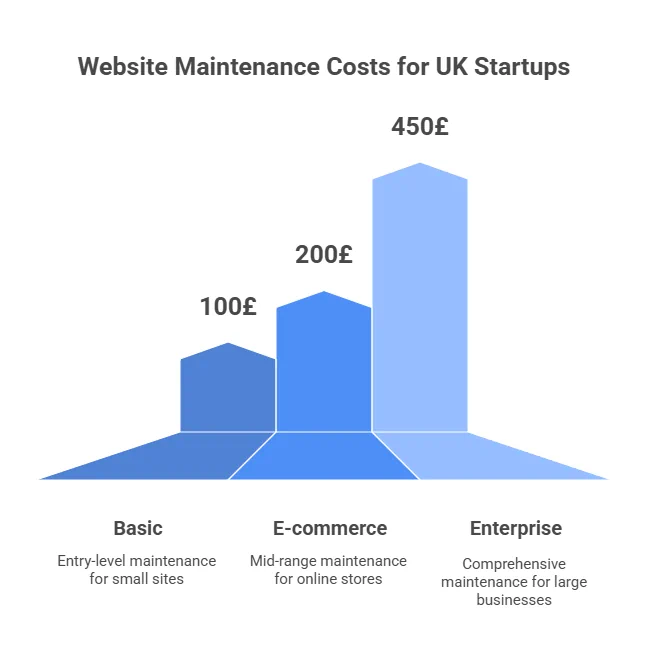
Here’s what you can expect to pay depending on your website’s type and complexity:
- Basic business websites (£50–£150 per month):
Ideal for small brochure-style sites or blogs. Covers software updates, backups, and basic security monitoring. - E-commerce or membership sites (£100–£300+ per month):
These require more frequent updates, advanced security, and uptime monitoring due to payment gateways and customer data handling. - Custom or enterprise-level sites (£300–£600+ per month):
Larger platforms with integrations, APIs, or complex databases benefit from dedicated maintenance teams and performance optimisation.
Factors Influencing Cost
Several variables determine how much you’ll spend on website maintenance:
- Size and complexity of your site – More pages and plugins mean more potential updates and checks.
- Type of hosting – Managed hosting with built-in security and backups may reduce your maintenance workload.
- Frequency of updates – Active content strategies (like weekly blogs) require regular database and SEO maintenance.
- E-commerce functionality – More transactions mean more security layers and compliance monitoring.
- Professional vs DIY approach – Outsourcing saves time but adds to monthly costs (often offset by higher reliability).
While small UK startups can start at the lower end of the range, investing in regular maintenance ensures stability and prevents costly downtime or data loss.
The Hidden Cost of Neglect
Many businesses ignore maintenance until something breaks — like a crashed site or lost customer data. Emergency fixes often cost 5–10 times more than a routine plan. Moreover, downtime can lead to lost sales, lower search rankings, and reduced customer trust.
The takeaway? Preventative maintenance is not an expense — it’s a smart, scalable investment in your startup’s reputation and success.
DIY vs Professional Website Maintenance
When it comes to maintaining your website, you have two main options: do it yourself or outsource to professionals. Both have benefits — but the right choice depends on your skills, time, and budget.
Let’s look at the pros and cons of each.
DIY Website Maintenance
Pros:
- Lower cost: Ideal for startups on tight budgets.
- Direct control: You decide when and how updates happen.
- Learning opportunity: Gain technical knowledge about your CMS and plugins.
Cons:
- Time-consuming: Managing updates, backups, and security checks can take hours each week.
- Risk of errors: A small mistake (like a plugin conflict) can break your site.
- Limited protection: DIY tools can’t always detect hidden vulnerabilities or malware.
DIY maintenance works best for technically confident founders managing small websites with simple functionality.
Professional Website Maintenance
Pros:
- Expert care: Professionals handle everything from updates to performance tuning.
- Proactive protection: Early detection of issues before they impact visitors.
- Time-saving: Frees you to focus on customers and growth.
- Peace of mind: Guaranteed uptime, security monitoring, and fast recovery in case of issues.
Cons:
- Monthly cost: Typically £50–£300 depending on site size and complexity.
- Less hands-on control: Changes or updates may go through your provider.
Professional services are ideal for startups ready to scale or for non-technical founders who prefer reliability and consistency.
Finding the Right Balance
Many UK startups take a hybrid approach — handling light content updates internally while outsourcing technical maintenance (like security, backups, and performance checks) to experts. This approach keeps costs manageable while ensuring the site remains safe and professional.
For instance, DataXpie’s website maintenance plans offer UK startups a flexible mix of proactive monitoring, SEO optimisation, and WordPress support — so you can grow confidently without worrying about backend issues.
Conclusion: Keep Your Website Strong, Secure, and Ready for Growth
Your website is more than just an online presence — it’s the backbone of your startup’s credibility and customer experience. Regular maintenance ensures that your site stays secure, loads quickly, and delivers a seamless experience to every visitor. For UK startups competing in a fast-moving digital landscape, this consistency is what builds trust, strengthens SEO, and converts browsers into buyers.
A structured maintenance plan — covering weekly, monthly, quarterly, and yearly tasks — protects your site from cyber threats, keeps your content fresh, and ensures ongoing compliance with UK laws like GDPR. Whether you choose to handle upkeep yourself or hire experts, the key is consistency. A neglected website maintenance can cost far more in downtime, lost leads, or reputation damage than a well-planned maintenance routine.
At DataXpie, we understand that startup founders have enough to focus on — from product development to marketing growth. That’s why our UK website maintenance services are designed to keep your site secure, fast, and fully optimised while you focus on building your business.
💡 Take the next step:
Explore DataXpie’s Website Maintenance Plans today and enjoy peace of mind knowing your online presence is always protected, updated, and performing at its best.