

For UK small businesses, a well Website Maintenance isn’t just a technical necessity — it’s a crucial part of keeping your business credible, visible, and secure. Yet, many small business owners only notice their site needs attention when something goes wrong — a broken form, a slow page, or, worse, a hacked website.
Table Of Content
Regular website maintenance ensures your site runs smoothly, stays protected from cyber threats, and provides the seamless experience your customers expect. Whether you manage your own site or use WordPress maintenance services in the UK, consistent upkeep keeps your business competitive online.
Why Website Maintenance Matters
Website maintenance might sound like background work, but it directly affects your security, search visibility, and brand reputation. According to solve.co.uk, over 40% of cyber-attacks target small businesses, making regular upkeep a necessity, not a luxury.
When websites aren’t maintained, outdated software and plugins become open doors for hackers. Malware injections, phishing attacks, or data breaches can compromise not only your Website Maintenance but also customer trust. Recovering from such incidents often costs far more — both financially and reputationally — than preventive maintenance ever would.
Beyond security, regular maintenance helps your site perform better in Google search results. Google’s algorithm rewards websites that are secure (with valid SSL certificates), load quickly, and regularly publish updated content. If your website is slow or outdated, you risk dropping in rankings — making it harder for potential customers in the UK to find your business online.
In short, website maintenance supports three key pillars of your digital presence:
- Security – protects your data and customer information.
- Performance – ensures fast loading and smooth navigation.
- SEO and visibility – keeps your site discoverable and competitive.
Key Maintenance Tasks (Weekly/Monthly)
Website maintenance doesn’t need to be complicated — but it should be consistent. Whether you’re handling upkeep yourself or outsourcing to a professional UK provider, the following tasks form the foundation of a healthy, secure website.
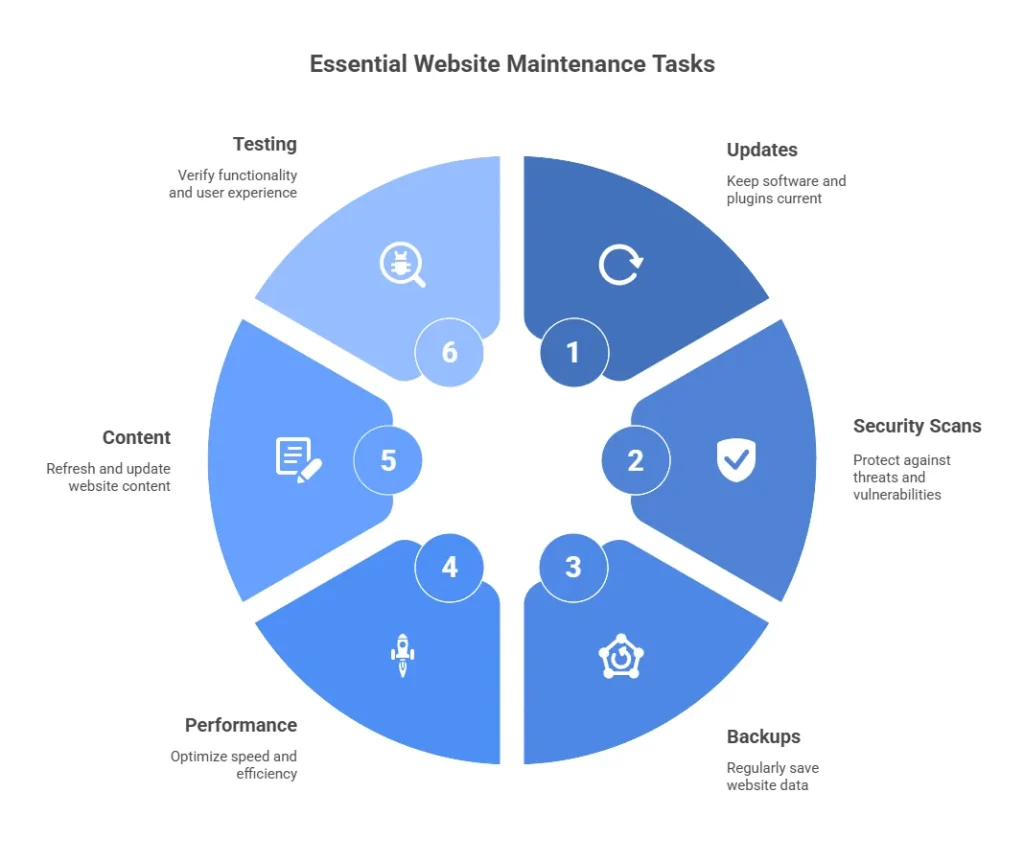
Software & Plugin Updates
One of the most common causes of website issues is outdated software. If you’re using WordPress, keeping your core system, plugins, and themes updated is essential. Developers release updates not just for new features but to patch vulnerabilities that hackers can exploit.
A good maintenance routine involves running updates after testing them in a safe, off-site environment (called “staging”). This ensures compatibility and prevents your live site from breaking. Professional WordPress maintenance services in the UK typically handle this automatically, giving you peace of mind that everything stays secure and functional.
Security Scans & Monitoring
Your website is constantly exposed to threats — from brute-force login attempts to hidden malware scripts. Regular security scans help detect issues early before they become major problems.
A strong maintenance plan includes:
- 24/7 security monitoring for unusual activity.
- SSL certificate checks to keep customer data encrypted.
- Malware scanning and removal when needed.
Think of it as having a security guard for your digital storefront. In the UK’s competitive online market, demonstrating that your site is safe (through visible trust badges or HTTPS encryption) helps build customer confidence.
Regular Backups
Imagine your website suddenly going down due to a server crash, malware infection, or accidental deletion. Without a recent backup, recovering your data could be time-consuming — or even impossible. That’s why regular backups are one of the most vital website maintenance tasks.
UK WordPress maintenance services typically offer daily or weekly backups, stored securely on external or cloud servers. This ensures that if anything goes wrong, your website can be restored quickly with minimal downtime.
For small businesses, this means less stress and no lost sales due to technical mishaps. It’s best to keep at least three backup copies: one recent, one a week old, and one a month old — providing extra protection in case a newer version contains errors or malware.
A reliable backup system gives you peace of mind knowing your site can be recovered at any time, keeping your business running smoothly and securely.
Performance Optimisation
Your website’s speed directly affects how visitors perceive your business. Slow websites frustrate users, drive them away, and negatively impact your Google rankings. According to solve.co.uk, optimising site performance keeps it “lightning-fast” and ensures smooth navigation across all devices.
Effective performance optimisation includes:
- Compressing images without sacrificing quality.
- Clearing caches to reduce load times.
- Cleaning up databases and unused files.
- Monitoring uptime to ensure your site remains accessible.
Regular performance checks help UK small businesses deliver the seamless experience users expect. A fast Website Maintenance not only boosts SEO but also enhances customer trust — especially for e-commerce and service-based businesses competing locally.
Content Updates
Fresh, relevant content is one of the simplest yet most powerful forms of maintenance. Adding new blog posts, news updates, or service information signals to Google that your website is active and trustworthy.
For UK small businesses, consistent content updates also help you:
- Engage local audiences by covering UK-specific topics.
- Improve search visibility for trending keywords.
- Showcase expertise and industry credibility.
If you use WordPress, updating content is quick and user-friendly. Even minor tweaks — like adding new testimonials or updating old posts — can improve engagement and SEO performance.
Test Contact Forms & Links
Few things frustrate potential customers more than broken forms or links. If your contact page, checkout form, or booking system doesn’t work properly, you’re losing leads without even knowing it.
As part of your weekly website maintenance, you should:
- Test all contact and enquiry forms.
- Check e-commerce checkout functionality.
- Fix or redirect any broken links.
This ensures that every visitor can interact smoothly with your business. Regular testing helps maintain professionalism and avoids costly missed opportunities — especially for UK small businesses where every lead counts.
Maintenance Schedule
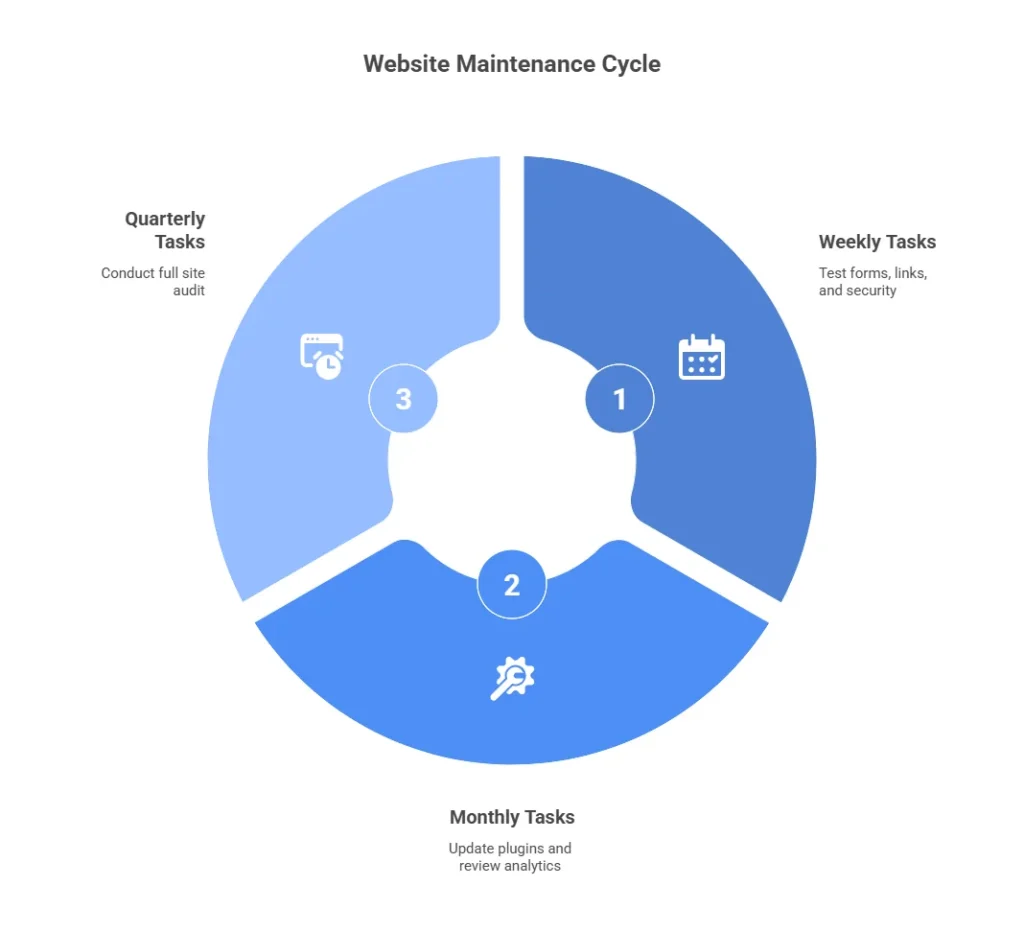
A structured maintenance schedule makes upkeep manageable. Breaking down your tasks into weekly, monthly, and quarterly actions ensures nothing gets overlooked and your Website Maintenance remains secure and up-to-date.
Weekly Tasks
- Test forms, checkout processes, and links.
- Run basic security and malware scans.
- Check backups are running properly.
- Approve or moderate comments (for blogs).
Monthly Tasks
- Update WordPress core, plugins, and themes.
- Review site analytics to track performance and visitor behaviour.
- Optimise images and clear unnecessary files.
- Audit broken links and update key content pages.
Quarterly Tasks
- Conduct a full site audit — test speed, SEO health, and mobile responsiveness.
- Review technical performance reports.
- Check GDPR compliance and privacy policies.
- Refresh design elements or add new features if needed.
For small UK businesses, sticking to this schedule helps prevent sudden breakdowns, security issues, and loss of customer trust. It’s an ongoing investment that pays off in stability, performance, and reputation.
WordPress Maintenance Services in the UK
For many UK small businesses, WordPress is the platform of choice — flexible, powerful, and easy to manage. However, with that flexibility comes responsibility: WordPress sites require regular updates and security checks to stay safe and efficient. Professional WordPress maintenance services in the UK take this pressure off busy business owners, providing reliable, expert care tailored to local needs.
Key Features of Professional Maintenance Plans
A good WordPress maintenance plan doesn’t just fix problems; it prevents them. UK-based providers offer packages designed to cover every critical area of website health:
- Regular Updates: Automatic and secure updates for WordPress core, plugins, and themes — often tested off-site before going live to avoid disruptions.
- Daily and Monthly Backups: Encrypted backups stored in the cloud, ensuring quick recovery from data loss or cyber-attacks.
- 24/7 Security Monitoring: Real-time malware detection, firewall protection, and proactive threat prevention.
- Performance Monitoring: Regular speed checks, cache management, and detailed performance reports to keep your site running fast.
- Content & Technical Support: Assistance with small edits, troubleshooting, broken link fixes, and emergency repairs — all handled by UK-based experts.
- SEO & Compliance Checks: Routine search engine optimisations and GDPR compliance support to maintain visibility and meet UK legal standards.
- Friendly Local Support: Access to technicians who understand the UK business landscape and communicate clearly without technical jargon.
These services ensure your website remains secure, compliant, and consistently optimised — allowing you to focus on growth instead of troubleshooting.
Cost and Plans
The cost of WordPress maintenance services in the UK typically ranges from £40 to £90 per month, depending on your site’s size and support level. Smaller business websites often start with basic plans that include updates, backups, and monitoring, while larger or e-commerce sites may need advanced support with real-time security and SEO tracking.
Most UK providers offer flexible monthly contracts with no long-term commitments — perfect for small business owners who want to control their budgets while ensuring professional oversight. Some even include add-on services like website edits, content uploads, or quarterly audits for a small extra fee.
When comparing plans, look for:
- Transparent pricing and service breakdowns.
- 24/7 emergency support availability.
- UK-based hosting or maintenance teams for faster communication and support.
A well-structured maintenance plan ensures your site gets the attention it needs without breaking the bank — helping you stay secure and competitive in a fast-paced digital environment.
Benefits for UK Small Businesses
Investing in website maintenance might seem like an extra expense, but for UK small businesses, it’s a smart long-term investment that pays dividends in performance and peace of mind.
Here’s how professional maintenance makes a difference:
- Peace of mind: Your website is monitored, updated, and protected by experts.
- Avoid costly downtime: Reduce the risk of site outages and lost revenue.
- Improved performance: Fast, secure websites create a better first impression for customers.
- Boosted SEO and trust: Regular updates and secure SSL connections improve visibility and credibility.
- Time-saving: You can focus on running your business while professionals handle technical upkeep.
Choosing a UK-based provider adds extra value — you’ll receive local, timely support that understands compliance standards, customer expectations, and the challenges small businesses face in the UK market.
DIY vs Professional Maintenance
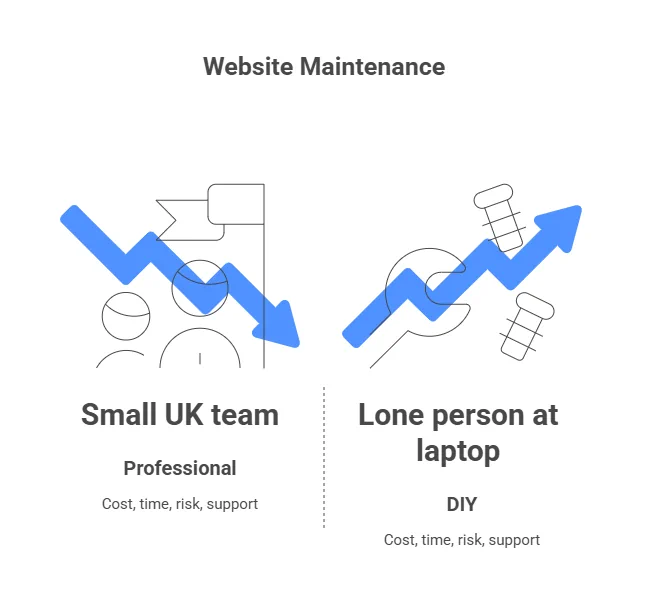
Many small business owners start out managing their own websites. While DIY maintenance can save money initially, it often becomes time-consuming and risky as websites grow in complexity. A single missed update or backup could cause major problems — from security breaches to data loss.
Here’s a quick comparison:
| Aspect | DIY Maintenance | Professional Maintenance (e.g. DataXpie) |
|---|---|---|
| Cost | Free or low-cost initially | £40–£90/month depending on plan |
| Time Investment | High — requires technical skill and regular attention | Low — handled by experts |
| Risk | Higher chance of missed updates, errors, or security issues | Minimal risk — proactive prevention |
| Support | Limited to online tutorials or forums | 24/7 expert UK-based support |
| Scalability | Harder as business grows | Easily scalable and customisable plans |
In short, professional website maintenance is like having a reliable IT team behind your business — without the overhead. For UK small businesses, partnering with a trusted provider such as DataXpie ensures peace of mind, professional oversight, and ongoing optimisation.
When something goes wrong, you’ll have experts on call instead of scrambling to fix the issue yourself. Over time, this saves both money and stress, while keeping your digital presence strong and secure.
Conclusion: Keep Your Website Running Smoothly and Securely
Your website is often the first impression customers have of your business — and in today’s competitive UK market, that impression needs to be fast, secure, and reliable. Regular website maintenance ensures that your online presence stays strong, your data remains protected, and your visitors always enjoy a seamless experience.
From updating WordPress plugins and running security scans to performing regular backups and content refreshes, every maintenance task plays a vital role in keeping your site at its best. Skipping these steps can lead to downtime, hacking risks, and lost opportunities — all of which are avoidable with the right strategy.
For UK small businesses, proactive upkeep isn’t just about preventing problems — it’s about building trust, improving visibility, and supporting long-term growth.
If you’re short on time or want complete peace of mind, consider partnering with experts who understand the UK digital landscape.
🚀 Keep Your Website Safe with DataXpie
At DataXpie, we specialise in WordPress maintenance services for UK businesses — offering reliable, flexible plans designed to keep your site secure, fast, and fully optimised. From 24/7 monitoring and daily backups to SEO support and performance checks, our UK-based team ensures your website always performs at its best.
Contact DataXpie today to discover how our tailored maintenance plans can help protect your business website, save you time, and give you complete confidence in your online presence.