

Running a small business in the UK often means wearing many hats — from managing operations and sales to trying to handle marketing on your own. Yet, as digital competition grows, spreading yourself too thin can make marketing feel more like guesswork than strategy. The truth is, without consistent and skilled marketing, even the best products struggle to reach their audience.
Table Of Content
Hiring a freelance marketer offers a smart, flexible way to fill that gap. Whether you need help improving your search rankings, running Facebook ads, or creating content that converts, freelancers give you access to expertise without the commitment of full-time staff. More and more UK entrepreneurs are discovering that outsourcing marketing allows them to focus on growth while professionals handle visibility, engagement, and lead generation.
This guide will walk you through everything you need to know — from understanding which marketing services to outsource, to finding the right freelancer, setting budgets, and building a partnership that drives results.
Why Outsource Marketing?
Most small business owners know they should “do more marketing”, but few have the time or in-house skills to do it effectively. From SEO to social media management, each channel demands unique expertise and constant attention. Outsourcing lets you tap into that skillset instantly, freeing up your time to focus on what you do best — running the business.
Many small teams in the UK start by trying to juggle everything themselves — writing posts, running ads, and checking analytics late at night. But that approach quickly leads to burnout and inconsistent results. By contrast, outsourcing marketing gives you access to experienced professionals who already understand tools, trends, and strategies that work for your industry.
Here’s why outsourcing marketing makes sense for small UK businesses:
- Expertise on Demand: Instead of hiring a full-time employee, you can bring in specialists — an SEO expert this month, a content writer next.
- Cost Control: You only pay for the work you need, with no long-term salaries or overheads.
- Scalability: Need more help during busy seasons? Simply increase hours or hire additional freelancers.
- Time Efficiency: You reclaim valuable time for sales, customer relationships, and operations.
Insights from online discussions show that flexibility and time savings are the top two reasons small business owners choose to outsource. Many entrepreneurs on Reddit mentioned that hiring freelancers helped them “finally get consistent marketing results” without sacrificing their evenings and weekends.
Outsourcing also helps you compete with larger brands, especially when you work with UK-based freelancers who understand your market, culture, and consumer habits. For startups or growing small businesses, it’s the simplest way to add professional firepower without overstretching your resources.
Types of Marketing Services You Can Outsource
Not all businesses need the same type of marketing help — some may struggle with visibility on Google, others might need better-performing ads or social media engagement. The good news? Freelance marketers in the UK cover virtually every area of digital marketing, allowing you to pick and choose based on your priorities and budget.
Core Services
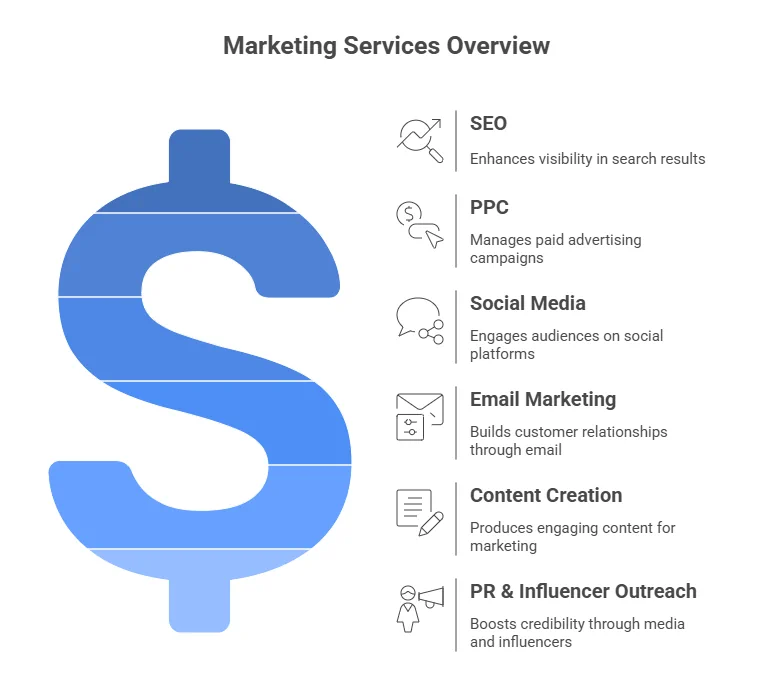
Here are the most common areas small businesses outsource first:
- Search Engine Optimisation (SEO): Improve your Google rankings and make your business visible for local UK searches. Freelancers can help with on-page SEO, backlinks, keyword strategy, and Google Business Profile optimisation.
- Pay-Per-Click Advertising (PPC): Freelancers manage Google Ads or Bing Ads campaigns, ensuring your money is spent wisely to generate measurable leads.
- Social Media Marketing: From Facebook and Instagram to LinkedIn, social media freelancers create engaging posts, manage communities, and run paid ads tailored to your audience.
- Email Marketing: Skilled freelancers can design and automate campaigns that build relationships and convert customers over time.
- Content Creation: Writers and designers craft blogs, graphics, and videos that reflect your brand voice and attract organic traffic.
- Public Relations & Influencer Outreach: Freelancers can pitch stories to media or collaborate with micro-influencers to boost your reach and credibility.
Emerging and Niche Skills
As marketing evolves, so does the range of freelance expertise available. Many small UK businesses now look for freelancers specialising in:
- AI-Powered Marketing: Using automation tools or machine learning for smarter ad targeting.
- Video & YouTube Marketing: Creating short-form video content that drives engagement.
- Local SEO & Voice Search Optimisation: Helping businesses appear in “near me” searches.
Social media discussions show a clear trend — UK small business owners increasingly want specialised freelancers, not generalists. For instance, hiring one person for SEO and another for social media often yields better results than expecting one freelancer to handle everything.
Outsourcing gives you the flexibility to build a marketing team à la carte, combining different freelancers for each marketing channel based on your goals and budget.
Hiring Options for UK Businesses
When you’re ready to hire a marketer, one of the first decisions is how to hire them. Should you go through a full-service agency, work directly with freelancers, or get help from a marketing consultant? Each option comes with its pros and trade-offs, depending on your budget, flexibility, and desired level of involvement.
Let’s look at the most common routes UK small business owners take when outsourcing marketing.
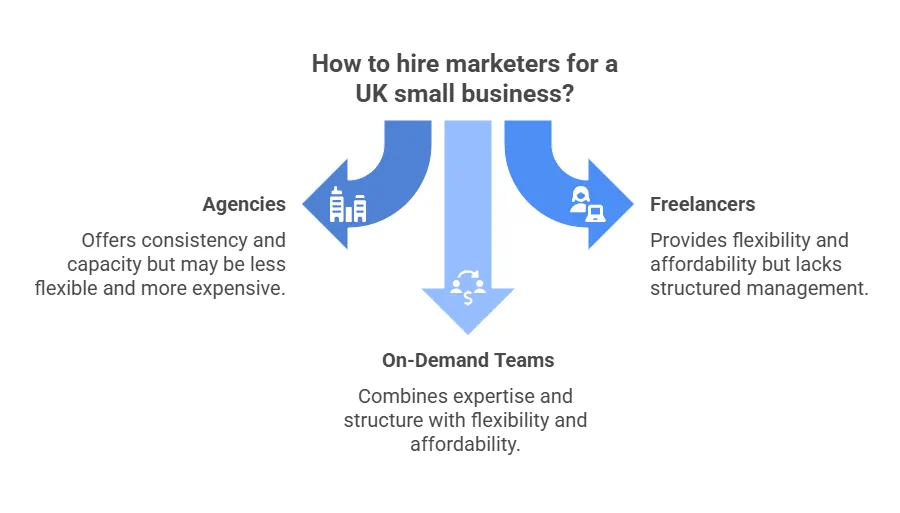
Agencies: Full-Service but Less Flexible
Marketing agencies can handle everything — from strategy to execution — making them ideal for businesses that want to hand over the entire process. Agencies often have specialists in different areas (SEO, ads, design, content), which ensures quality and consistency.
However, that level of service comes with a price tag. Agencies tend to charge monthly retainers or long-term contracts, which can be difficult for small businesses operating on tight budgets. Turnaround times can also be slower since you’re one of many clients.
If you value convenience and want everything done under one roof, agencies can be great. But if you’re after agility and control, you might prefer freelance support.
Freelancers: Flexible and Cost-Effective
Freelancers are an increasingly popular choice for UK startups and small businesses because they provide expertise without the commitment of hiring a full-time employee. You can hire them for a single project — such as a three-month SEO campaign or a one-off social media launch — or keep them on retainer for ongoing support.
Small business owners on Reddit often say they start with Upwork or Fiverr to test the waters. These platforms make it easy to find talent across every marketing niche and filter candidates by reviews, skills, and hourly rates. However, the downside is that quality can vary widely. Many business owners mention that finding the right freelancer sometimes takes time and a few trial runs.
A more strategic approach is to build a small freelance team of specialists — for example, one person for content writing, another for social media, and a third for paid ads. This lets you cover all major marketing channels without relying on a single “do-it-all” freelancer.
LinkedIn is another strong option for hiring UK-based freelancers. You can directly review their professional background, see their published posts, and gauge their expertise by how they engage with marketing discussions. Many business owners say that interacting with a freelancer’s content first helps them judge both personality and skill before starting a conversation.
Consultants and On-Demand Teams (e.g., DataXpie)
Somewhere between freelancers and agencies lies a growing middle ground — on-demand marketing teams. These services combine freelance flexibility with structured management and results tracking.
For instance, DataXpie’s Pay-As-You-Go Marketing Services UK offer vetted marketing specialists available without contracts. This model gives small businesses the security of professional oversight and the flexibility of freelance pricing.
Another growing trend, especially mentioned in YouTube comments, is the “no-risk trial” period — where businesses can test a marketer or agency for a week or two before committing. This approach helps small business owners evaluate quality and communication before investing more time or money.
If you’re unsure which route to take, consider your priorities:
- If you need consistency and capacity → go for an agency.
- If you want flexibility and affordability → choose freelancers.
- If you want expertise plus structure → try on-demand marketing services like DataXpie.
How to Vet and Choose the Right Marketer
Finding the right marketer isn’t just about skills — it’s about reliability, communication, and understanding your business goals. Many small businesses rush into hiring the first affordable freelancer they find, only to face delays, unmet expectations, or poor-quality work. Taking a little extra time to vet your marketer can save you money and frustration down the line.
Here’s how to ensure you’re hiring the right person or team.
Check Their Track Record
Ask for case studies or examples of previous work that demonstrate tangible results. For example:
- “Increased UK website traffic by 40% within 3 months.”
- “Generated 200 qualified leads from Facebook Ads.”
- “Helped a local café double its online orders through Google My Business optimisation.”
If the freelancer can’t provide measurable outcomes, ask for a portfolio or samples of similar projects. Real-world examples are often a better indicator of skill than promises.
Also, look for experience relevant to your industry. A marketer who’s worked with UK e-commerce brands might not be the right fit for a local trades business, and vice versa.
Assess Their Understanding of the UK Market
The UK marketing landscape is unique — from consumer behaviour and regional trends to GDPR compliance and local SEO nuances. A freelancer who has worked with UK clients before will likely understand how to adapt tone, offers, and targeting for your audience.
For example, British consumers tend to value trust and credibility, so content that’s too “salesy” can backfire. A marketer familiar with this nuance will know how to strike the right tone.
If you’re hiring remotely, ask about their experience with UK-based projects or request to see examples of campaigns targeted to UK audiences.
Start Small with a Pilot Project
Reddit and Quora users frequently advise small business owners to start small — hire for a short, clearly defined project before committing long-term. This could be a single ad campaign, blog post, or email series.
Starting small helps you test:
- Communication and responsiveness
- Quality of work and adherence to deadlines
- Their ability to follow brand guidelines and understand your tone
If everything goes well, you can scale up gradually. This approach also prevents the common “disappearing freelancer” issue many business owners have experienced mid-project.
Use Networking and Trusted Recommendations
Don’t overlook your network. Many UK entrepreneurs find trusted marketers through LinkedIn groups, local business communities, or referrals from other founders. You can also attend virtual networking events — often hosted by UK marketing associations — to connect with verified professionals.
Some small business owners use pre-vetted freelance agencies or virtual assistant companies that specialise in marketing. These services screen candidates in advance, which saves you time and ensures you’re working with credible expert
Evaluate Communication and Transparency
Great marketers are collaborators, not just contractors. Before hiring, notice how clearly they communicate about timelines, goals, and reporting. Ask how often they’ll update you on progress — weekly, fortnightly, or monthly.
If you find a freelancer who proactively shares ideas, data insights, and recommendations, that’s a strong sign you’ve found someone invested in your success.
Setting Goals and Budget
Once you’ve found a promising freelance marketer, the next step is to set clear goals and decide on a realistic budget. Without a defined plan, even the best marketer will struggle to deliver the results you want. Setting measurable objectives helps you both stay aligned and ensures your money is well spent.
Define Clear, Measurable Goals
Start by identifying what you want your marketing to achieve. Different goals require different strategies — for instance, boosting brand awareness needs content and social media, while generating leads requires SEO or paid ads.
Ask yourself questions like:
- Do I want more website traffic or more sales?
- Am I trying to build a brand or generate quick leads?
- Which platforms matter most to my audience — Google, LinkedIn, Instagram, or TikTok?
From there, turn your goals into measurable metrics. For example:
- “Increase organic traffic by 20% in three months.”
- “Generate 100 qualified leads via Facebook Ads.”
- “Grow Instagram engagement by 30% by next quarter.”
These measurable targets make it easier to track progress and hold your freelancer accountable.
Many Reddit users emphasise the value of tracking ROI (Return on Investment) carefully — especially for small businesses working with limited budgets. If you’re paying £300 for a campaign, you should know how much revenue or engagement it brings back.
Plan Your Marketing Budget Wisely
Marketing costs vary depending on the channel and freelancer experience. A good rule of thumb is to start small and scale up as you see results.
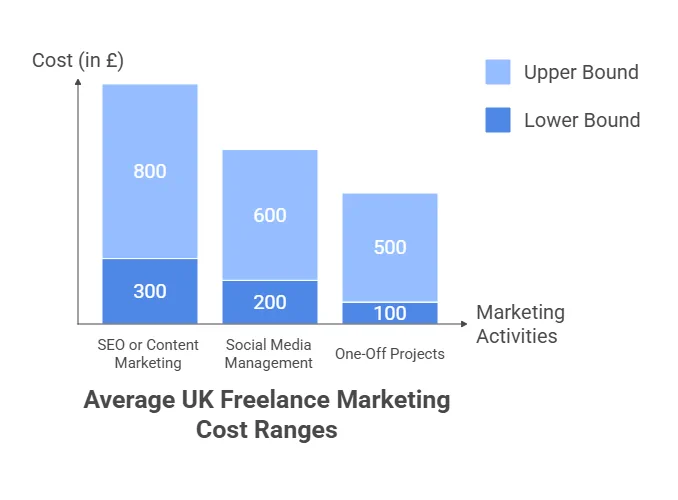
Here’s a simple breakdown:
- SEO or Content Marketing: £300–£800 per month
- Social Media Management: £200–£600 per month
- Google or Meta Ads Management: 10–20% of ad spend
- One-Off Projects (e.g., blog series, landing page): £100–£500
Many small business owners discuss negotiating pay-per-task or hourly rates that align with their cash flow. For example, you might pay per blog post, campaign, or milestone. This keeps costs transparent and manageable.
If you’re on a very tight budget, consider working with freelancers on short-term contracts or trial projects. That way, you can test performance before committing more funds.
Finally, remember that marketing is an investment, not just an expense. The right freelancer can bring in customers worth many times their fee. Keep an eye on long-term gains like brand visibility and customer loyalty, not just short-term clicks.
Collaboration and Ongoing Management
Establish Clear Communication Channels
Right from the start, decide how you’ll stay in touch.
- For regular updates, use tools like Slack, Microsoft Teams, or WhatsApp for quick chats.
- Schedule weekly or monthly check-in calls via Zoom or Google Meet to review campaign progress.
- Use project management tools such as Trello, Asana, or ClickUp to track deliverables and deadlines.
Make sure to agree on working hours and turnaround times that fit UK time zones. A quick response rate and proactive communication are often signs of a reliable freelancer.Hiring the right marketer is just the beginning — maintaining a productive working relationship ensures long-term success. Many UK small business owners mention that poor communication or unclear expectations can derail even the best marketing efforts. Effective collaboration keeps everyone accountable, informed, and motivated.
Set Reporting Expectations Early
Reporting keeps your marketing transparent and measurable. Ask your freelancer to share a monthly summary that includes:
- Traffic growth (website or social media)
- Lead or conversion performance
- Budget usage vs. results
- Next month’s focus or recommendations
These reports don’t need to be fancy — a clear, visual summary using Google Analytics, Meta Ads Manager, or even Excel is enough. What matters most is consistency.
Encourage Collaboration Across Channels
If you work with multiple freelancers (e.g., one for SEO and one for social media), create a shared document or workspace where they can coordinate. When marketers understand what others are doing, your campaigns become more cohesive.
For example:
- Your SEO expert can share keyword insights that your content writer can use.
- Your social media manager can repurpose blog snippets for engagement posts.
Building a small freelance “micro team” this way often produces better, more unified results than isolated efforts.
Build Long-Term Partnerships
Many successful business owners on Reddit and Quora say their best marketing results came from freelancers they kept for the long term. Once a freelancer understands your tone, brand, and goals, their efficiency and creativity improve dramatically.
Offer feedback regularly — both positive and constructive — and acknowledge great work. Loyalty goes both ways, and building trust creates smoother collaboration over time.
Common Pitfalls to Avoid
Even with the right freelancer or agency, UK small business owners can fall into a few traps that reduce marketing effectiveness. Being aware of these pitfalls helps you save time, money, and frustration.
- Expecting One Person to Do Everything
Many entrepreneurs assume a single freelancer can handle all channels — SEO, social media, content, email marketing, and paid ads. In reality, specialists usually deliver better results. Consider hiring multiple freelancers with complementary expertise. - Skipping ROI Tracking
Without tracking leads, conversions, or revenue generated, you won’t know if your marketing investment is paying off. Set clear KPIs upfront and review results regularly. - Ignoring Local Context
Marketing strategies that work elsewhere may not suit the UK market. Cultural nuances, regional trends, and GDPR compliance all matter. Freelancers familiar with UK consumers are worth prioritising. - Poor Communication or Undefined Deliverables
Ambiguous instructions or lack of check-ins can derail campaigns. Always set clear expectations, timelines, and reporting schedules. - Overlooking Contracts and Payment Terms
Even with freelancers, a simple contract ensures clarity on payment, scope, and deadlines. Pay-as-you-go arrangements or trial periods help mitigate financial risk while testing the partnership.
By proactively avoiding these mistakes, you set your marketing partnership up for success and ensure your small business sees tangible growth.
Conclusion – Flexible Marketing for Growing UK Businesses
Hiring freelance marketers can be a game-changer for UK small businesses. Outsourcing provides access to expertise, saves time, and allows you to scale your marketing efforts without the overhead of full-time staff. By carefully vetting freelancers, setting clear goals, and maintaining strong collaboration, you can create campaigns that generate real results.
Small business owners who embrace flexible marketing — whether through specialists, agencies, or pay-as-you-go models — often see faster growth and better ROI. Starting with pilot projects, tracking performance, and gradually building long-term partnerships ensures your marketing strategy evolves alongside your business.
If you’re looking for expert, flexible marketing support without long-term commitments, consider DataXpie’s Pay-As-You-Go Marketing Services UK. Their vetted professionals can help your business grow while you focus on running it — risk-free and on your schedule.
If you’re looking for expert, flexible marketing support without long-term commitments, consider DataXpie’s Pay-As-You-Go Marketing Services UK. Their vetted professionals can help your business grow while you focus on running it — risk-free and on your schedule.