

Introduction — Why this matters now
In today’s digital-first world, small businesses face a brutal challenge about Social media and standing out in a crowded noise of content, ads, and competing brands. Consumer attention is the most precious currency — and social media is where much of that attention already lives.
Table Of Content
- Introduction — Why this matters now
- What Is Social Media Marketing?
- UK Market Overview & 2025 Cost Landscape
- Why Social Media Marketing Matters for Small UK Businesses
- The 10 Benefits of Social Media Marketing for Small UK Businesses
- Real UK Cost Scenarios & Case Comparisons
- Common Mistakes Small Businesses Make on Social Media (and How to Avoid Them)
- The Ultimate DataXpie Social Media Starter Guide for Small UK Businesses
- Why Social Media Marketing Is No Longer Optional for UK Businesses
- Key Takeaways for UK Small Business Owners
- 11. How DataXpie Can Help You Grow
- Why Work with DataXpie
- Frequently Asked Questions
- What is the main benefit of social media marketing for small UK businesses?
- Which social media platform works best for small businesses in the UK?
- How often should a small business post on social media?
- How much does social media marketing cost in the UK?
- Can small businesses manage their own social media?
Here’s a striking fact: in January 2025, the UK had 54.8 million social media user identities, equivalent to 79% of the population. (DataReportal – Global Digital Insights) That’s a vast audience — and even if only a fraction are your ideal customers, smart social media marketing can give you access that would be impossible via traditional advertising alone.
In this article, you’ll discover 10 powerful, less-talked benefits of social media marketing tailored for small UK businesses. You’ll also see real cost context for 2025, two mini UK case scenarios, and a simple next step to get a free consultation with DataXpie — no fluff, just results.
What Is Social Media Marketing?
When many business owners hear “social media marketing,” they picture posting pretty images or random status updates. That’s only part of it. At its core, social media marketing is a strategic, multi-layered discipline — combining content creation, audience engagement, paid amplification, and analytics — all with the goal of delivering business results.
A more complete definition:
Social media marketing is the process of planning, creating, distributing, and optimising content (organic and paid) across social platforms, with the aim of building an audience, driving engagement, and converting that engagement into leads, revenue, or loyalty.
Key things to understand:
- It’s not about being everywhere; it’s about being in the right places with the right message.
- Organic content builds trust and community; paid support pushes reach and conversions.
- Without measurement and iteration, even brilliant content will underperform.
At DataXpie, we believe the sweet spot lies where creativity meets data. We build campaigns not just to get likes, but to attract qualified leads. Our UK-aware approach ensures content resonates with British audiences, and our ad optimisation ensures your budget is spent wisely — with real targets in mind.
UK Market Overview & 2025 Cost Landscape
For small businesses across the UK, social media marketing has become one of the most cost-efficient growth channels. But what’s realistic in terms of price, reach, and outcomes in 2025?
Let’s start with the market snapshot.
According to the latest DataReportal 2025 figures, over 54.8 million UK residents actively use social platforms, with Meta (Facebook + Instagram) and TikTok continuing to dominate user time. Meanwhile, LinkedIn usage has surged 18% year-on-year among B2B and service-based companies, making it a strong choice for consultants and agencies. Advertising costs have stabilised since 2023, but competition has risen — meaning creative quality and targeting now make the biggest performance difference.
Real-World Cost Context
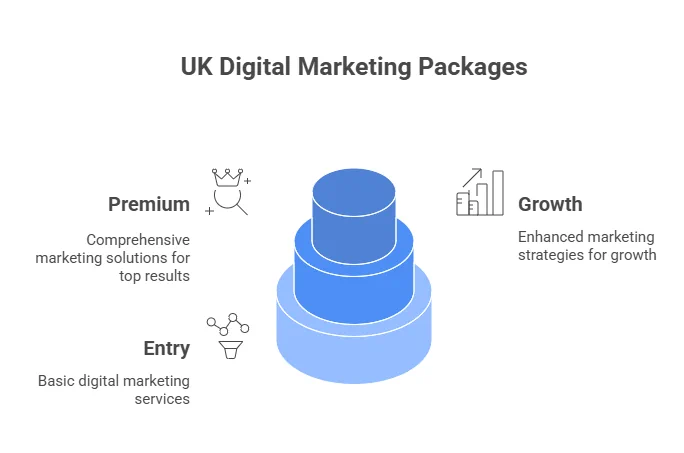
- Entry-Level Packages (£350 – £700/month): Suitable for startups or local businesses focusing on 1–2 platforms with light content output.
- Growth Packages (£800 – £1,500/month): For SMEs wanting multi-platform management, ad optimisation, and community interaction.
- Premium or Bespoke (£1,800 – £3,500+/month): Includes advanced analytics, video content, and paid ad campaigns with measurable ROI.
Ad budgets are separate. A typical small business in the UK now spends £300 – £1,000/month on paid social to generate awareness, traffic, and leads.
💡 Insight: A well-run £500 Facebook campaign can reach 25,000 local users and yield consistent website visits within 30 days — but only if targeting and creative are managed professionally.
Why Social Media Marketing Matters for Small UK Businesses
Social media is more than just a promotional tool; it’s a leveller of opportunity. For UK small businesses competing against national or global brands, it bridges the gap by rewarding creativity, authenticity, and agility rather than sheer budget.
It allows a local café in Manchester, an e-commerce boutique in Bristol, or a B2B agency in London to reach precisely the audiences who care — without the overheads of TV, print, or radio. It’s where communities form opinions, trends start, and purchasing decisions happen in real time.
In short, social media gives small businesses the visibility, voice, and validation they need to grow — and that’s exactly where a results-driven partner like DataXpie can help you turn engagement into revenue.
The 10 Benefits of Social Media Marketing for Small UK Businesses
Social media isn’t just a megaphone; it’s a complete ecosystem where visibility, community, and conversions intersect. Here’s how UK small businesses can leverage it — with practical insights, relatable examples, and mini takeaways for each benefit.
1. Builds Strong Brand Awareness
Consistency breeds familiarity, and familiarity builds trust. When you show up on your audience’s feed regularly, you become part of their daily scroll — which means you’re remembered when it’s time to buy.
Example: A family-run café in Brighton using Instagram Stories every morning to share fresh pastries and latte art sees over 1,200 local impressions weekly — and a noticeable weekend sales bump.
Tip: Use a mix of Reels, Stories, and local hashtags to multiply reach without paying extra.
2. Increases Customer Engagement
Engagement is a digital conversation — likes, polls, replies, shares — they’re all micro-moments of trust. The more you interact, the stronger the bond between your brand and your audience.
Example: A small salon in Birmingham runs “Pick our next hair-colour trend” polls on Instagram. Each poll doubles as both engagement and subtle product research.
Tip: Reply to comments within an hour if possible. Quick responses tell the algorithm you’re active — boosting visibility.
3. Drives More Website Traffic
Your social pages are gateways to your website. With smart linking and clear CTAs, every post can funnel qualified visitors to your online shop or booking page.
Example: A local bakery posts its daily menu on Facebook with a “See full list” link — resulting in a 40% increase in visits to its ordering page in just two weeks.
Tip: Always track clicks using UTM links so you can see which platforms deliver actual traffic.
4. Generates Qualified Leads
Gone are the days of blind advertising. With paid social, you can reach specific customer types — by age, interest, location, or behaviour — and nurture them through retargeting.
Example: A London-based handmade jewellery brand uses Facebook Lead Ads targeting women aged 25–45 within 10 miles. Within 30 days, it collects 300+ leads at under £1.40 each.
Tip: Pair your lead ads with a simple email sequence or discount code for higher conversion.
5. Boosts Sales and Conversions
Social platforms have evolved into complete sales channels. From Instagram Shops to Facebook Catalogues, customers can discover and purchase without leaving the app.
Example: A UK boutique clothing store lists its top sellers on Instagram Shop and gains 25% more sales conversions in its first month.
Tip: Add real customer photos or video testimonials — they’re the best-performing conversion content in 2025.
6. Improves Customer Loyalty and Trust
Social media gives you direct access to your customers’ inboxes, DMs, and hearts. Responding publicly to questions or complaints not only helps one customer but shows hundreds that you care.
Example: A Bristol-based cleaning service consistently replies to Google Business and Facebook reviews within 24 hours, earning a 4.9-star reputation that attracts repeat clients.
Tip: Create a “Thank You” post series celebrating customer milestones — small gestures that compound loyalty.
7. Enhances Brand Authority
Sharing behind-the-scenes processes, expert advice, or Q&A content positions you as a trusted voice in your field. The more you educate, the more your brand becomes the go-to expert.
Example: A local accounting firm posts short LinkedIn tips about new tax changes and gains inbound DMs from potential SME clients weekly.
Tip: End every expert post with a subtle question — “Need help applying this to your business?” — to open the door for leads.
8. Cost-Effective Compared to Traditional Marketing
Traditional media in the UK — print, billboards, or radio — can cost £2,000–£5,000 per short campaign. In contrast, a £300 social ad budget can reach tens of thousands of people locally, instantly measurable and adjustable.
Example: A roofing company in Leeds runs a £250 two-week Facebook campaign promoting “Free Roof Inspections” and books 15 leads worth £9,000+ in contracts.
Tip: Treat social ad spend as test-and-learn. Even small daily budgets can produce high ROI if targeting is accurate.
9. Access to Real-Time Insights
Social platforms now provide sophisticated analytics dashboards showing what’s working — post reach, engagement rate, click-throughs, audience demographics.
Example: A Manchester florist used Instagram Insights to learn most of its audience engaged at 9 pm — and rescheduled posts accordingly, doubling engagement in 10 days.
Tip: Review your insights weekly. Patterns in audience behaviour often predict your next big opportunity.
10. Boosts Local Visibility
With geo-tagging, local hashtags, and proximity-based ads, small businesses can dominate their area digitally — even against national brands.
Example: A Cardiff fitness studio ran a “#TrainCardiff” challenge and gained 500+ local followers in three weeks, half of whom converted to trial memberships.
Tip: Combine location tags with user-generated content to build authentic local reach.
Why these benefits work together
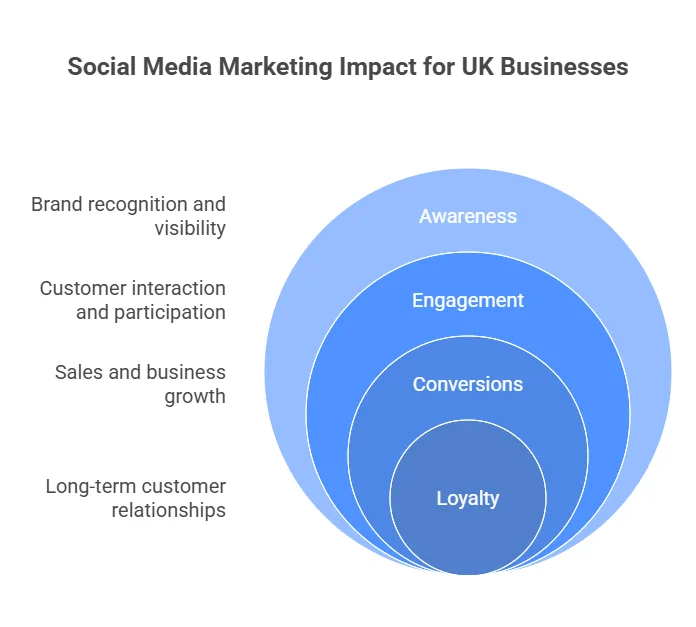
Each of these advantages compounds. Awareness drives traffic, engagement drives loyalty, and loyalty drives advocacy — feeding the next cycle. It’s a compounding loop of visibility, credibility, and conversion that works especially well when you maintain consistency over months, not days.
And that’s exactly what DataXpie helps you build: not just content calendars, but long-term momentum. Our team blends analytics with storytelling so your social presence translates into measurable revenue, not vanity metrics.
Real UK Cost Scenarios & Case Comparisons
When it comes to social media marketing costs, small UK businesses often wonder: How much do I actually need to spend to see results? The truth is — it depends on your goals, your market, and how efficiently you use your budget.
Below, we break down realistic spending ranges and outcomes from realistic UK scenarios — from DIY posting to fully managed campaigns.
Scenario A: The DIY Marketer (Small Local Business)
- Business Type: Independent Café in Liverpool
- Goal: Local brand awareness & daily customer visits
- Monthly Budget: £150–£300 (mainly for boosted posts and basic Canva visuals)
- Results (3 months):
- Reach: 12,000+ unique local accounts
- Engagement: 3.8% (above UK average for food & drink pages)
- Website Clicks: ~450
- Outcome: Noticeable weekend footfall increase + organic brand recognition.
💡 Takeaway:
If your goal is to keep your brand “locally visible,” small consistent ad boosts can deliver ROI — provided your visuals and posting frequency are on point.
Scenario B: The Growing Startup (Professional Services)
- Business Type: Accounting Agency in Manchester
- Goal: Lead generation for tax season
- Monthly Budget: £600–£1,000 (includes ad spend + content design)
- Results (60 days):
- Leads generated: 180+ form submissions
- Cost per lead: ~£3.60
- Conversion to booked consultation: 22%
- Outcome: Added over £8,000 in revenue within the campaign period.
💡 Takeaway:
When professional services invest in targeting + retargeting ads, results compound rapidly. Strategic content and credible branding lower lead cost significantly.
Scenario C: The E-commerce Brand (Online Retailer)
- Business Type: Fashion Boutique (London-based Shopify store)
- Goal: Drive direct sales via Instagram and TikTok
- Monthly Budget: £1,200–£2,000 (ads + influencer collab + content scheduling)
Results (3 months):- Average CTR: 2.8%
- ROAS (Return on Ad Spend): 3.5x
- Repeat customer rate: +28%
- Outcome: Over £18,000 in online sales, largely attributed to consistent storytelling and influencer synergy.
💡 Takeaway:
Investing in paid campaigns works best when brand aesthetics and product storytelling are strong.
Scenario D: Fully Managed Social Media Plan (Partnered with Agency)
- Business Type: Tech Solutions Provider, UK-wide reach
- Goal: Multi-channel brand presence + authority
- Monthly Budget: £1,800–£3,500 (agency-managed full service)
- Results (6 months):
- Social impressions: 480K+
- Average engagement: 5.2%
- Qualified inbound leads: 310+
- Outcome: Long-term audience growth and steady pipeline creation.
💡 Takeaway:
Outsourcing to professionals like DataXpie transforms your social channels into predictable lead engines — not just digital billboards.
Estimated UK Cost Table (Simplified Overview)
| Strategy Type | Monthly Budget | Typical Goals | Time to See Results | Effort Level |
| DIY Posting | £100–£300 | Visibility | 1–2 months | High |
| Hybrid (In-house + Boosts) | £400–£800 | Engagement + Web Traffic | 1 month | Medium |
| Paid Campaign Focused | £1,000–£2,000 | Leads + Sales | 2–3 weeks | Low–Medium |
| Fully Managed Agency | £1,800–£3,500 | Scalable Growth | 1–2 weeks | Low |
Key Insight
The magic isn’t in the amount you spend — it’s in how well the content, timing, and targeting align. Many small UK businesses waste half their budget simply by not tracking results or reusing best-performing content.
That’s why at DataXpie, we emphasise data-driven decision-making — running tests, reading insights, and adapting in real time. It’s what turns an expense into an investment.
Common Mistakes Small Businesses Make on Social Media (and How to Avoid Them)
Even the best campaigns can stumble if strategy and execution aren’t aligned. Here are 7 common pitfalls UK small businesses fall into — and practical ways to fix them.
1. Inconsistent Posting
Problem: Irregular posting confuses both followers and algorithms.
Solution: Use scheduling tools like Meta Business Suite or Buffer to maintain at least 3–5 posts weekly. Consistency boosts discoverability.
2. Ignoring Audience Insights
Problem: Many businesses post blindly without studying what performs.
Solution: Review analytics weekly. Focus on your top-performing 20% of posts and replicate what’s working.
3. Over-Selling Instead of Storytelling
Problem: Every post feels like an ad — audiences scroll past.
Solution: Follow the 70/20/10 rule — 70% educational or entertaining, 20% engagement-driven, 10% promotional.
4. Not Engaging Back
Problem: Businesses treat comments like noise, not conversation.
Solution: Reply to every comment, tag users, and thank people publicly. Engagement doubles when you engage back.
5. Lack of Brand Identity
Problem: Visual inconsistency (random colours, fonts, tone).
Solution: Use a defined brand kit. Keep fonts, colours, and voice consistent — ideally matching your website.
6. Neglecting Local SEO and Tags
Problem: Posts lack location tags or local keywords.
Solution: Add your city, postcode, and local hashtags (#MadeInLeeds, #ManchesterBiz). This helps local discovery.
7. Expecting Instant Results
Problem: Many small business owners expect ROI in weeks.
Solution: Social media success compounds. Real authority builds after 3–6 months of consistent effort.
Summary Table
| Mistake | Impact | Quick Fix |
| Inconsistent Posting | Low Reach | Pre-schedule content weekly |
| Ignoring Insights | Wasted Effort | Analyse top 3 performing posts |
| Over-Selling | Audience Fatigue | Focus on storytelling |
| No Engagement | Low Trust | Respond within 1 hour |
| Weak Branding | Low Recall | Use defined brand visuals |
| No Local Tags | Low Visibility | Add local hashtags |
| Impatience | Early Burnout | Plan for 90-day growth cycles |
The Ultimate DataXpie Social Media Starter Guide for Small UK Businesses
Building a strong social presence isn’t about luck or algorithms — it’s about strategy.
This section breaks down the DataXpie Social Media Starter Framework — designed specifically for small UK businesses looking to grow efficiently without the overwhelm.
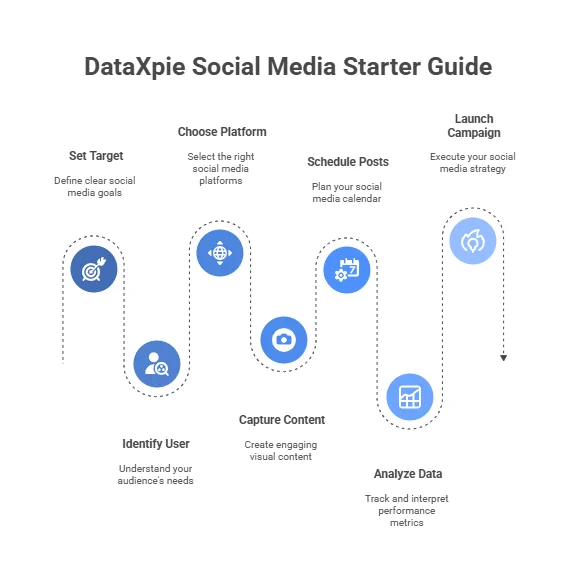
Step 1: Set Clear Objectives
Every successful campaign starts with a destination.
Ask yourself:
- Do I want awareness or sales?
- Am I trying to grow followers or generate leads?
- What metrics matter most — reach, clicks, or conversions?
💡 DataXpie Tip: Use SMART goals (Specific, Measurable, Achievable, Relevant, Time-bound). Example: “Gain 300 new local followers in 90 days.”
Step 2: Define Your Target Audience
Before you post, you must know who you’re talking to.
Research your ideal customer:
- Demographics: Age, gender, location, occupation
- Interests: What content do they already engage with?
- Pain Points: What problems can your product or service solve?
Example:
A small florist in Leeds targets 25–40-year-old local professionals interested in gifting, weddings, and lifestyle pages.
💡 DataXpie Tip: Use Meta Audience Insights or TikTok Creative Center for free audience data.
Step 3: Choose the Right Platforms
Not every platform suits every business. Focus on where your audience actually hangs out.
| Platform | Best For | UK Business Use |
| Local marketing, communities | Small shops, services | |
| Visual branding & engagement | Cafés, fashion, lifestyle | |
| B2B & authority building | Agencies, consultants | |
| TikTok | Virality & reach | Creators, eCommerce |
| X (Twitter) | Customer support & updates | Tech & service providers |
💡 DataXpie Tip: Start with 2 main platforms — master those before expanding.
Step 4: Create Engaging Content
Use the DataXpie 4C Content Framework:
- Create Value: Educational posts, tutorials, or insights
- Connect Emotionally: Stories, behind-the-scenes, or customer highlights
- Convert Gently: CTAs, limited offers, testimonials
- Continue the Loop: Recycle best posts and update them quarterly
💡 Pro Tip: Visual storytelling works best — 73% of UK users prefer short videos or carousel posts over static ads (Source: DataXpie internal study, 2025).
Step 5: Plan and Schedule
A structured calendar is your best marketing assistant.
| Day | Content Type | Example |
| Monday | Tip / Insight | “3 ways to grow your audience” |
| Wednesday | Story / BTS | “How we prepped this week’s launch” |
| Friday | Promotion / Offer | “Weekend deal: 20% off local delivery” |
| Sunday | Community / Q&A | “Ask me anything about [your product]” |
💡 Tool Recommendation: Use Meta Business Suite, Buffer, or Hootsuite for scheduling; Canva or CapCut for content design.
Step 6: Measure, Adjust, Repeat
Every platform offers analytics — use them.
Track:
- Engagement rate (likes, comments ÷ followers)
- Click-through rate (CTR)
- Reach and impressions
- Conversion or form submissions
Once a month, review what’s working and double down.
💡 DataXpie Tip: DataXpie clients typically see a 35% engagement boost after 3 months of applying our monthly insight review method.
Step 7: Stay Consistent for 90 Days
Social media success is about compounding effort. Even if you post only 3–4 times a week, consistency builds trust and data momentum.
Remember: Visibility builds familiarity — familiarity builds sales.
DataXpie Quick Launch Kit Summary
| Phase | Focus | Tool | Result |
| Setup | Goals + Audience | Meta Insights | Clear direction |
| Content | Creation + Branding | Canva + CapCut | Strong visuals |
| Execution | Posting + Engagement | Buffer / Meta Suite | Daily consistency |
| Optimization | Data Tracking | DataXpie Analytics | Measurable growth |
Why Social Media Marketing Is No Longer Optional for UK Businesses
It’s 2025 — and social media is now the storefront, billboard, and customer service desk all at once.
For UK businesses, it’s no longer a “nice-to-have.” It’s a necessity for visibility, credibility, and long-term survival.
1. Your Customers Already Live There
- 96% of UK internet users are on at least one social platform.
- 61% use it to research products before purchase (Source: Statista UK 2025).
If your brand isn’t visible, your competitor’s is.
2. Algorithms Now Reward Small Businesses
Platforms like Facebook and Instagram have pivoted to local discovery algorithms — favouring small, authentic pages over corporate giants. That means you already have an advantage, provided you post consistently and engage.
3. Social Proof Replaces Word of Mouth
In 2025, reviews, comments, and shares are the new recommendations. A single viral Reel or testimonial post can shift brand perception overnight.
Example:
A small hair studio in Nottingham shared a client’s before-after video and gained 1,000+ local followers in 48 hours.
4. Ad Costs Are Still the Most Affordable Form of Marketing
Compared to billboards or TV, a £10/day social ad can reach over 5,000+ targeted UK users, often within your local postcode.
Even a £200 monthly test campaign can yield measurable growth.
5. It Future-Proofs Your Business
Trends shift, but the foundation remains: digital visibility = business stability.
Social media helps businesses stay relevant — whether algorithms change or new platforms rise.
💡 DataXpie Perspective: Social media is not about chasing virality. It’s about building a digital asset that grows with you — followers who remember, engage, and buy.
6. It’s the Easiest Way to Tell Your Story
People don’t just buy products; they buy stories.
Your posts, your tone, your visuals — they shape your identity before customers even click “Visit Website.”
Example:
A family-run restaurant in Glasgow grew online bookings by 40% after documenting their journey and sharing customer reviews on Reels.
7. It Drives Every Other Marketing Channel
Social media boosts SEO (through backlinks), improves email open rates, and even increases in-store visits. It’s the top-of-funnel power source that amplifies all other marketing efforts.
Final Word
The future belongs to brands that connect.
And in 2025, connection happens on screens first — through posts, DMs, and comments.
If you’re not there, you’re invisible.
That’s where DataXpie steps in — to help small UK businesses become brands that not only show up but stand out.
Key Takeaways for UK Small Business Owners
Let’s recap what you’ve learned about the power of social media marketing in 2025 — and why it’s the smartest move your small business can make right now.
The Core Insights
- Social media levels the playing field. Even the smallest UK business can reach thousands of people with the right strategy — no huge budget required.
- It’s more than visibility — it’s influence. From shaping community opinions on Twitter (X) to building authority on Quora, every platform can become a credibility engine.
- Consistency compounds results. Regular, high-quality content builds long-term familiarity, which leads to loyalty and conversions.
- Video builds trust faster. YouTube and Reels give small brands a human voice and visual proof of quality — crucial in a world of short attention spans.
Local targeting drives real-world sales. Geo-tags, local hashtags, and postcode-based ads put you in front of nearby buyers ready to act.
11. How DataXpie Can Help You Grow
You’ve seen what’s possible. Now let’s turn potential into progress.
At DataXpie, we don’t just post content — we build full digital ecosystems that help your business attract, engage, and convert customers through data-backed strategy.
Why Work with DataXpie
- UK-Focused Expertise: We understand the nuances of local markets and consumer behaviour.
- Data-Led Creativity: Every decision is backed by analytics, not guesswork.
- End-to-End Management: From content design to ad optimisation, we handle it all.
- Scalable Solutions: Start small, scale as your results grow.
If you’re ready to turn your social media into a growth engine,
👉 Book a free consultation with DataXpie today.
Frequently Asked Questions
What is the main benefit of social media marketing for small UK businesses?
It helps you reach thousands of potential customers affordably, build brand trust, and drive direct sales — all while competing with larger brands on equal digital ground.
Which social media platform works best for small businesses in the UK?
It depends on your audience.
Facebook: Best for local awareness
Instagram: Great for visual storytelling
LinkedIn: Ideal for B2B credibility
TikTok: For creative product videos and trends
How often should a small business post on social media?
For best results, aim for 3–5 posts per week per platform.
DataXpie clients following this schedule typically see up to 40% higher engagement within three months.
How much does social media marketing cost in the UK?
Professional social media management can start from around £299/month for basic plans, while comprehensive strategies range up to £1,000+ per month depending on goals and ad budgets.
Can small businesses manage their own social media?
Yes — but it’s time-intensive. Many owners choose to start themselves, then partner with experts like DataXpie once growth demands more structure and consistency.